Why Index Funds Struggle to Avoid AI Stock Volatility
Major global stock indexes give substantial weight to US technology and chip companies, leaving funds that track them heavily exposed to AI stocks. Economists say market capitalization weighting may push large stock prices higher, while declines could also hurt passive investors.

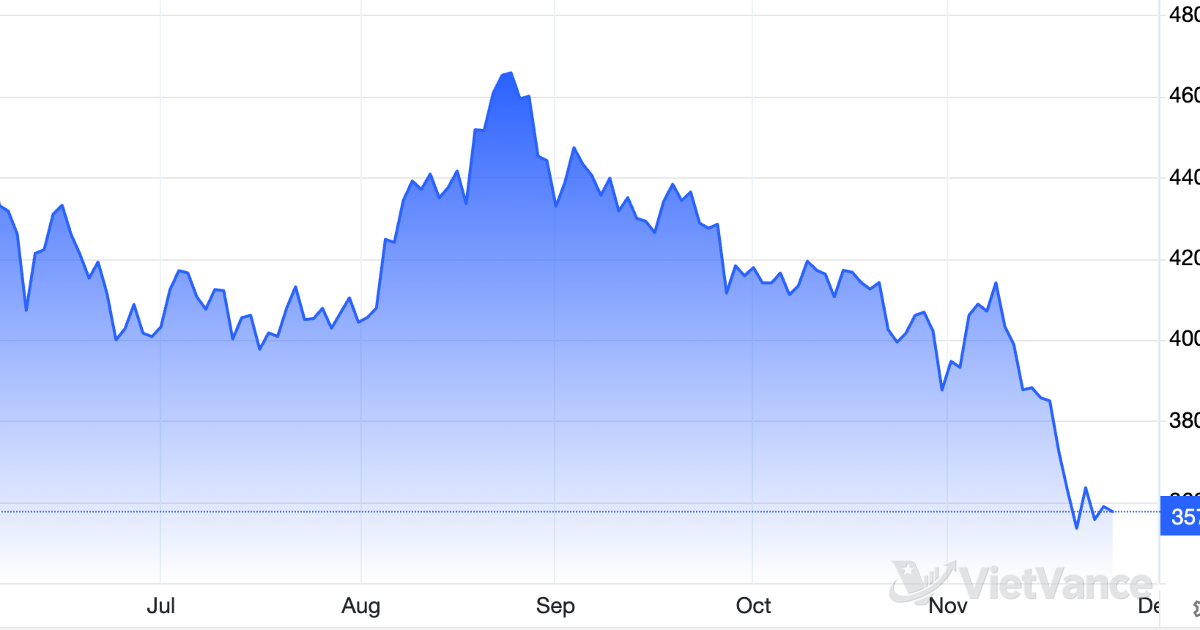
AI-related stocks have fluctuated sharply recently. For investors who hold index funds, diversification makes it difficult to avoid these stocks entirely: most major indexes weight companies by market capitalization, so a rising share price and a larger market value increase a company's share of the index.
In the MSCI All Country World Index (ACWI), which covers more than 2,400 companies across 47 developed and emerging markets, the 10 largest stocks account for nearly a quarter of the index's total market value. Nine are US technology companies, while the other is semiconductor company TSMC. US-listed companies account for about two-thirds of the index's total market value but only about one-fifth of its companies.
Stock market file photo.(VietVance)
This concentration is also evident in emerging market indexes. In the MSCI Emerging Markets Index, the 10 largest stocks together account for 37.5%, with TSMC alone accounting for nearly 16%; eight of the top 10 are technology, chip or internet companies. Finance professor Dimitri Vayanos says that when heavily weighted stocks are concentrated in one industry, inflows into index funds have a greater effect on their prices.
Other indexes are less concentrated but remain connected to the AI supply chain. The 10 largest stocks in the MSCI EAFE Index account for about 14.5% of its total market value. Its largest holding, ASML, supplies equipment to chipmakers. Asset management company founder Gerd Kommer warns that if an AI stock bubble bursts, the decline could spread to global stock markets, with individual investors who hold large positions in related stocks facing greater losses.
Source: VietVance