APEC: A Cooperation Platform for 21 Member Economies
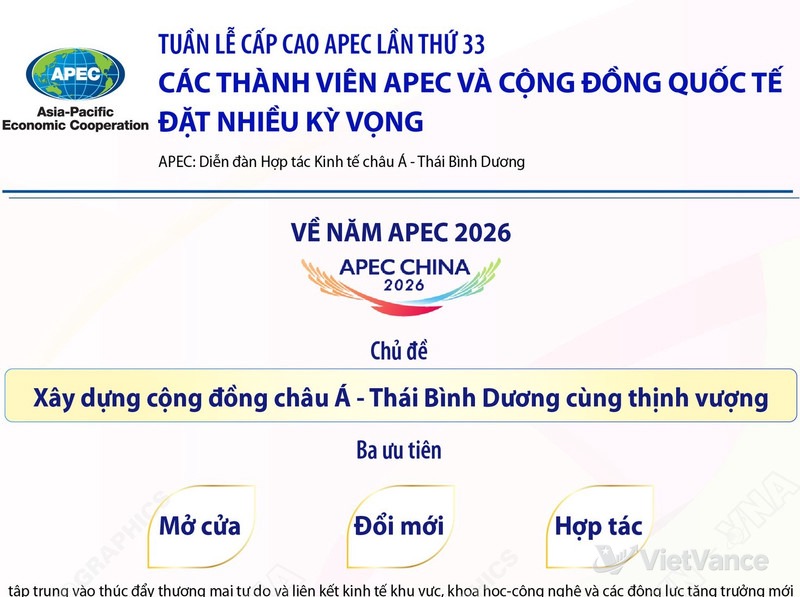
Founded in 1989, APEC has 21 member economies and promotes regional economic ties through consensus and voluntary cooperation. Historical data cited in the original article show progress in trade growth, tariff reductions and trade facilitation among its members.

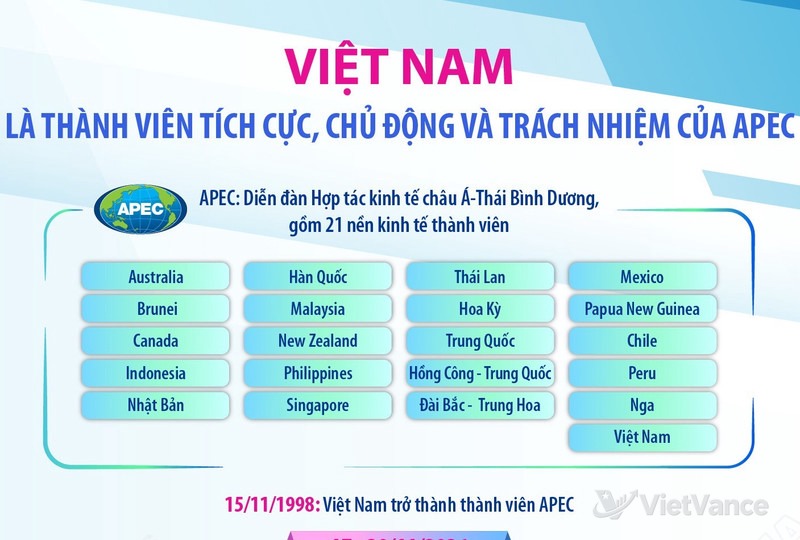
The Asia-Pacific Economic Cooperation (APEC) forum was established in Canberra, Australia, on November 6, 1989, to promote economic and trade cooperation in the Asia-Pacific region. It now has 21 member economies; Vietnam joined in 1998. APEC operates by consensus, on a voluntary and nonbinding basis, and refers to its members as “economies.”

APEC-themed decorations in Shenzhen, Guangdong Province, China.(VietVance)
APEC conducts dialogue through leaders’ meetings, ministerial meetings and working-level meetings on issues including trade, finance, energy, transport and small and medium-sized enterprises. At a leaders’ meeting in Indonesia in 1994, APEC adopted the Bogor Goals, which set targets for developed member economies to achieve free and open trade and investment by 2010 and developing member economies by 2020.

Participants discuss the implementation of APEC’s Bogor Goals.(VietVance)
Historical data cited in the original article show that from 1994 to 2014, merchandise trade among member economies grew by an average of 7.8% annually, while intraregional trade rose to four times its previous level. The average most-favored-nation tariff fell from 11% in 1996 to 5.5% in 2014. The number of free trade agreements and regional trade arrangements in the region increased from 22 in 1996 to 152 in 2015.
APEC cooperation covers trade and investment liberalization, business facilitation, and economic and technical cooperation. Dialogue between its Business Advisory Council and member economy leaders gives businesses a channel to make recommendations on regional economic policy.
Source: VietVance