APEC Shenzhen Meeting to Focus on AI Cooperation
The 33rd APEC Economic Leaders’ Meeting is scheduled for November 18–19, 2026, in Shenzhen, China. Industrial cooperation in AI, technology adoption by small and medium-sized enterprises, and the development of safe and trustworthy AI ecosystems are drawing attention ahead of the meeting.

The 33rd Asia-Pacific Economic Cooperation (APEC) Economic Leaders’ Meeting is scheduled for November 18–19, 2026, in Shenzhen, China. APEC Secretariat Executive Director Eduardo Pedrosa said research and innovation in Shenzhen could bring practical benefits within and beyond the region. AI cooperation is among the issues drawing attention ahead of the meeting.
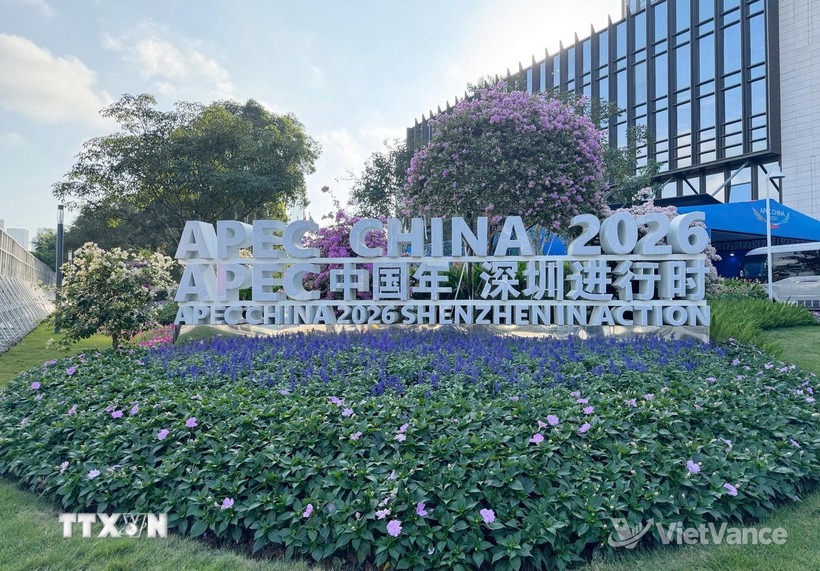
APEC China Year emblems displayed on the streets of Shenzhen, China.(VietVance)
Shenzhen’s core AI industry generated about 220 billion yuan (approximately US$33 billion) in revenue in 2025, and the city had more than 2,600 large AI enterprises. In the first half of 2026, trade between Shenzhen and other APEC member economies reached 1.98 trillion yuan, up 33% year on year and accounting for nearly 70% of the city’s total foreign trade.
In industrial applications, SmartMore, whose research and development center is based in Shenzhen, develops industrial inspection systems that can detect minute production defects. The company said it has served more than 730 businesses worldwide and deepened cooperation with partners in Japan, South Korea and Southeast Asia in consumer electronics, new energy and precision manufacturing.
According to APEC data, micro, small and medium-sized enterprises account for more than 97% of businesses in the region, provide most private-sector jobs and contribute about half of regional output. Yang Qian, co-founder of Shenzhen-based AI robotics startup X Square Robot, said AI-powered robots and open-source technology can help small and medium-sized enterprises lower barriers to adopting technology.
The APEC AI Initiative for 2026–2030, adopted in 2025, aims to promote innovation and build AI ecosystems that are safe, accessible and trustworthy. The Chengdu Declaration, adopted on July 23, 2026, encourages member economies to apply AI in manufacturing, agriculture and services while providing small and medium-sized enterprises with affordable, easy-to-deploy digital products and solutions. China also announced in July 2026 that it planned to provide 5,000 places in AI training and seminars for developing countries over the following five years and establish a center for cooperation on cross-border data flows in Shenzhen’s Qianhai area.
Source: VietVance