Ho Chi Minh City Says Can Gio’s Marine Economy Must Protect Mangroves
Ho Chi Minh City says it will protect Can Gio’s mangrove ecosystem as it develops an international transshipment port, logistics and island tourism, and will not trade the environment for economic growth. The planned port project covers about 571 hectares, with expected investment of nearly US$5 billion.

Ho Chi Minh City Vice Chairman Bùi Minh Thạnh said at the 13th meeting of the World Network of Island and Coastal Biosphere Reserves on November 6, 2026, that the Can Gio Mangrove Biosphere Reserve plays an important role in conserving biodiversity, regulating the climate, protecting the coast and sustaining community livelihoods. As the city develops Can Gio’s marine economy, it will not trade the environment for economic growth.
Ho Chi Minh City is advancing a marine economy strategy focused on an international transshipment port, logistics, trade and tourism. Under its plan through 2030, the Can Gio international transshipment port, together with a free trade zone, will become an important driver of growth. The project covers about 571 hectares and is expected to attract nearly US$5 billion in investment. It aims to increase international cargo transshipment capacity and spur the development of port services and logistics.
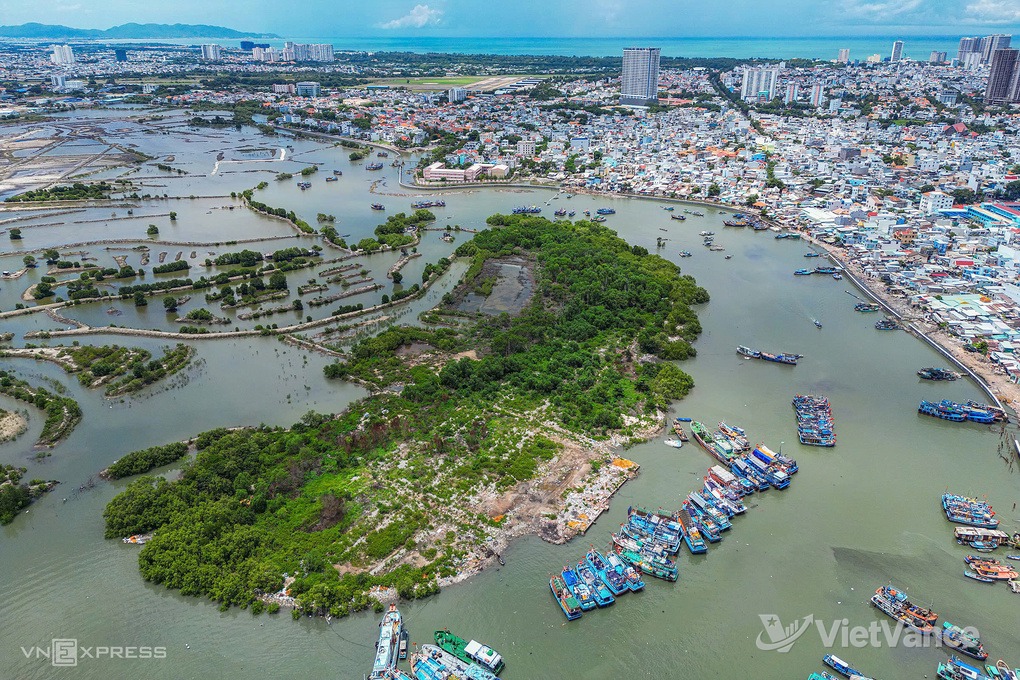
Aerial view of the area where the Can Gio–Vung Tau sea crossing road is being built.(VietVance)
Ho Chi Minh City also plans to link Can Gio with Vung Tau and Con Dao in a coastal and island tourism route, while developing high-tech marine aquaculture, further processing and product traceability. By 2030, the city aims to increase the value of its marine aquaculture output by 8% a year and total coastal and island tourism revenue by 14% a year. Bùi Minh Thạnh said the city’s development priorities include balancing urban development with nature, using technology and green finance to support conservation, and putting residents and communities at the center of sustainable development.
Dương Thanh An, deputy director of the Nature Conservation and Biodiversity Department under Vietnam’s Ministry of Agriculture and Environment, said economic development and ecological protection in coastal and island areas need to be considered together from the policy and spatial planning stages. Experts recommend that ecotourism expansion reflect each area’s carrying capacity, with waste controlled and impacts on ecosystems reduced. They also recommend studying ecosystem services and carbon markets to generate additional funding for conservation.
Source: VietVance