Scholar in Canada Suggests Linking Ho Chi Minh’s Thought to Contemporary Issues
Nguyễn Đài Trang, a scholar studying Ho Chi Minh in Canada, suggests using brief, accessible, research-based content on issues such as racial discrimination and environmental protection to introduce his thought to young Vietnamese abroad and international audiences. She says this could help young people understand their history and create opportunities for cross-cultural dialogue.

Nguyễn Đài Trang, a scholar studying Ho Chi Minh in Canada, suggests introducing his thought to young Vietnamese abroad and international audiences in an accessible way grounded in documentary evidence and academic research. She believes linking it to contemporary social issues can help young people understand their history and create opportunities for dialogue with international audiences.
Nguyễn Đài Trang heads the Canada–ASEAN Initiative at York University’s Centre for Asian Research. In an interview, she said she began studying Ho Chi Minh out of a desire to understand Vietnam’s history, her roots and her compatriots. She believes that a spirit of self-directed learning, a scientific approach to work and a sense of responsibility to the community remain relevant to Vietnamese people living abroad.
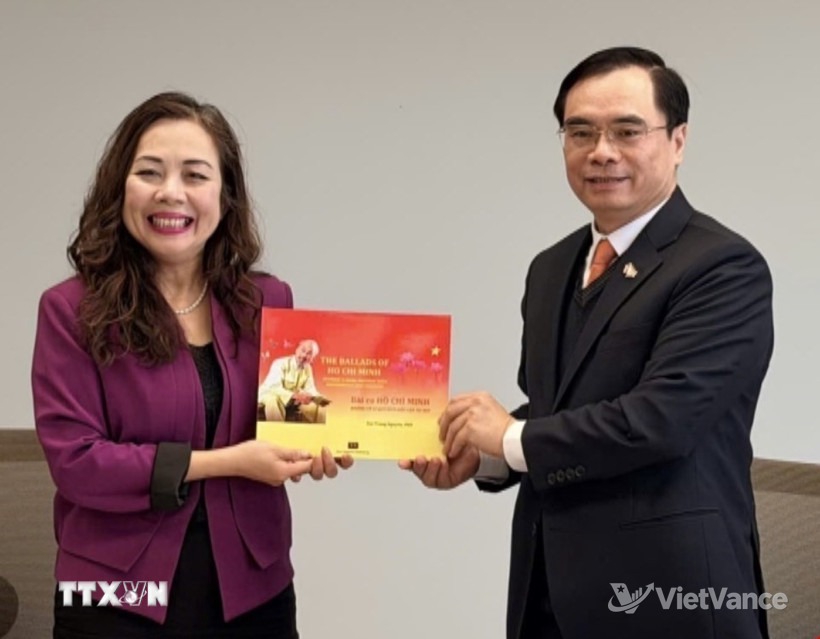
Nguyễn Đài Trang (left) presents a bilingual Vietnamese–English book, “The Song of Ho Chi Minh,” introducing Ho Chi Minh.(VietVance)
Nguyễn Đài Trang has lived abroad for more than three decades. She said learning the local language, joining local organizations and building community ties all require time and effective methods. She hopes young Vietnamese abroad will follow developments both where they live and in Vietnam, and find practical ways to take part in education, work and community activities.
To share these ideas, she suggests regularly posting short articles on social media, each focused on a topic such as opposing racial discrimination, environmental protection, gender equality or combating corruption, with language tailored to different readers’ interests. She cited Nguyễn Ái Quốc’s 1925 work “The Black Race” as material that could be used to discuss racial discrimination. She said this approach could deepen young Vietnamese people’s understanding of their history and encourage dialogue with international audiences.
Source: VietVance