Canada Makes Auto Industry’s Future a Condition of Trade Deal with US
Canadian Prime Minister Mark Carney says Canada will accept a trade deal with the US only if it safeguards the survival and growth of its auto industry. Talks are progressing, but autos remain difficult to resolve. Plans to sell the Brampton plant and uncertainty over jobs highlight concerns about long-term investment conditions.

Canadian Prime Minister Mark Carney said Canada would accept a trade deal with the US only if it safeguarded the survival and growth of its auto industry. Speaking in Manila, he said talks were progressing, but autos remained one of the most fundamental and difficult issues to resolve. Before his trip, Carney held lengthy discussions with US President Donald Trump and senior US officials.
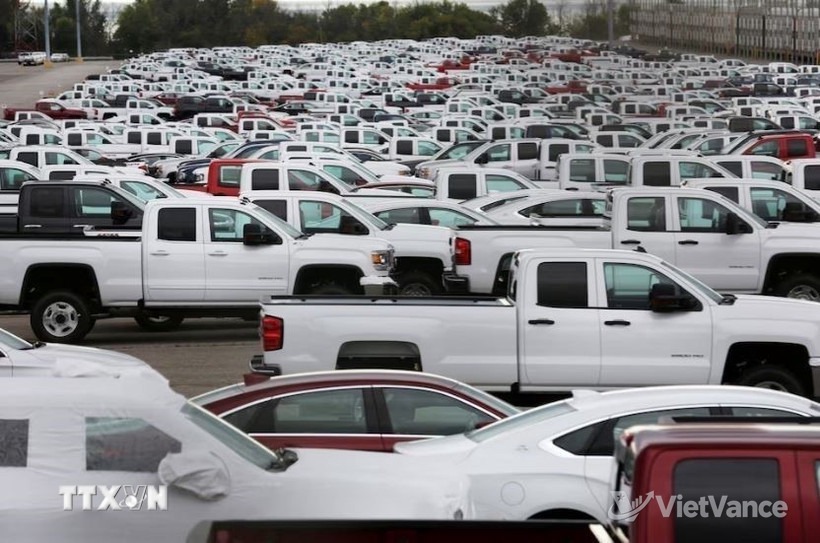
New vehicles produced at a General Motors (GM) plant in Oshawa, Ontario, Canada.(VietVance)
About 90% of Canada’s finished vehicles and 60% of its auto parts are exported to the US. Auto parts may cross the border between the two countries several times before a vehicle is completed, leaving production in Canada vulnerable to changes in US trade policy. For automakers, allocating models and investing in production lines typically involve plans spanning many years, so the outcome of the talks must also provide stable market access.
The future of the Brampton plant in Ontario has brought the investment dispute into sharper focus. Between November 9 and 15, 2026, Stellantis and Canadian defense technology company Roshel announced an agreement to buy and sell the plant and related equipment. The transaction value was not disclosed, and the two companies also plan to explore cooperation in defense. Earlier, plans to produce the Jeep Compass moved to Illinois, leaving the future of more than 2,000 Brampton workers uncertain.
The Canadian government has demanded that Stellantis address alleged breaches of a funding agreement within 30 days of the announcement, or it may sue to recover hundreds of millions of Canadian dollars. Finding a new industrial use for the plant could create production opportunities, but it remains unclear whether auto industry jobs and supply chains can be preserved.
Canada’s The Globe and Mail reported that the three major US automakers want a deal soon to reduce losses, then seek better terms. Honda and Toyota, meanwhile, are concerned that an agreed tariff rate could undermine the competitiveness of production in Canada. Vũ Mạnh Chiến, a professor at the University of Québec, told the Vietnam News Agency that companies need specific, durable policy changes before making major investments. Alongside tariffs, they consider the business conditions they will face when a plant begins operating several years later.
Source: VietVance