Vietnam and China plan trial customs clearance for driverless cargo vehicles at Hữu Nghị border gate
Vietnam and China discussed a trial of customs clearance for driverless IGV vehicles at Hữu Nghị border gate on November 18. The three-month trial is expected to begin in late November or early December 2026 and run daily from 6 p.m. to 8 p.m. Hanoi time, using standard 40-foot containers.

On November 18, the Management Board of the Đồng Đăng–Lạng Sơn Border Gate Economic Zone in Vietnam’s Lạng Sơn province and the Border Gate Office of China’s Guangxi Zhuang Autonomous Region held talks on a trial customs clearance plan for driverless IGV vehicles. The meeting took place on the freight route near border markers 1119–1120 at Hữu Nghị International Border Gate. The two sides agreed that the trial is expected to begin in late November or early December 2026, last three months, and operate daily from 6 p.m. to 8 p.m. Hanoi time.
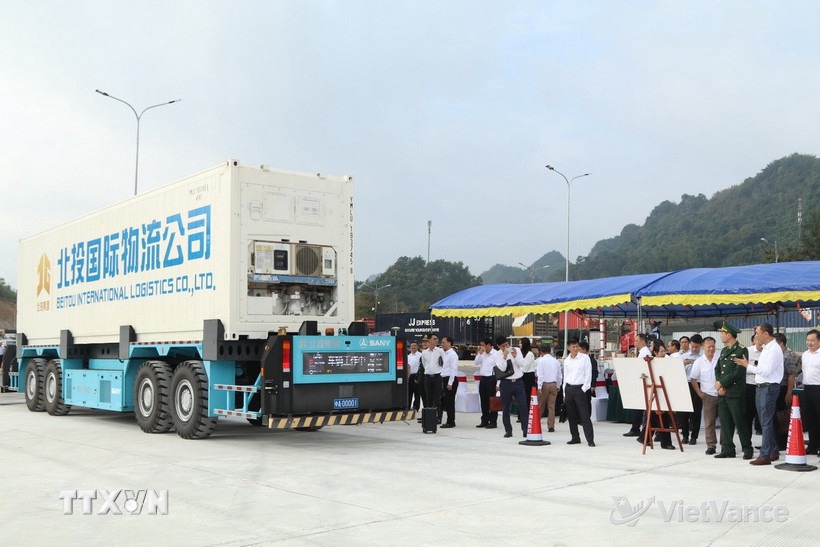
A trial of customs clearance for IGV vehicles near border markers 1119–1120 at Hữu Nghị International Border Gate.(VietVance)
The proposed trial area covers approximately 50 meters into Vietnam from the Km0 boundary line, within four smart border gate lanes on the dedicated freight route near border markers 1119–1120. Standard 40-foot containers will be used during the trial. The two sides also discussed procedures for issuing, checking and controlling international transport permits for IGV vehicles.
Vietnam will facilitate an exemption from temporary license plate procedures for Chinese IGV vehicles. Information on cargo handover, imports and exports must be declared through the Digital Border Gate Platform, and activities must comply with the specialized regulations enforced by authorities at the border gate. IGVs are driverless transport vehicles controlled automatically by a system.
Hoàng Viết Đông, deputy head of the Management Board of the Đồng Đăng–Lạng Sơn Border Gate Economic Zone, said Lạng Sơn authorities have instructed businesses to provide lighting, container lifting equipment and transfer vehicles for the nighttime trial. They will also install barriers separating 10 regular lanes from four smart lanes to allow IGV vehicles to travel independently.
The two sides also reached some agreement on responsibility for cargo losses, emergency response during vehicle operations, information exchange and coordination in handling malfunctions. They will continue to advance construction of the smart border gate pilot project.
Source: VietVance