More Than 30 Countries Join COP31 Global Electrification Pledge
More than 30 countries have joined a voluntary pledge launched by COP31 host Türkiye to raise electricity’s share of global final energy demand to 35% by 2035. The source of additional electricity, infrastructure costs in developing countries, and financial and technical support remain key issues.

More than 30 countries have joined a voluntary global electrification pledge launched by Türkiye, the host of COP31. Türkiye aims to raise electricity’s share of global final energy demand from just over 20% today to 35% by 2035 and to have the target included in the final agreement of COP31 in Antalya.
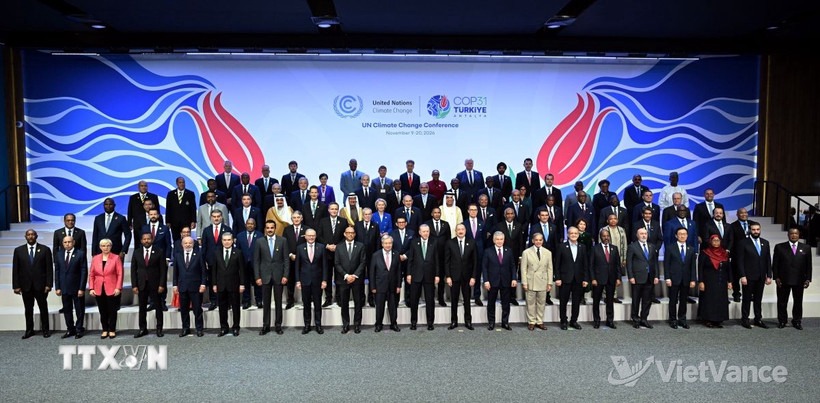
Delegates pose for a group photo at COP31 in Antalya, Türkiye.(VietVance)
Countries supporting the initiative say electric technologies can be cleaner, safer and more efficient than fossil fuel technologies. Observers note, however, that some developing countries have yet to endorse the plan because meeting its target would require substantial infrastructure investment. The current pledge also does not require additional electricity to come from renewable sources, so its effect on emissions depends on how that electricity is generated.
Emissions tracking nonprofit Climate TRACE estimates that, even if countries do not prioritize clean power, the pledge could still cut carbon emissions by about 4.1 billion tonnes a year, equivalent to 7% of current global emissions. If clean energy is prioritized for additional electricity generation, the reduction could nearly double. These figures are the organization’s estimates for different implementation scenarios.
Electrification is also seen as a way to strengthen energy security. The conflict involving the United States, Israel and Iran has made energy security a priority for many governments and highlighted the risks of relying on imported oil and gas. Generating electricity from domestic renewable sources and pairing it with battery storage could reduce dependence on imports and exposure to fuel price shocks. The World Resources Institute says electric vehicles can convert about 80% of electrical energy into motion, compared with about 20% of fuel energy for gasoline or diesel engines.
Mohamed Adow, director of the Nairobi-based research organization Power Shift Africa, says wealthy countries should lead the transition, while developing countries need financial and technical support and people who lack electricity must be able to access energy at an affordable cost. High interest rates are another obstacle for renewable energy projects; the Institute for Energy Economics and Financial Analysis notes that most of these projects’ lifetime costs must be paid at the outset.
Source: VietVance