COP31 Nears Agreement After New Draft Released
COP31 negotiators in Antalya, Turkey, worked into the early hours of November 22 amid disagreements over fossil fuels and climate adaptation funding. Australia and Turkey, which jointly chair the conference, hope the new draft will gain consensus, but the agreement had not been adopted when the Chinese article was published.

The 31st United Nations Climate Change Conference (COP31) in Antalya, Turkey, is close to reaching a final agreement. Australia and Turkey, which jointly chair the conference, have released a new draft agreement and hope the parties will agree on how to advance efforts to address global warming.
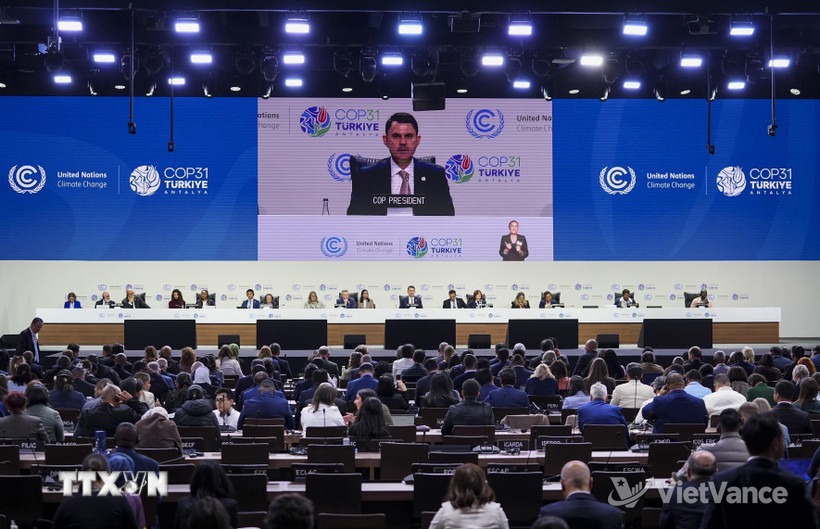
COP31 is close to reaching a final agreement after disagreements among the parties.(VietVance)
Negotiators missed the November 20, 2026, deadline, continued working through November 21 and extended talks into the early hours of November 22. The new draft revises an earlier version that some participants considered insufficiently ambitious because it did not mention ending the use of fossil fuels.
COP31 President Murat Kurum told a plenary session on the evening of November 21 that he believed all parties could accept the new text. He said concerns about fossil fuels and funding to help developing countries adapt to climate change had been addressed. Under the schedule at the time, delegations could raise objections until 10:00 a.m. on November 22, Vietnam time, and the meeting was expected to begin considering the agreement for adoption at 1:00 p.m. that day.
The new text followed intensive consultations among Australia, Turkey and nearly 200 delegations. Negotiators needed to balance the needs of countries most vulnerable to climate change with the concerns of countries whose economies depend on fossil fuel production or consumption. This is also the first COP meeting since a United Nations environmental body confirmed that global temperatures will rise beyond the 1.5°C threshold. More than a decade ago, countries agreed to strive to stay below that threshold; exceeding it would intensify the effects of extreme weather.
Source: VietVance