EU Imposes 16% Anti-Dumping Duty on Vietnamese Cold-Rolled Steel
The EU has imposed a 16% anti-dumping duty on cold-rolled flat steel imported from Vietnam. Vietnam’s trade counselor to Belgium and the EU says exporters face additional steel trade measures and carbon costs, and should strengthen their cost and origin records while monitoring export growth.

The EU has imposed a 16% anti-dumping duty on cold-rolled flat steel imported from Vietnam. On September 18, 2025, the European Commission launched an investigation into cold-rolled steel from Vietnam, India, Japan, Taiwan (China) and Turkey following a petition by the European Steel Association. Its final ruling set duties of 5.6% to 28% for the five markets; POSCO Vietnam, China Steel & Nippon Steel Vietnam and Hoa Sen Group are subject to the 16% rate.
Trần Ngọc Quân, Vietnam’s trade counselor to Belgium and the EU, said the 16% duty is higher than the rates the EU applies to the relevant products from India and Turkey, weakening the price competitiveness of Vietnamese cold-rolled steel. According to the trade office, Vietnam accounts for about 3.4% of EU steel imports. Over the preceding seven months, Vietnam’s steel exports to the EU totaled about €700 million (approximately US$767 million), down about 39%. In 2024, the EU accounted for 23% of Vietnam’s steel export value, equivalent to more than US$2 billion.
Beyond the new duty on cold-rolled steel, Vietnamese hot-rolled steel has been subject to a 12.1% anti-dumping duty since 2025, except for products from Hòa Phát Group. The EU also introduced new safeguard measures on imported steel on July 1, 2026, and applies measures including tariff quotas, rules of origin and the Carbon Border Adjustment Mechanism. According to the trade office, the EU announced a third-quarter carbon price under the mechanism of €82.32 per tonne on October 5, 2026, about 10% higher than in the first and second quarters.
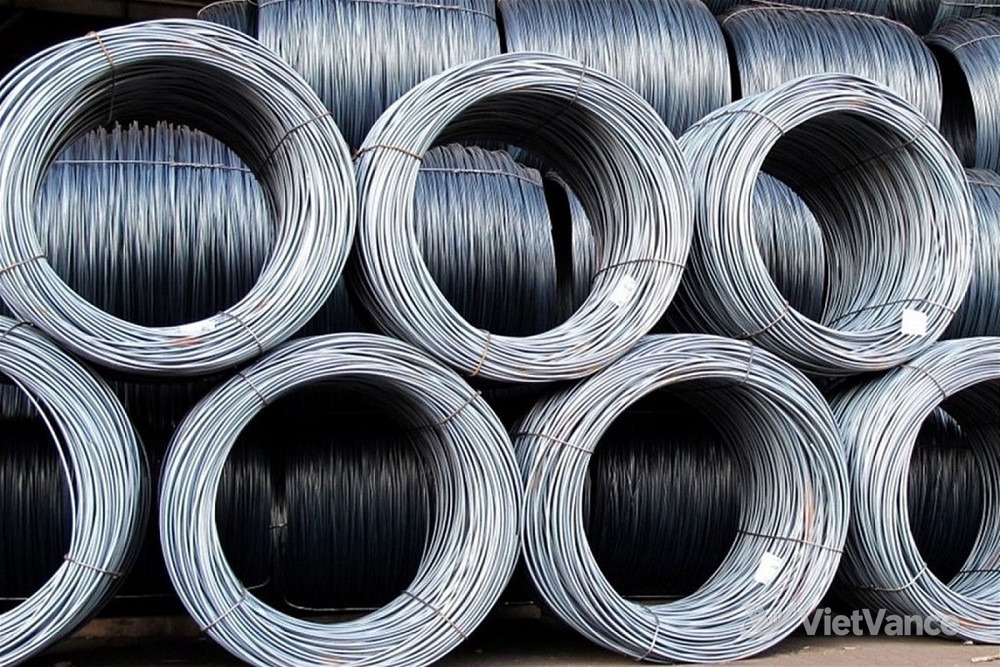
Steel wire products.(VietVance)
Trần Ngọc Quân said exporters could face greater pressure if Vietnam does not soon conclude talks with the EU on steel tariff quotas for free trade agreement partners and establish a carbon credit market. He said companies can seek redress through EU judicial procedures, but should first assess their evidence and prepare production and business records that meet EU requirements for breaking down costs, while monitoring the pace of export growth to the EU. He also urged companies to pay attention to transparency of origin and to potential trade remedy investigations involving other products.
Source: VietVance