Gia Lai Expands Coffee Farming Training, Plans to Broaden Rural Vocational Education
Coffee cultivation and care courses in mountainous Gia Lai are helping rural workers develop farming skills. From 2015 to August 2026, a local vocational training center ran 112 classes for more than 3,100 ethnic minority trainees. The province aims to train about 31,000 rural workers by 2030.

Mountainous areas of Gia Lai province have added coffee cultivation and care to rural vocational training. In late 2025, a course opened in Buôn Lưới village, Sơn Lang commune, where 30 trainees studied coffee propagation, planting, pest and disease control, harvesting and initial processing, and practiced fertilizing and pruning. The course focuses on helping workers who have land apply these skills to their existing farming activities.
The Kbang Center for Vocational and Continuing Education, which provides the training, said courses are designed around trainees’ needs and local production conditions. From 2015 to August 2026, the center held 112 rural vocational training classes for more than 3,100 ethnic minority trainees. It ran seven classes for more than 200 trainees in 2025 and another three for more than 90 trainees in the first eight months of 2026. Courses also cover rice, macadamia and sugarcane cultivation, as well as livestock farming.
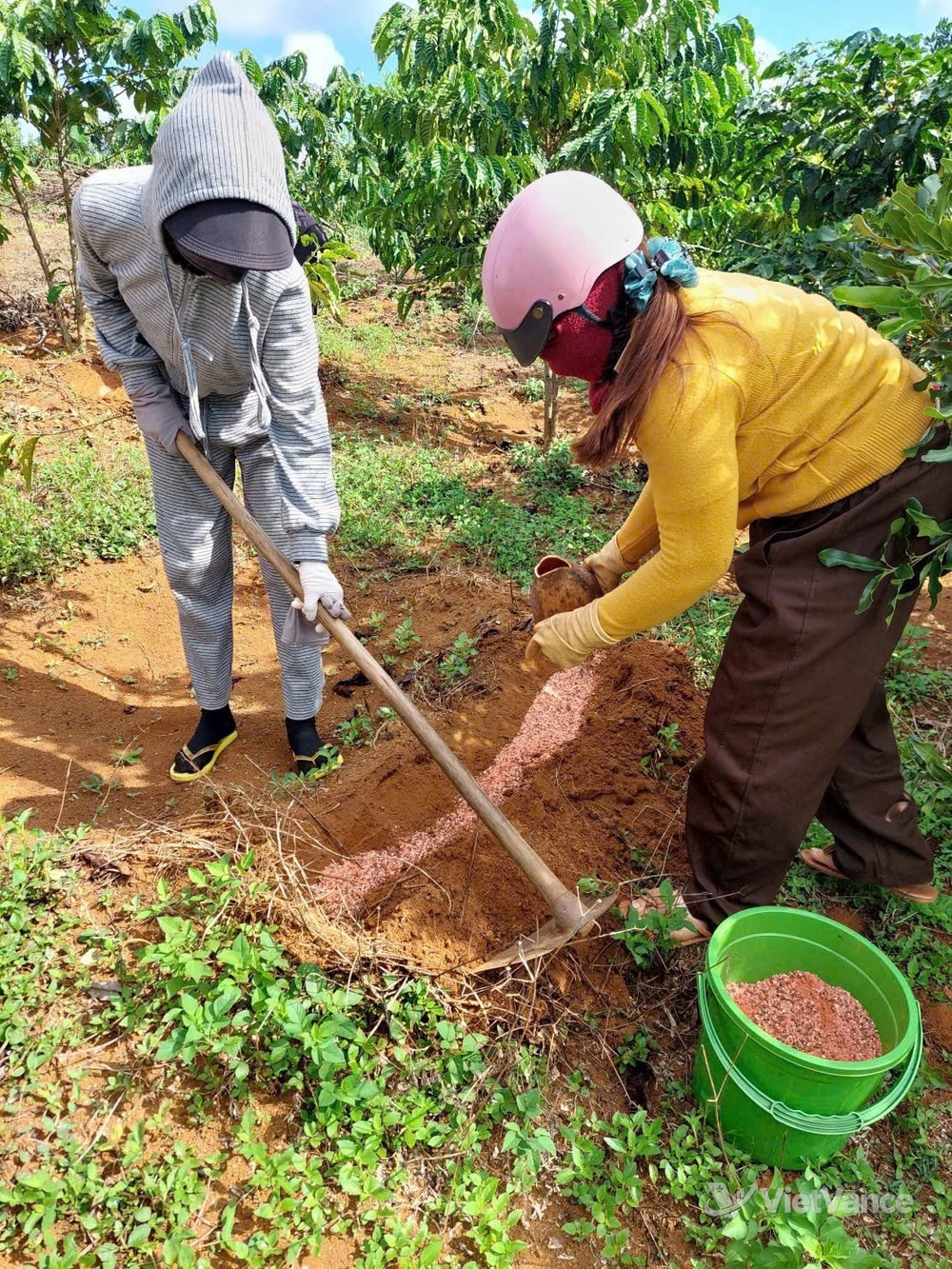
Gia Lai residents fertilize coffee trees while learning to apply cultivation techniques.(VietVance)
Figures released by the Gia Lai Department of Education and Training in October 2026 show that the province was estimated to have enrolled and trained 12,615 vocational trainees in the first half of the year, including 1,437 from ethnic minority groups. A decision issued by the Gia Lai Provincial People’s Committee on May 21, 2026, sets a goal of training about 31,121 rural workers by 2030 and achieving a post-training employment rate of over 85%. A plan issued on July 8 further calls for agricultural training to be linked to production needs, rural industry development and higher incomes.
Training in mountainous areas still faces challenges: trainees must balance classes with work on family farms, and their education levels and access to information vary. Local training institutions propose flexible schedules, more practical instruction and links with businesses offering jobs to make training more useful.
Source: VietVance