Why Can Buying Gold Lead to an Immediate Loss? Understanding the Buy-Sell Spread
Gold dealers usually quote a buying price and a higher selling price. The spread means buyers may lose money if they sell immediately, even when the market price has not changed. Buyers should check both prices and compare the resale price with what they actually paid.

In gold trading, the “buying price” is what a dealer pays to buy gold back from a customer; the “selling price” is what a customer pays to buy gold from the dealer. The selling price is usually higher, and the difference is the buy-sell spread. For buyers planning to resell their gold, this spread affects their actual return.
Consider a hypothetical transaction: a shop quotes a buying price of 14 million Vietnamese dong per unit for gold rings and a selling price of 14.2 million Vietnamese dong per unit. If a customer buys at the selling price and immediately sells the gold back to the same shop at the buying price, they will receive 200,000 Vietnamese dong less per unit, even if the market price has not changed.
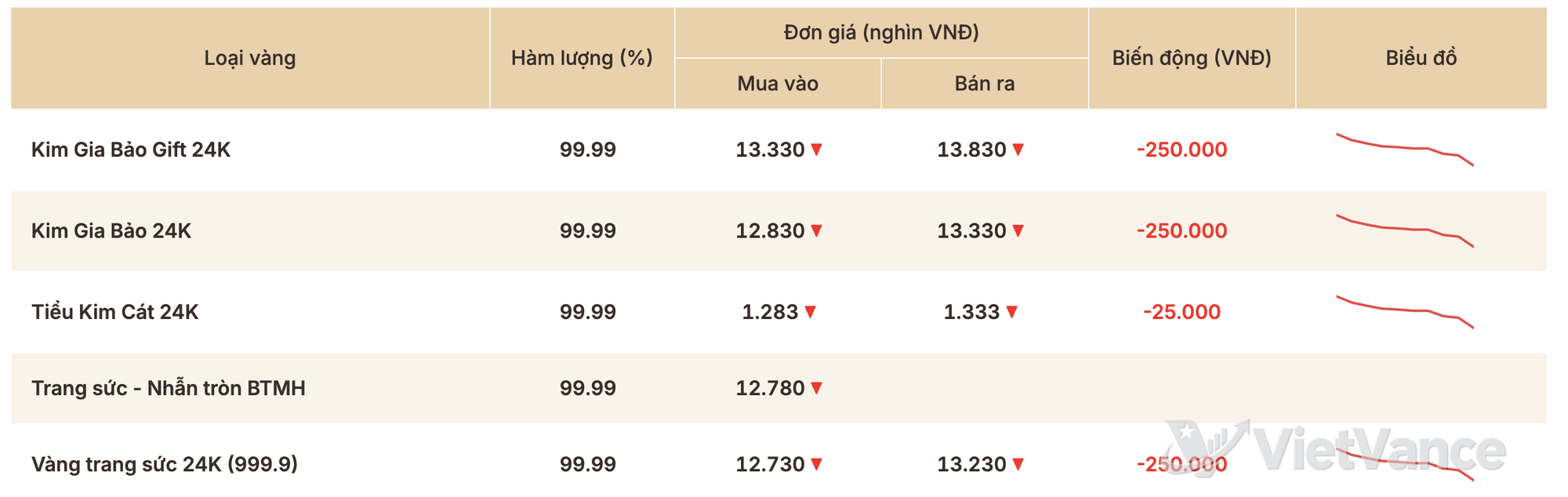
Illustration of the spread between gold buying and selling prices.(VietVance)
To recover this cost, the dealer’s buying price at the time of resale must reach the price the customer originally paid. To make a profit, it must exceed that price. So even if the quoted selling price rises, buyers may still lose money if the buying price when they resell remains below their purchase cost.
The spread varies by type of gold, dealer and market conditions. Before buying, customers should compare both buying and selling prices and check the dealer’s buyback policy. After buying, they should keep the invoice and a record of the amount actually paid, then compare that amount with the buying price at the time of resale to calculate their actual profit or loss.
Source: VietVance