Hanoi Introduces New Measures to Advance 253.5 km of Urban Rail
The Hanoi People’s Council has adopted a resolution introducing special measures for urban rail construction, including changes to land acquisition, contract pricing and funding oversight. Construction began on five lines on June 22, 2026. The lines are planned to span about 253.5 km with 163 stations and are targeted for completion by 2030.

The Hanoi People’s Council adopted Resolution No. 101/2026/NQ-HĐND, dated November 4, 2026, to pilot special measures for urban rail investment and construction. Hanoi had begun construction on Lines 1, 2, 8, 10 and 14 simultaneously on June 22. The five planned lines total about 253.5 km, with 163 stations, and are targeted for completion by 2030. Funding needs for the urban rail network from 2026 to 2030 are estimated at more than VND 1 quadrillion, including about VND 900 trillion for these five priority lines.
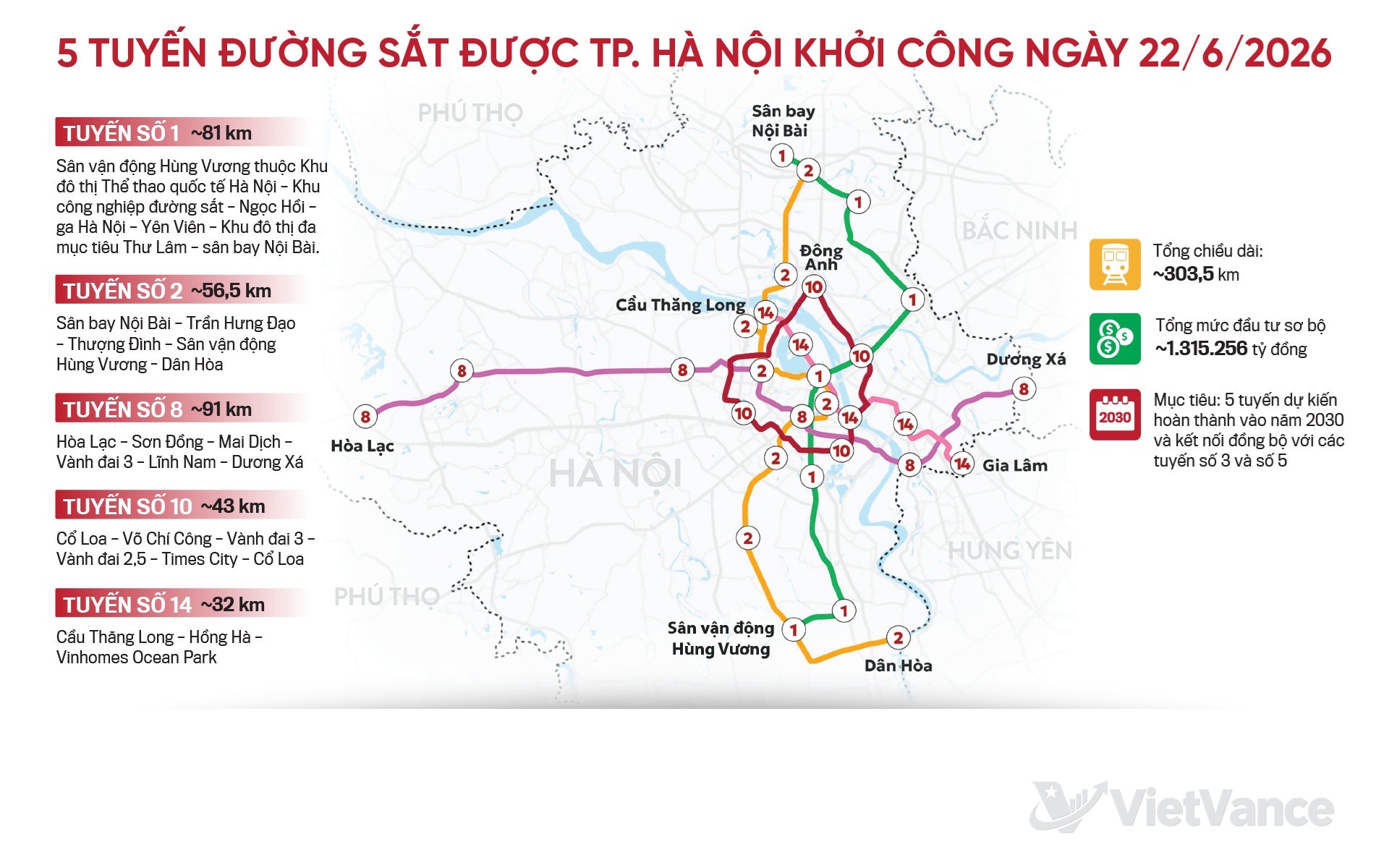
Hanoi began construction on five urban rail lines simultaneously on June 22, 2026.(VietVance)
The resolution allows compensation, resettlement, land acquisition and utility relocation to proceed directly on the basis of project requirements and approved detailed plans or overall site plans, without separately preparing and approving a land acquisition subproject. Local authorities along the routes are responsible for handing over construction sites on schedule. Strategic contractors undertake surveying, design, technology selection and construction, and are responsible for schedules, quality and safety; project owners conduct independent checks and supervision.
To control costs, the average contract price for underground sections is capped at USD 120 million per kilometer, excluding value-added tax, land acquisition and other costs specified in the resolution. It must also remain within the approved preliminary funding requirement. Contract prices are tied to the results of Vietnam’s State Audit: if the audited amount is lower than the agreed price, the contract price is reduced accordingly. Contractors must also open dedicated accounts at commercial banks in Hanoi to receive advance payments and payments for work. Project owners may obtain account balances and transaction records every two weeks.
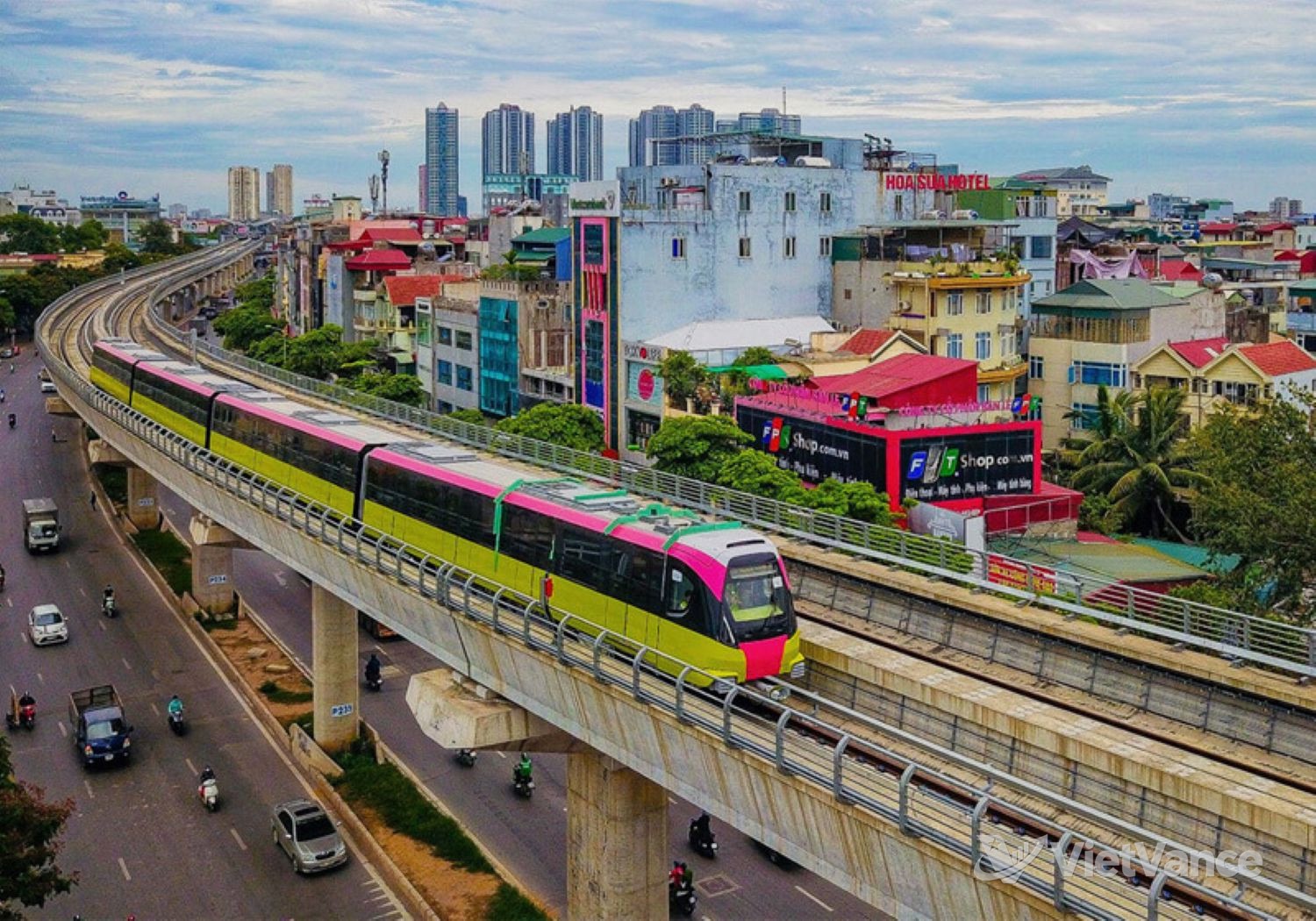
Hanoi has introduced special measures for urban rail investment and construction to advance rail infrastructure development.(VietVance)
Funding sources include Hanoi’s municipal budget, central government support, official development assistance, local government bonds and revenue from land development under a transit-oriented development model. The resolution also requires contractors to transfer technology, hand over technical documents, system interfaces and data, and manage the entire project lifecycle digitally, from surveying through operations and maintenance. Whether these measures support the five lines’ progress as planned will depend on their implementation.
Source: VietVance