Ho Chi Minh City Targets $2 Trillion to $2.5 Trillion Economy by 2050
Ho Chi Minh City has unveiled its master plan for 2025–2050, targeting GRDP of $2 trillion to $2.5 trillion and a population of about 27 million by 2050. The plan identifies technological innovation, the digital economy and high value added services as drivers of growth.

On November 23, the Ho Chi Minh City People's Committee unveiled its master plan for 2025–2050, proposing a multi-center metropolis driven by five growth poles. The plan was approved on October 31, 2026. Under the plan, the city's gross regional domestic product (GRDP) is projected to reach $2 trillion to $2.5 trillion by 2050, with GRDP per capita of at least $90,000. These figures are planning targets.
The plan sets a minimum average annual GRDP growth target of 10.5% for 2026–2030, with the economy reaching about $200 billion to $225 billion in 2030. The average annual growth target is at least 10% for each period from 2031 to 2045, before falling to at least 6% for 2046–2050. The target economic size is $400 billion to $450 billion by 2035 and $1.3 trillion to $1.7 trillion by 2045.
To reshape its growth model, Ho Chi Minh City plans to raise productivity and develop technological innovation, the digital economy and high value added services. The plan aims for the digital economy to account for about 30% to 40% of GRDP by 2030 and about 60% by 2035. At both milestones, the city also plans to keep society-wide research and development spending at about 2% to 3% of GRDP and allocate about 4% to 5% of total annual budget spending to science, technology, innovation and digital transformation.
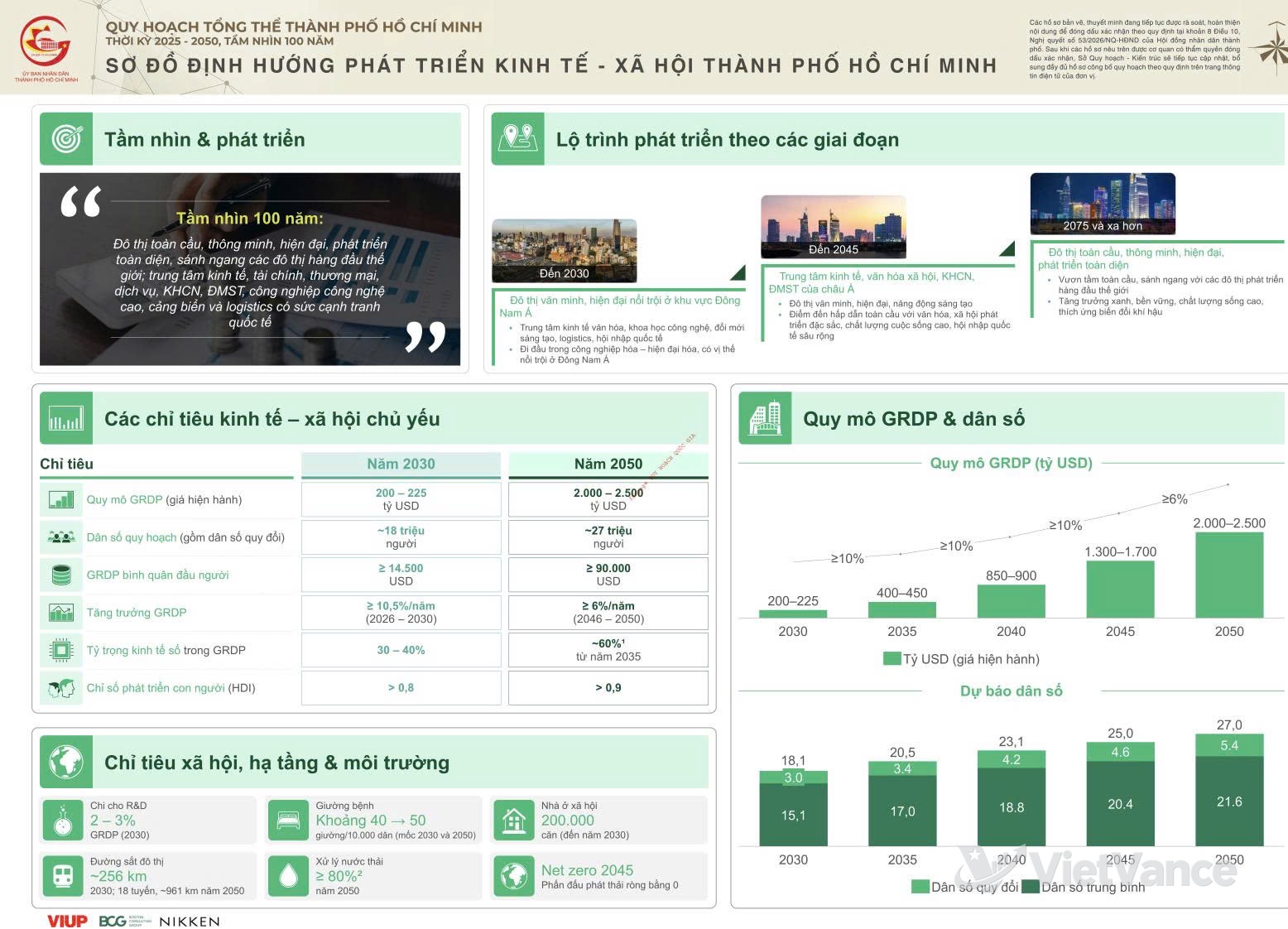
Socioeconomic development directions in Ho Chi Minh City's master plan.(VietVance)
The plan calls for developing data centers, cloud computing and 5G and 6G networks, while promoting the use of artificial intelligence in public administration, transportation, finance, logistics and other fields. Priority technologies also include semiconductors, biotechnology and clean energy. The population targets are about 18 million in 2030 and about 27 million in 2050, including permanent residents, temporary residents staying for more than six months, and a converted population figure. Citywide construction land is projected to reach about 365,000 to 390,000 hectares by 2050.
Source: VietVance