Japan Plans to Use AI to Draft Parliamentary Answers from January 2027
Japan plans to use AI from January 2027 to help draft ministers’ answers to parliamentary questions. The application is being tested, and civil servants will have to verify its output. The government hopes it will shorten preparation time and ease overtime work.

The Japanese government plans to begin using an artificial intelligence application in January 2027 to help draft ministers’ answers to questions in the Diet. Japan’s Digital Agency is testing the application for use during the regular Diet session beginning that month. The government hopes to shorten the time needed to prepare materials and reduce prolonged overtime for civil servants.
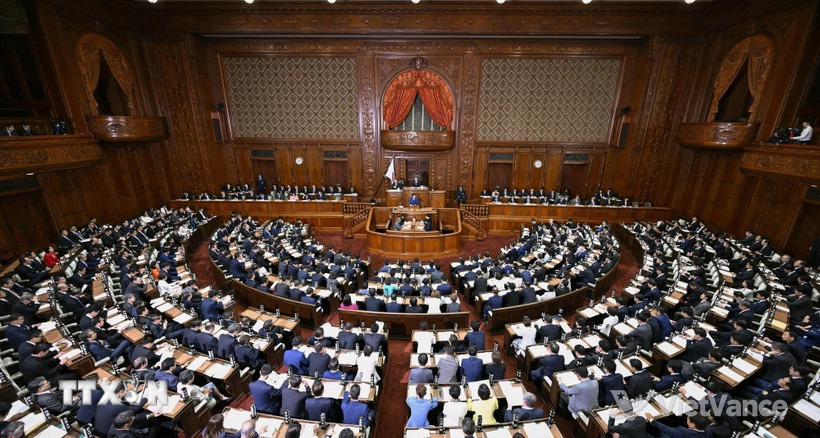
A Diet session in Tokyo, Japan. File photo.(VietVance)
The trial application runs on “Genai,” a generative AI platform for government administration. The platform can be used by approximately 180,000 civil servants in central government ministries and agencies. After lawmakers submit questions, the application can search records of previous Diet sessions, legal documents, internal materials and prepared questions and answers. Within minutes, it can identify the main issues, generate draft responses and suggest possible follow-up questions.
Under the current process, lawmakers must give advance notice of their questions so civil servants in government ministries and agencies can prepare answers for ministers. Civil servants must assess the intent of each question, consult Diet records and legal documents, and anticipate follow-up questions. Because lawmakers often submit questions late, preparation can continue into the night. A survey conducted by Japan’s Cabinet Bureau of Personnel Affairs in February and March 2025, while the budget committees of both Diet chambers were meeting, found that civil servants spent an average of 7 hours and 16 minutes preparing answers, with work estimated to finish at 1:48 a.m. the following day.
Japan’s minister responsible for digital transformation, Toshiharu Furukawa, said preparing accurate answers in limited time places a heavy burden on civil servants. He hopes AI will reduce processing time, allowing them to focus more on researching the issues and improving the quality of their answers. The Digital Agency stressed that AI can still generate incorrect information, so civil servants must check drafts against original materials and confirm their accuracy and consistency with government policy. The government plans to continue testing during the current extraordinary Diet session, which is expected to run until around mid-December 2026, then assess the application’s effectiveness, accuracy and operation.
Source: VietVance