Japanese Investment in Vietnam Shifts Toward Manufacturing and Technology Research
Japanese investment in Vietnam is expanding from official development assistance and contract manufacturing into retail, advanced manufacturing and research and development. Aeon is opening stores more rapidly, Oji is building a packaging plant, and Meiko plans a research center. Vietnamese companies are also expanding in Japan.

Japanese companies are expanding their retail, manufacturing and technology research operations in Vietnam. In October 2026, Aeon opened its 10th shopping center in Vietnam, in western Hai Phong. Tezuka Daisuke, general director of Aeon Vietnam, said the group plans to allocate about 60% of its investment funds for ASEAN to Vietnam. Aeon has opened four new shopping centers in Vietnam this year; as of November, Uniqlo and Muji had 34 and 21 stores in the country, respectively.
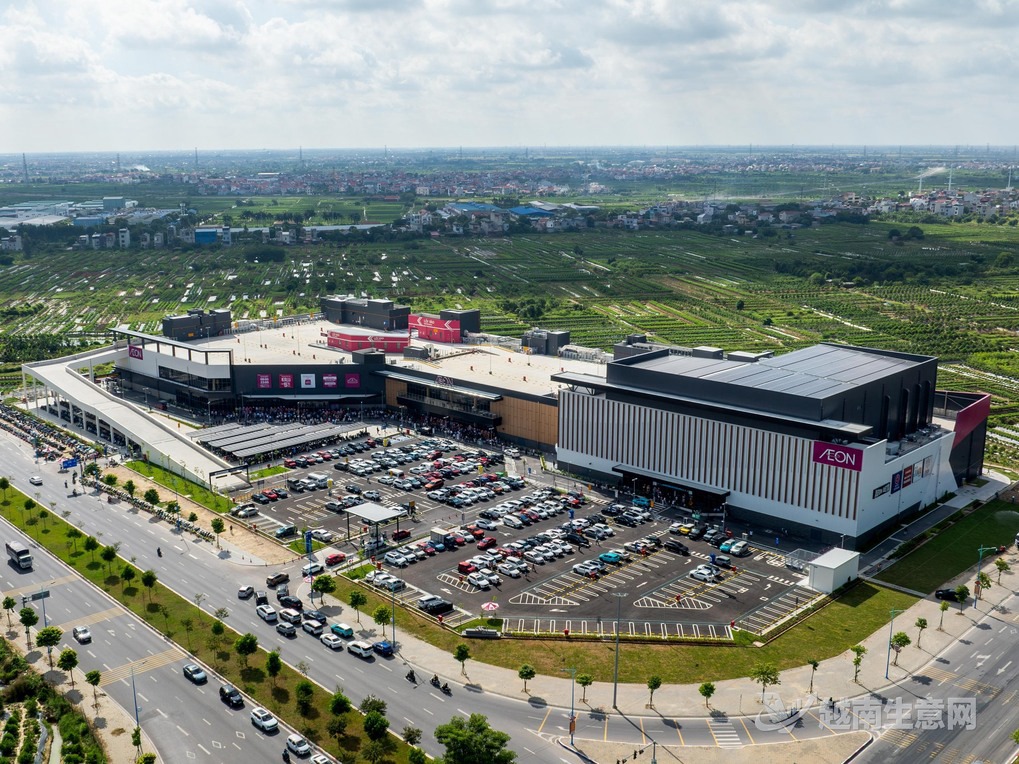
A panoramic view of Aeon Hai Duong shopping center in October 2026.(VietVance)
Lê Duy Bình, head of Economica Việt Nam, said that around 30 years ago, Japanese funding for Vietnam mainly took the form of official development assistance for projects such as transport infrastructure, hospitals and schools. It is now gradually shifting toward investment in manufacturing, retail and new technologies. He said Vietnam is also gaining importance in Japanese companies’ global supply chains.
Manufacturing investment continues to grow. The Oji Group, which entered Vietnam in 1999, now operates five subsidiaries and 10 factories there. In October 2026, the group began construction of a $110 million packaging plant at the Long Thành high-tech park in Đồng Nai, with a designed annual capacity of 8 billion cartons. Meiko has built six factories in Vietnam, with cumulative investment of $1.5 billion, and plans to establish a research and development center in Hòa Lạc, Hanoi, in 2027 for work on semiconductors, artificial intelligence and automation, as well as workforce training.
Two-way investment is also growing. Vietnamese companies FPT and CMC established legal entities in Japan in 2005 and 2017, respectively. CMC Chairman Nguyễn Trung Chính said Japanese customers’ requirements for quality, delivery schedules and stability in cooperation have pushed Vietnamese companies to improve their capabilities. On November 9, Vietnam and Japan adopted a joint vision statement calling for deeper comprehensive strategic partnership. Businesses and analysts say transparency in the investment environment, policy stability and visa procedures will affect long-term cooperation between the two countries.
Source: VietVance