Mekong Delta low-emission rice project strengthens production and sales links
A low-emission rice project in the Mekong Delta has covered more than 84,000 hectares and supported exports of certified rice. Vietnam’s Ministry of Agriculture and Environment proposes expanding the program, while financing, supply-chain coordination and benefit sharing remain key to sustaining the transition.

The Mekong Delta is advancing high-quality, low-emission rice production and strengthening links among farmers, cooperatives and businesses in cultivation, purchasing and sales. A rice value-chain transformation project running from 2023 to 2027 had covered a cumulative 84,459 hectares by the end of its third growing season, reduced greenhouse gas emissions by 320,910 tonnes of CO₂ equivalent and increased participating farmers’ production profits by 56.22%. The project involved 20,620 farming households and 163 cooperatives and cooperative groups.
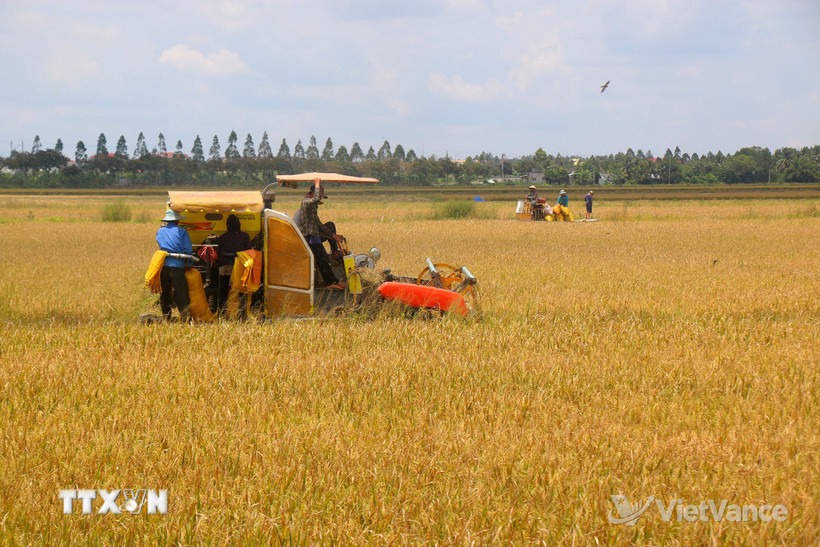
The Mekong Delta enters the rice harvest season. File photo.(VietVance)
The project links changes in production methods with branding and market development. A low-emission green rice brand was launched in April 2025; the first 500 tonnes of rice under the brand were exported to Japan that June. As of the original report, more than 123,000 tonnes of rice had been certified under the brand, including 53,897 tonnes exported to markets with demanding quality requirements. Representatives of cooperatives and farming households say the costs of new production procedures and the proceeds from the products need to be shared transparently to sustain cooperation.
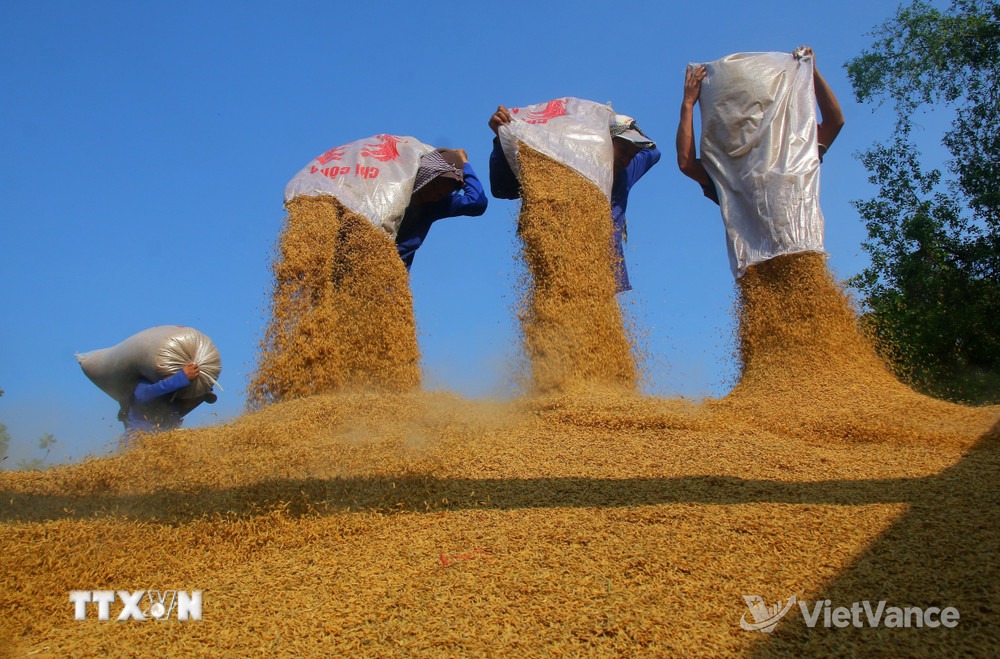
Finished rice ready for sale. File photo.(VietVance)
Vietnam’s Ministry of Agriculture and Environment has proposed adjusting the scope of its high-quality, low-emission rice program to cover all rice-growing areas in the Mekong Delta, with a goal of reaching at least 1 million hectares by 2030. Other proposed targets include cutting rice seed use by 30%, chemical fertilizer and pesticide use by 30%, irrigation water use by 20%, and greenhouse gas emissions by more than 10%. All of these remain proposed targets.
Nguyễn Phước Thiện, vice chairman of the Đồng Tháp Provincial People’s Committee, says production costs must fall and economic efficiency improve alongside emissions reductions. He proposes wider use of technology and a specific funding mechanism for large-scale production models. For equipment investment, he suggests exploring centralized agricultural machinery services to reduce upfront costs for farmers and cooperatives.
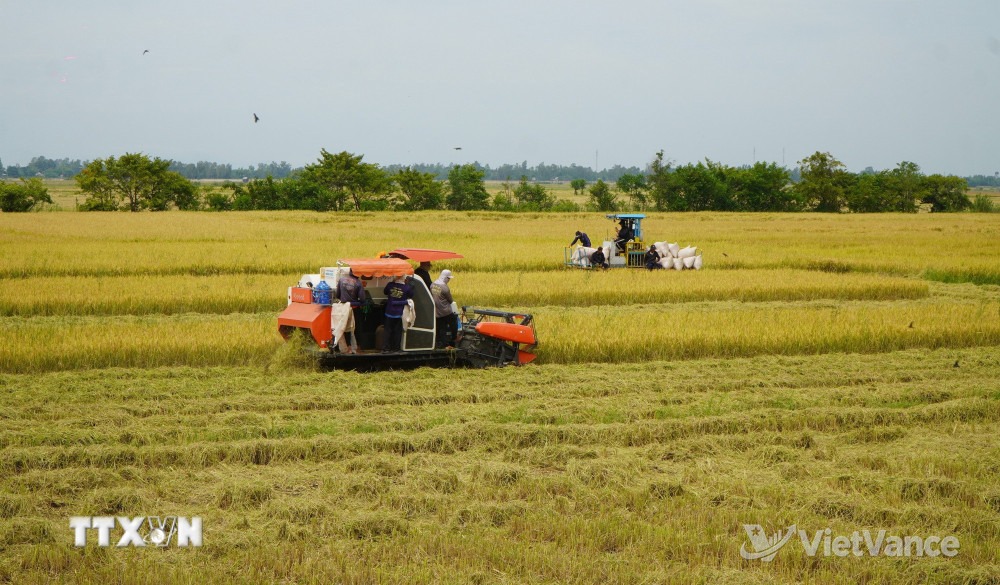
Farmers in a border area of Đồng Tháp Province use machinery to harvest rice. File photo.(VietVance)
According to a project report, cumulative credit disbursements reached about 4 trillion Vietnamese dong by the end of April 2026. Scaling up the transition will require continued financing for farmers, cooperatives and businesses to invest in infrastructure, technology, purchasing and processing. Vietnam’s Ministry of Agriculture and Environment also plans to improve its system for measuring, reporting and verifying emissions reductions. If payments based on those reductions are introduced, mechanisms for certification, revenue management and benefit sharing will also need to be clarified.
Source: VietVance