SpaceX Recovers Starship Upper Stage After Orbital Flight for the First Time
On November 14, SpaceX’s Starship returned to its Texas launch site after more than 22 hours in orbit, where launch tower arms caught its upper stage for the first time. The 15th test flight deployed 26 Starlink satellites, but the Super Heavy booster malfunctioned during its return, leaving some test objectives unmet.

On November 14, SpaceX’s Starship spacecraft returned to its launch site in Texas, United States, after more than 22 hours in orbit and was caught by mechanical arms on the launch tower. It was the first successful recovery by mechanical arms of a Starship upper stage after an orbital flight. This was the Starship system’s 15th test flight. Launched the previous day, the spacecraft completed 14 orbits of Earth.
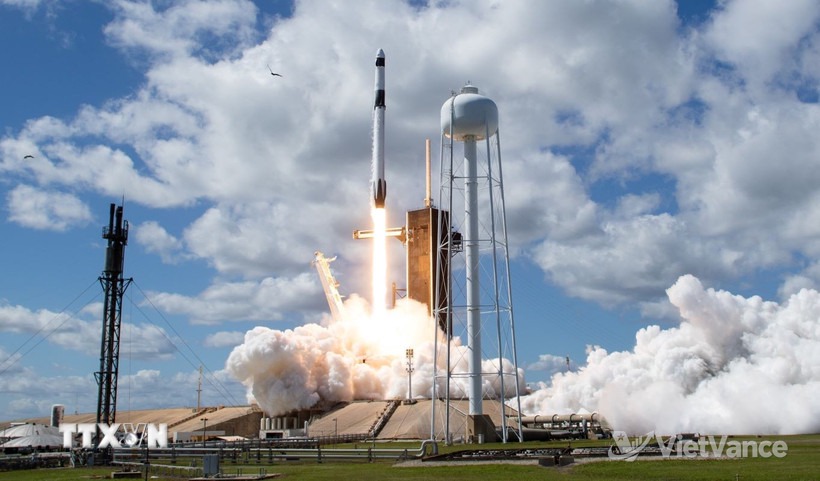
File photo of the Starship spacecraft.(VietVance)
During its return, Starship fired its engines to adjust its orientation, slowed down and descended vertically before being caught by the launch tower’s mechanical arms. Earlier, the spacecraft had deployed 26 Starlink satellites at an altitude of about 260 kilometers. After completing its time in orbit, Starship fired its engines to leave orbit and entered Earth’s atmosphere at an initial speed of about 27,400 kilometers per hour.
SpaceX said the test did not meet all its planned objectives. About 10 minutes after launch, the Super Heavy booster that carried Starship into space malfunctioned during its return. Starship is designed so that both its upper stage and booster can return to Earth and be reused; the successful recovery of the upper stage marks further progress in testing that goal.
SpaceX has invested more than $15 billion in developing Starship. The U.S. National Aeronautics and Space Administration (NASA) committed $3.2 billion under a contract worth more than $4 billion that SpaceX won in 2021, with plans to use Starship for the Artemis lunar program. NASA hopes Starship and another lunar lander developed by Blue Origin will begin crewed flights to the Moon in 2028, but both still need to complete several technical demonstrations; Starship must also demonstrate its ability to refuel in orbit.
Source: VietVance