Tây Ninh Approves Đức Hòa Urban Planning Brief Covering About 42,500 Hectares
The Tây Ninh Provincial People’s Committee has approved the brief for Đức Hòa’s urban master plan, covering seven communes and about 42,500 hectares through 2050. The area is planned as the province’s new administrative and political center, with a focus on industry, services and logistics, and a goal of meeting Vietnam’s Class II urban standards.

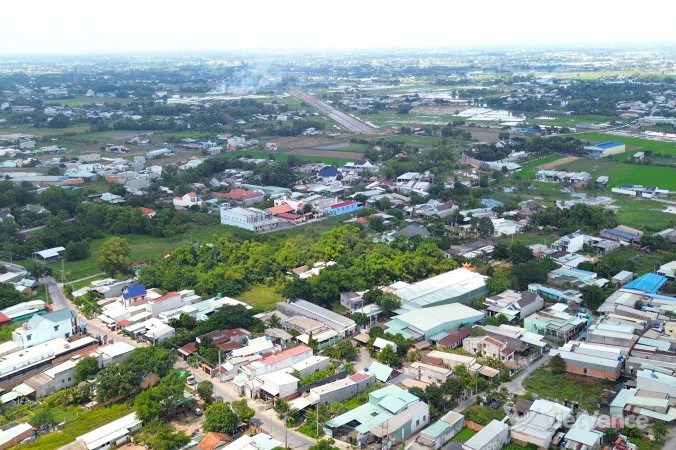
The Tây Ninh Provincial People’s Committee has approved the brief for Đức Hòa’s urban master plan. The planning area covers seven communes—Đức Hòa, Mỹ Hạnh, Hòa Khánh, Đức Lập, Hiệp Hòa, Hậu Nghĩa and An Ninh—and totals about 425.11 square kilometers, or approximately 42,511 hectares. The planning horizon extends to 2050, with a near-term phase ending in 2035.
Under the planning direction, Đức Hòa will become Tây Ninh’s new administrative and political center and develop economic, financial, commercial, logistics and high-tech industries. Local industrial parks and clusters are expected to focus on high-tech and clean industries, supporting industries and production services. The plan also calls for a multicenter urban area integrating urban development, industry, agriculture and green space.
The planning brief sets a goal for Đức Hòa to meet Vietnam’s Class II urban standards. The central Đức Hòa–Hậu Nghĩa area will be studied as the site of the province’s new administrative and political center. The plan projects a population of about 550,000 by 2035 and 750,000 by 2050, with corresponding urban residential land areas of approximately 5,000 to 5,500 hectares and 7,000 to 7,500 hectares, respectively.
The transport plan will study connections between Đức Hòa, Ho Chi Minh City and surrounding areas, and consider the use of Ring Road 4, the Ho Chi Minh Road, the western North–South Expressway and the Vàm Cỏ Đông River waterway. The plan will also study the layout of new urban areas, industrial parks, social housing and worker housing. The Tây Ninh Provincial People’s Committee has assigned the provincial Department of Construction to prepare the master plan.
Source: VietVance