Tô Lâm Visits Hồ Chí Minh’s Former Residence in Kunming
On the afternoon of November 19, General Secretary of the Communist Party of Vietnam and President of Vietnam Tô Lâm, his wife and a high-level Vietnamese delegation laid flowers and visited Hồ Chí Minh’s former residence in Kunming, China. In the visitors’ book, Tô Lâm thanked the Chinese side for restoring and preserving the site.

On the afternoon of November 19, General Secretary of the Communist Party of Vietnam and President of Vietnam Tô Lâm, his wife and a high-level Vietnamese delegation laid flowers and visited the site of Hồ Chí Minh’s former residence in Kunming, Yunnan province, China. The visit was part of Tô Lâm’s itinerary during the 33rd APEC Economic Leaders’ Week and his bilateral work in China.
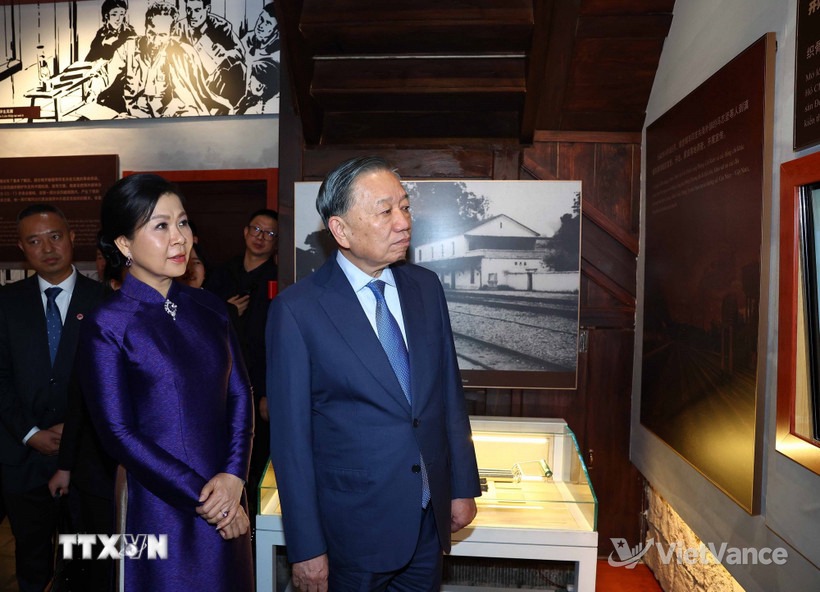
Tô Lâm and his wife tour the site of Hồ Chí Minh’s former residence in Kunming.(VietVance)
The site is at 89–91 Nanhua Shan Street in Kunming, where Hồ Chí Minh lived and worked during his revolutionary activities in the city. Tô Lâm and the delegation viewed artifacts, photographs and documents preserved there, learning about Hồ Chí Minh’s activities at the time and his interactions with Chinese leaders and the public.
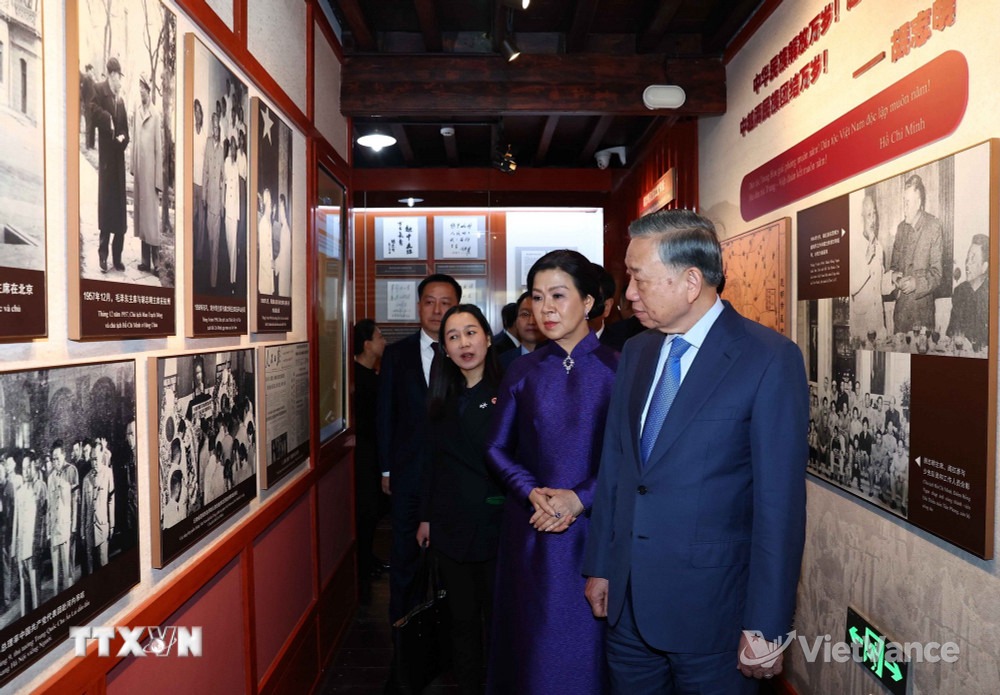
Tô Lâm and his wife tour the site of Hồ Chí Minh’s former residence.(VietVance)
The former residence lies within a protected historic and cultural district in Kunming and is currently managed by the culture and tourism authorities of the city’s Wuhua District. It was designated a provincial-level protected cultural relic in 2019. Relevant Yunnan provincial authorities restored and opened it in 2022, and it officially opened to the public free of charge on March 25, 2023. It has since received tens of thousands of visitors.
Writing in the visitors’ book, Tô Lâm said he was moved to visit the place where Hồ Chí Minh had lived. He said the site bears witness to a period of Hồ Chí Minh’s revolutionary activities and reflects the deep ties between Vietnam and China. He thanked the Chinese side, particularly the relevant authorities in Yunnan, for restoring and preserving the site.
Source: VietVance