UOB Survey: Vietnam Leads ASEAN in Consumer Confidence
A 2026 UOB survey puts Vietnam’s consumer confidence index at 63 points, the highest in ASEAN, though down four points from the previous year. Concern about living costs has risen, while respondents report strong savings habits and confidence in managing their finances.

UOB’s seventh ASEAN consumer sentiment survey shows that Vietnam’s consumer confidence index reached 63 points in 2026, the highest in ASEAN. It fell four points from the previous year but remained nine points above the ASEAN average. The share of Vietnamese respondents with positive views of current economic conditions and future prospects was 84% in each case. The index reflects consumers’ assessments of economic conditions, the economic outlook and their personal finances.
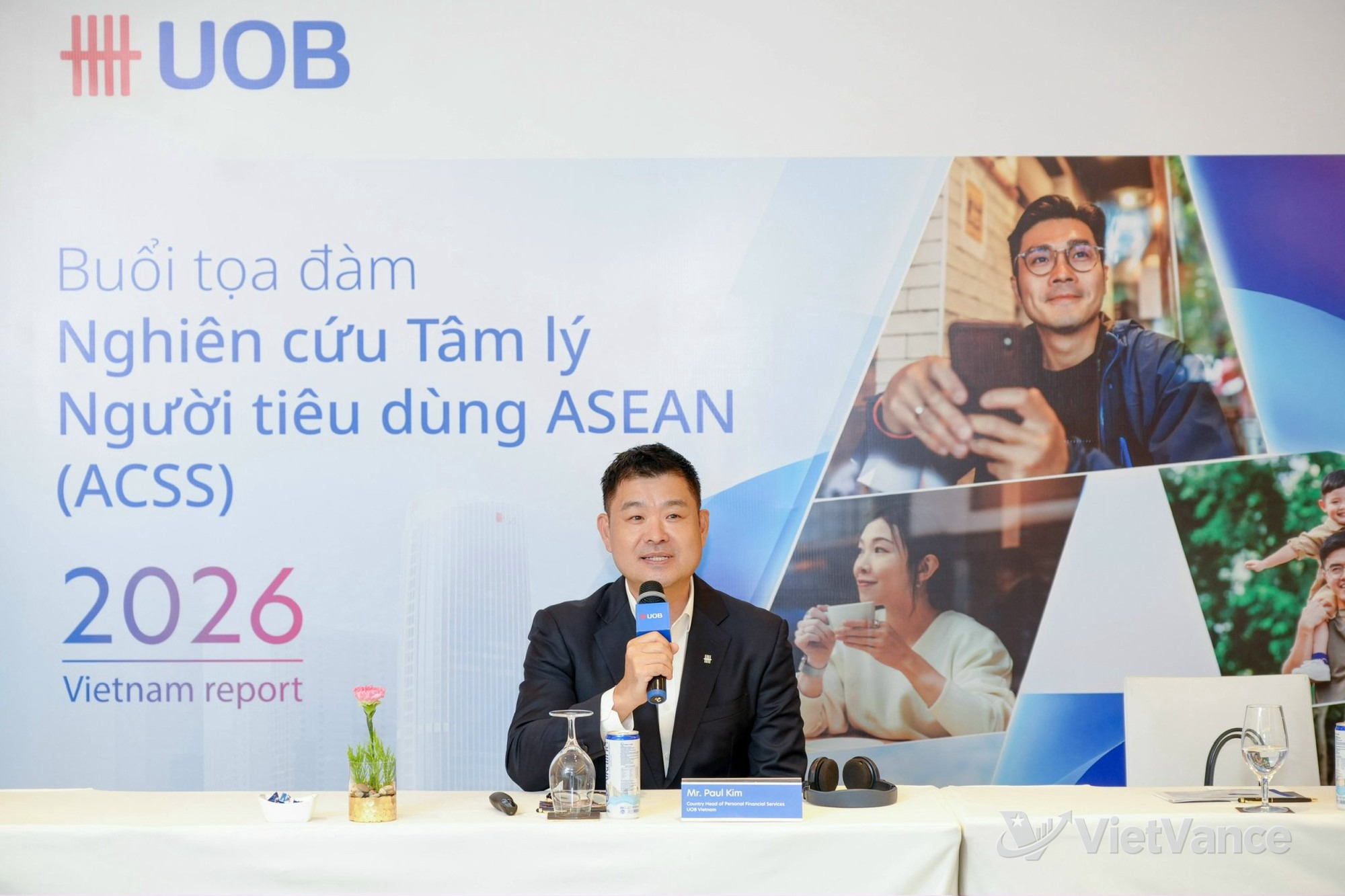
A UOB survey shows that Vietnam had ASEAN’s highest consumer confidence index in 2026.(VietVance)
Alongside their optimism, Vietnamese respondents have become more concerned about immediate risks. Some 65% cited climate change, natural disasters and environmental pollution as major concerns, up four percentage points from 2025; 62% were worried about rising living costs, up eight percentage points. The shares concerned about household expenses and the global geopolitical situation were both 60%.
The survey also found that 37% of Vietnamese respondents associated wealth with meeting current needs and achieving their families’ future goals. Good health mattered to 34%, while another 34% valued having a certain level of financial assets. Some 40% of respondents were working with a financial adviser, above the ASEAN average of 32%.

UOB’s survey examines Vietnamese consumers’ views of wealth and approaches to personal finance.(VietVance)
Digital tools have become a common way to manage personal finances: 85% of Vietnamese respondents use them to manage assets, 42% hold their main investments through digital banks, and 31% use artificial intelligence to obtain financial information. For complex financial decisions, some respondents still prefer help from a relationship manager.
On financial preparedness, 92% of Vietnamese respondents said they were confident in managing their personal finances, and 89% save more than 10% of their income each month, up seven percentage points from 2025. Another 92% have established an emergency fund. However, the share who believe their current investments are sufficient to support retirement and long-term financial goals fell seven percentage points to 69%.
Source: VietVance