Former US SEC Chair Warns of AI Investment Bubble
Former US Securities and Exchange Commission Chair Gary Gensler says heavy investment in AI may have created a bubble and expects the US economy to weaken before November 2028. Research firm head Ed Yardeni believes the market may gradually absorb the risks through a valuation adjustment.

Former US Securities and Exchange Commission Chair Gary Gensler said in an interview with CNN that the AI investment boom has become a bubble. He expects US markets to undergo a valuation adjustment before the November 2028 presidential election, and the economy may also weaken. This is his assessment of the risks, not an economic change that has already occurred.
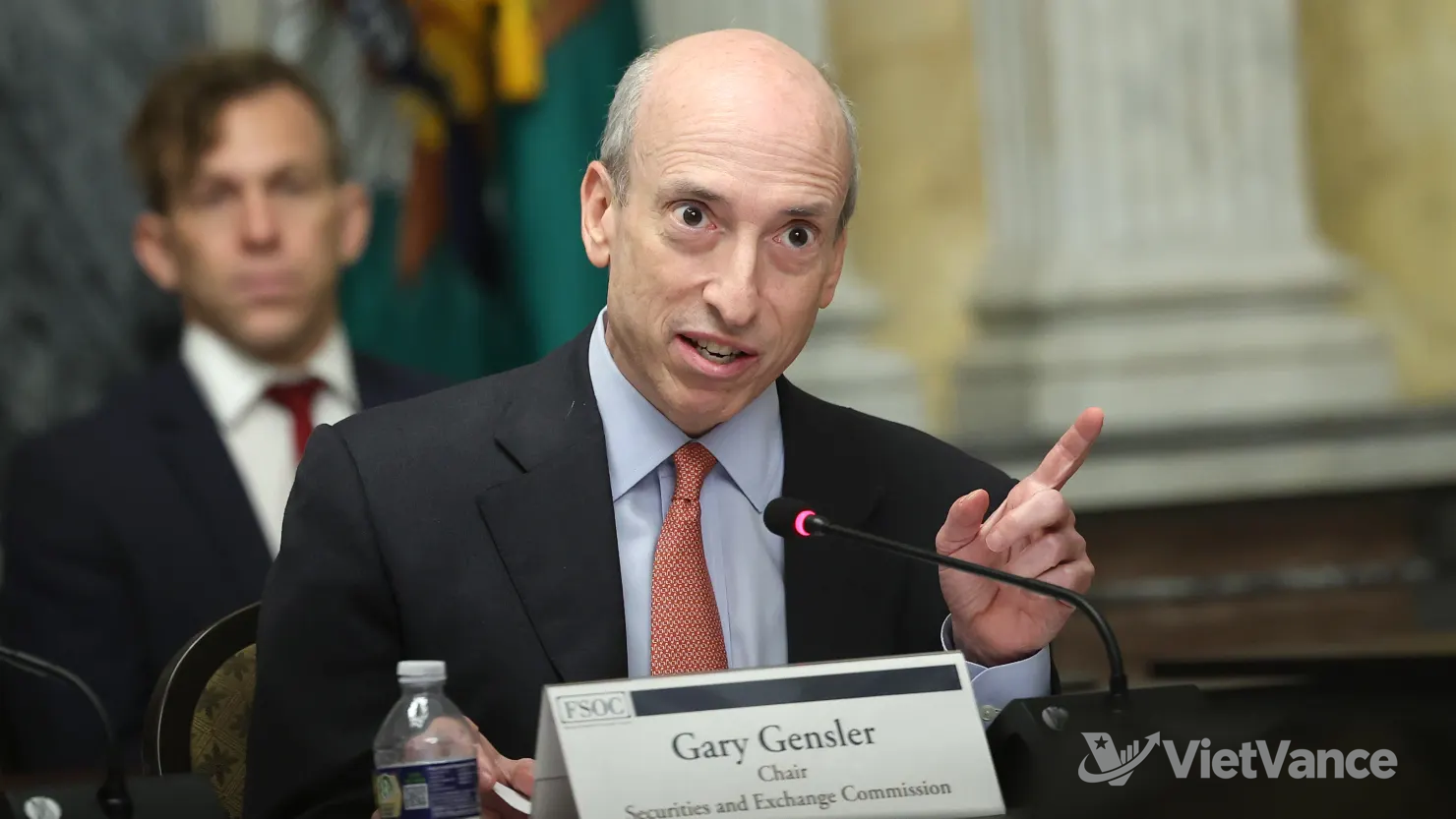
Gary Gensler pictured in 2023, when he was chair of the US Securities and Exchange Commission.(VietVance)
Gensler said that, by some estimates, as much as $800 billion a year is flowing into AI infrastructure. Companies are investing heavily in data centers, chips and other equipment, but capital is flowing in faster than profits are being generated. He said the development of railroads, electricity and the internet all saw contractions after periods of large-scale investment, and the current boom could also face an adjustment.
He is particularly concerned about excessive corporate borrowing and the difficulty of assessing risks posed by circular financing and complex arrangements kept off balance sheets. In his view, heavily indebted specialist cloud providers that rent computing capacity to AI developers may come under pressure first. He predicts that if the bubble bursts and triggers a recession, the impact could be comparable to the bursting of the dot-com bubble in the early 2000s, but would not be as severe as the 2008 financial crisis.
Ed Yardeni, head of a research firm, takes a different view. He says that although AI-related stocks have fallen significantly recently, investors have not panicked, and the market is more likely to gradually absorb excessive valuations. He acknowledges that the scenario Gensler describes is possible, while arguing that concern about a bubble helps curb unsustainable stock price gains.
Source: VietVance