US and China Advance 6G Development, Target Initial Commercial Rollout Around 2030
The US is advancing 6G spectrum research and international standards, while China has launched trials in eight provincial-level regions. Both target initial commercial rollout around 2030, but the timetable remains uncertain. Network construction, compatible devices and common standards are still needed.

The US and China are advancing research and development of sixth-generation mobile communications technology, with both targeting around 2030 for initial commercial 6G deployment. The US is focusing on spectrum research and international standards, while China has launched trials in eight provincial-level regions. These timelines still depend on progress in technology development, network construction and device compatibility.
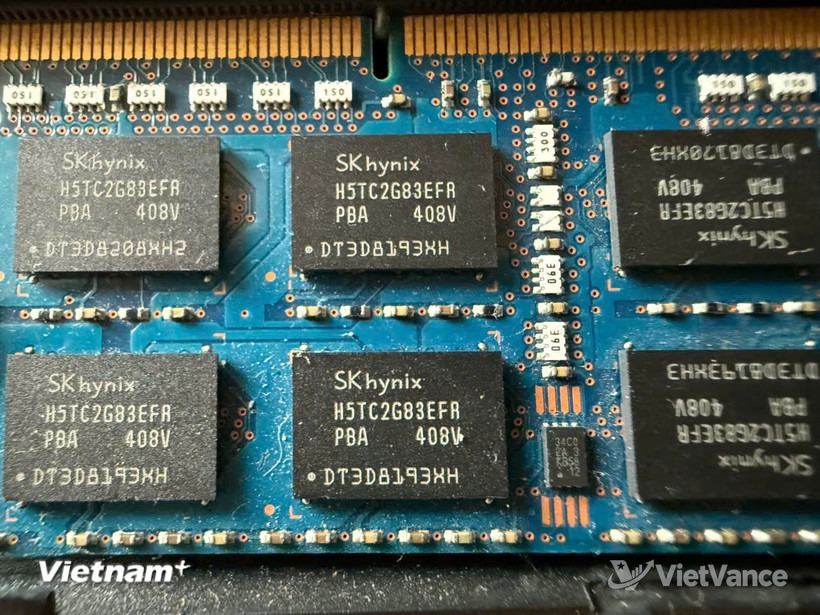
Illustration of sixth-generation mobile communications technology.(VietVance)
6G is envisioned as offering faster data transmission, greater capacity and lower latency than 5G, while integrating artificial intelligence more deeply into network design and operations. Networks could allocate resources automatically, respond to demand and potentially expand coverage through integration with satellite technology. These capabilities remain in the research and testing stage.
The US plans to study the 7.125–7.4 GHz band to assess whether existing federal systems can move to other bands, including 7.4–8.4 GHz, without significantly affecting national security missions or power grid operations. It also hopes to promote international spectrum coordination and common standards. Preparations are expected to continue through the end of 2029. The first commercial 6G services are expected around 2030, but that timing remains uncertain.
China recently announced a plan for next-generation information and communications infrastructure through 2030, covering 6G, 5G-Advanced, 10-gigabit optical networks and satellite internet. China’s Ministry of Industry and Information Technology said it plans to expand AI computing capacity and aims to complete most of its low-Earth-orbit satellite internet system by 2030. 6G trials cover eight provincial-level regions, including Beijing, Shanghai and Guangdong, and focus on network equipment, chips, satellite integration and industrial applications. Research and testing are expected to continue from 2026 to 2029.
6G is also expected to support autonomous driving, smart infrastructure and integrated sensing technology that uses radio signals to detect objects and environmental conditions. Whether these applications materialize will depend on technological progress, investment and the availability of compatible devices. Even after the first commercial networks launch, broader coverage could take several more years.
Source: VietVance