US Judge Again Blocks Executive Order Restricting Birthright Citizenship
A federal judge in Washington ruled on November 25 to suspend a Trump administration executive order issued in August 2026 that restricts birthright citizenship. The judge found it inconsistent with the US Supreme Court’s interpretation of the 14th Amendment. The White House opposed the ruling, and the administration is expected to appeal.

A federal judge in Washington, the US capital, ruled on November 25 to suspend enforcement of an executive order issued by the Trump administration in August 2026. The order sought to exclude some children born in the United States from recognition as citizens. The ruling marks another judicial setback for the administration’s effort to change birthright citizenship policy.
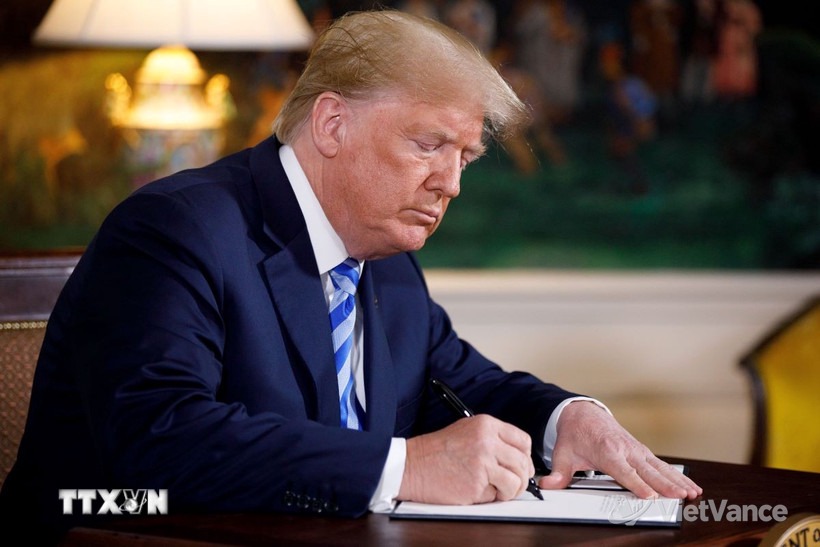
US President Donald Trump signs an executive order at the White House. File photo.(VietVance)
In his 67-page ruling, Judge Christopher Cooper found that the order was inconsistent with the US Supreme Court’s interpretation of the 14th Amendment to the Constitution. Under the precedent he cited, people born on US territory and subject to US jurisdiction are entitled to citizenship; the president has no authority to create new exceptions on his own.
The first related executive order, which Trump signed on his first day back in the White House in January 2025, targeted US-born children whose mothers were in the country unlawfully or held only temporary residency status and whose fathers were neither US citizens nor lawful permanent residents. The second order, issued in August 2026, expanded the proposed exclusions to include children of people designated as alien enemies or members of terrorist organizations or gangs, children of certain employees of foreign governments and international organizations, and children born in the United States through commercial surrogacy to foreign parents.
Federal Judge Deborah Boardman in Maryland had already ordered parts of the second executive order blocked on September 2. Cooper’s ruling extends protection to other affected children. He found that the traditional exception concerning children of hostile forces applies when a foreign military actually occupies US territory; commercial surrogacy also does not change the fact that children born in the United States are subject to US jurisdiction.
The White House opposed the ruling. Spokesperson Lauren Bis said the order was consistent with the Supreme Court’s legal principles and analysis. The Trump administration is expected to appeal and may also ask a court to allow the order to take effect temporarily while litigation continues.
Source: VietVance