US Proposes 35% Tariff Ceiling on Vietnamese Goods, Putting Short-Term Pressure on Stocks
The US Trade Representative has preliminarily proposed a Section 301 tariff of up to 35% on some Vietnamese goods, potentially falling to 20% if the two countries reach a reciprocal trade agreement. ABS Securities data show Vietnamese stocks have typically fallen initially after negative tariff events, while subsequent performance depends on policy and negotiations.

The Office of the US Trade Representative has issued preliminary findings in its Section 301 investigation into structural overcapacity and proposed a 35% tariff ceiling on Vietnamese goods. The rate could fall to 20% if Vietnam and the US reach a reciprocal trade agreement that addresses the investigation’s findings. Both figures represent the proposed total additional Section 301 tariff and would not be added to the current 12.5% rate.
The US is proposing a Section 301 tariff of up to 35% on Vietnamese goods, drawing attention to the outlook for Vietnamese stocks.(VietVance)
The proposal includes several categories of exceptions. Goods subject to Section 232, including steel and aluminum, cars and parts, wood products and semiconductors, fall outside its scope; certain raw materials, energy products and agricultural goods are also exempt. Vietnam’s Ministry of Industry and Trade says the exemption list covers 2,121 eight-digit HS tariff lines. Detailed product lists are still needed to estimate the actual average tariff rate for each industry.
ABS Securities believes Vietnam may make commitments to buy more US goods, tighten rules of origin and strengthen enforcement of intellectual property rights, among other measures. On November 21, 2026, the Vietnamese government issued a resolution on an overall plan to manage trade surpluses and prevent international trade risks from 2026 to 2030, including a ban on imports of goods linked to forced labor. The Ministry of Industry and Trade plans to submit rebuttal comments to the US by the January 5, 2027, deadline and speak at a hearing on January 25.
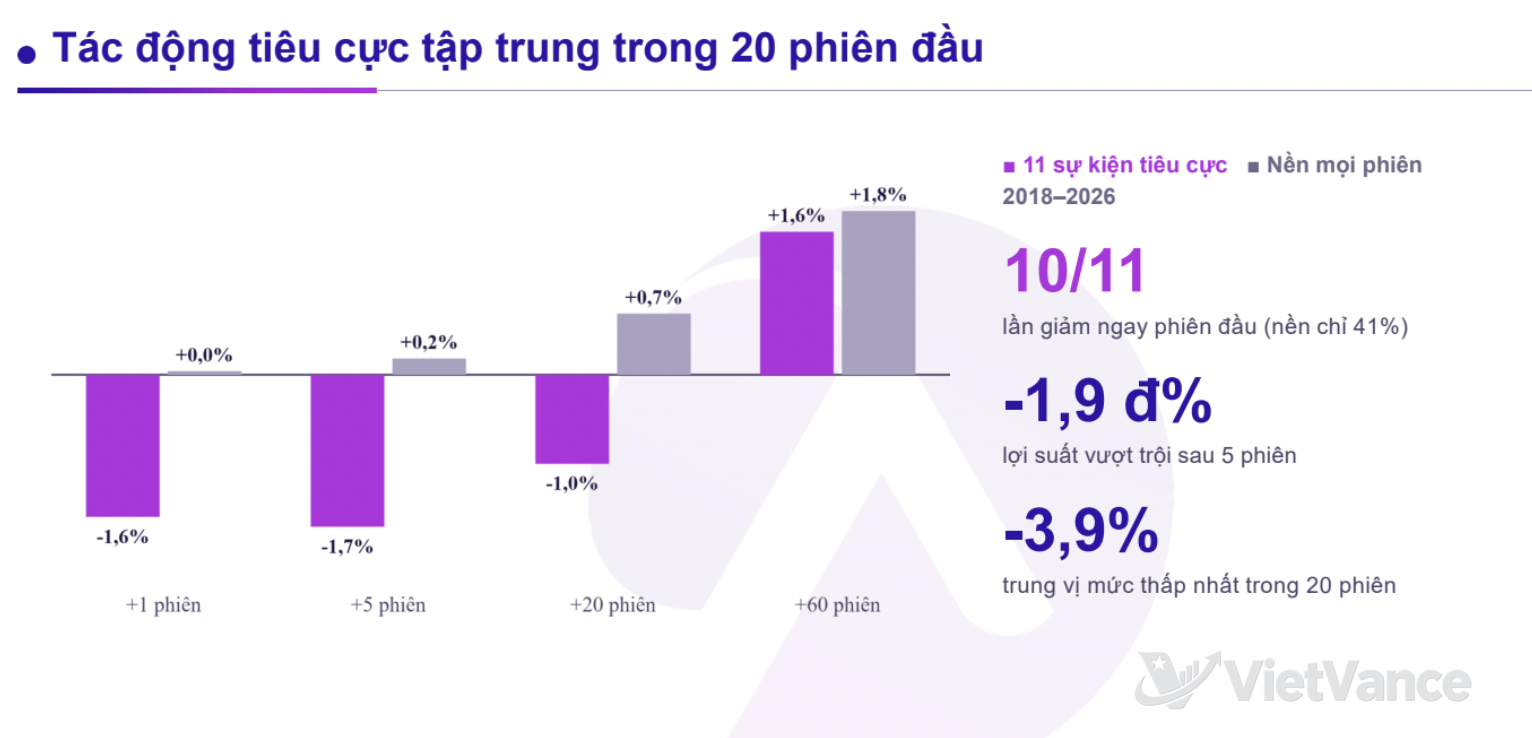
According to ABS Securities, after 13 tariff-related events from 2018 to 2026, the VN-Index fell by an average of 1.4% after one trading session and 0.8% after five sessions. Its average change turned positive, rising 0.8% after 20 sessions and 3.6% after 60. In 10 of the 11 negative events, the index fell in the first session. These historical results cannot determine how the market will perform after this proposal; its response still depends on negotiations and whether the tariffs are implemented.
The firm said the US has identified textiles and garments, footwear, shipbuilding, cement, electronics, information technology and telecommunications as sectors of concern over transshipment and overcapacity. Companies with substantial exports to the US that face scrutiny of product origins need to watch for potential effects on orders, profit margins and competitiveness.
Source: VietVance