Vietnam passes 2027 budget, targets revenue growth of about 9.1%
Vietnam’s National Assembly passed the 2027 state budget resolution on November 9, setting revenue at VND 3,334.338 trillion and spending at VND 4,073.935 trillion. It asked the government to target revenue growth of about 9.1% over the actual 2026 level and to save part of public investment and recurrent spending from the start of the year.

Vietnam’s National Assembly passed the 2027 state budget resolution on November 9, with all 471 members present voting in favor. The resolution sets 2027 state budget revenue at VND 3,334.338 trillion and spending at VND 4,073.935 trillion; the budget deficit is VND 739.597 trillion, equivalent to 4.5% of GDP. Total state budget borrowing is VND 1,279.717 trillion.
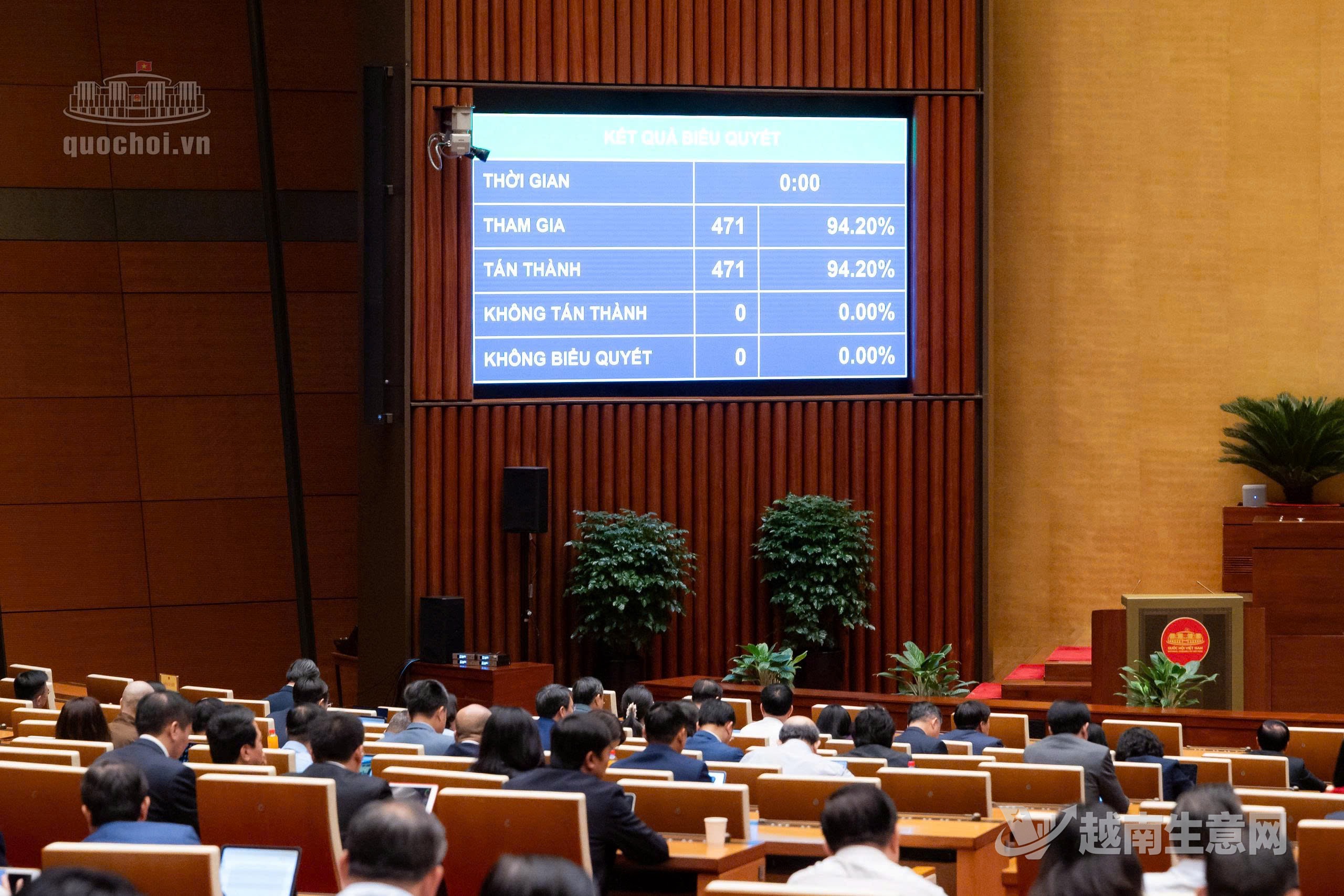
Vietnam’s National Assembly passed the 2027 state budget resolution with 471 votes in favor.(VietVance)
The National Assembly asked the government to aim for 2027 budget revenue growth of about 9.1% over the actual 2026 level. The government must continue improving the tax system, broaden the tax base, and strengthen efforts to combat revenue losses, transfer pricing and tax evasion, while collecting tax arrears. E-commerce, businesses operating on digital platforms and mineral extraction were identified as areas requiring tighter tax administration.
On spending, the resolution requires a 5% saving in public investment expenditure when the budget is allocated at the start of the year, with the funds directed to priority and urgent projects. It also requires a 10% saving in recurrent expenditure to fund social security policies. The recurrent spending savings exclude salaries, salary-related payments and personnel expenses. Budget allocations must also take account of the ability of agencies and localities to implement projects and disburse funds.
The resolution calls for tighter management of the budget deficit, local government borrowing and government debt repayment obligations, as well as stronger oversight and auditing of budget implementation. The use of accumulated central funds for salary reform will be expanded to social policies, including pensions and social insurance benefits. Local governments may also use their remaining salary reform funds for centrally issued social security policies and staff reduction policies.
Source: VietVance