Vietnam plans to mobilize up to VND 6,400 trillion for investment in 2027
Vietnam’s prime minister told the National Assembly on November 12 that total investment in 2027 will require VND 6,000 trillion to VND 6,400 trillion, equivalent to 36% to 38% of GDP. The government plans to raise funds through the budget, bonds, credit, and domestic and foreign investment while improving the efficiency of capital use.

Vietnamese Prime Minister Lê Minh Hưng told the National Assembly on the afternoon of November 12, 2026, that total social investment in 2027 would require about VND 6,000 trillion to VND 6,400 trillion, equivalent to 36% to 38% of GDP. Of that, development investment spending from the state budget is expected to be about VND 1,760 trillion, accounting for 27% to 29% of total investment.
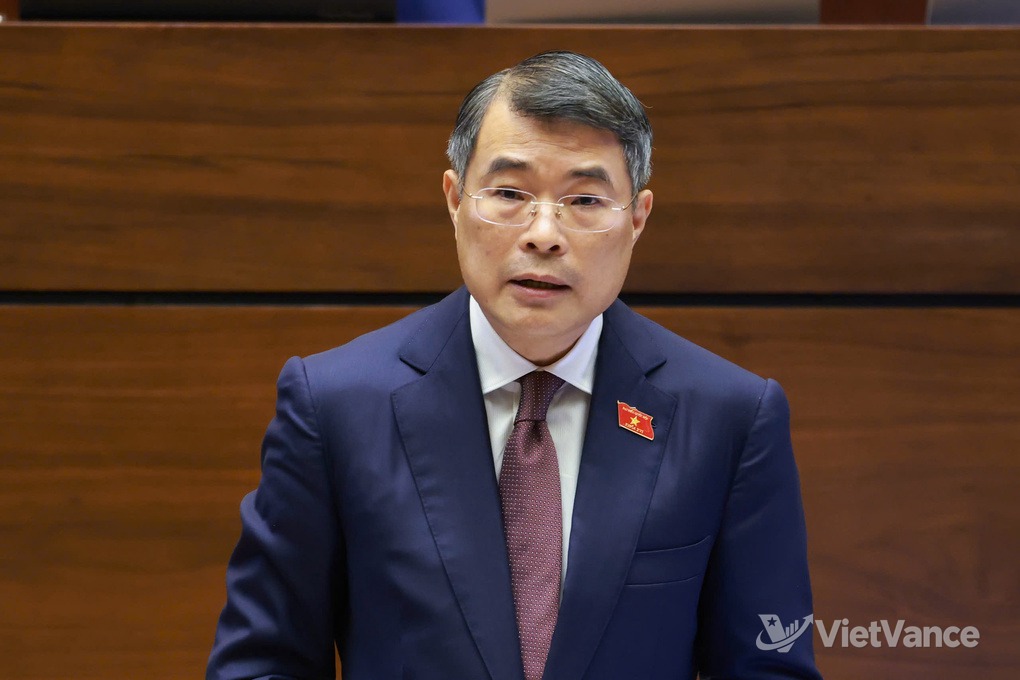
Vietnamese Prime Minister Lê Minh Hưng speaks before answering questions from National Assembly deputies on the afternoon of November 12, 2026.(VietVance)
To meet the funding needs, the government has set a target of increasing budget revenue by about 9.1% in 2027 and plans to save 5% of public investment spending and 10% of recurrent spending. Other funding sources include bond issuance, official development assistance loans, bank credit, investment by state-owned enterprises, private investment, and foreign direct investment. The government also plans to develop medium- and long-term capital markets and attract international investment funds and stable, long-term foreign portfolio investment.
Lê Minh Hưng said that, alongside raising funds, Vietnam must improve the efficiency of capital use, productivity, and competitiveness. Investment resources will be prioritized for foundational industries, supporting industries, energy, materials, electronics, and semiconductors. The government will also promote high-tech, low-emission agriculture, tourism, logistics, and the diversification of export markets, while strengthening the commercialization of research results and digital transformation.
To support growth while controlling inflation, the government will adjust tax, interest rate, and exchange rate policies flexibly and ensure supplies of fuel, electricity, and essential goods. Vietnam’s consumer price index rose 4.57% year on year in the first 10 months of 2026, while the full-year inflation target is about 4.5%. The government previously cut value-added tax by 2% on certain goods and services through the end of 2026.
Lê Minh Hưng also said total social investment reached VND 3,110 trillion in the first nine months of 2026, up 15.1% year on year. Estimated budget revenue in the first 10 months reached VND 2,440 trillion, or 96.4% of the budget estimate, while public investment disbursement was nearly VND 708.6 trillion, or 74.1% of the annual plan. Over the same period, registered foreign direct investment reached USD 54.85 billion, up 74% year on year, while disbursed investment reached USD 24.08 billion, up 13.1%.
Source: VietVance