Vietnam Allows Short-Term Apartment Stays; Expert Cautions Against Overestimating Returns
Vietnam’s National Assembly passed amendments to the Housing Law on November 21, 2026, allowing qualifying apartments to be rented for short-term stays from July 1, 2027. A real estate expert says the change gives owners another rental option, but returns will depend on rent, occupancy, operating costs and policy stability.

Vietnam’s National Assembly passed amendments to the Housing Law on November 21, 2026, adding an exception for accommodation rentals to the rule barring apartments from nonresidential use and including such rentals among homeowners’ rights. The law will take effect on July 1, 2027. Owners using apartments to provide accommodation must meet security and public order requirements under the regulations on apartment building management and use. Previously, restrictions on nonresidential use under the 2023 Housing Law created legal obstacles to daily rentals.
Lê Quốc Kiên, an independent financial and real estate adviser, believes projects in city centers with concentrations of tourists and business travelers are more likely to benefit. Midrange and upscale apartments priced from about VND 80 million per square meter, or roughly VND 4 billion to VND 5.6 billion in total, may see clearer gains. Projects primarily serving owner-occupiers may see little significant change.
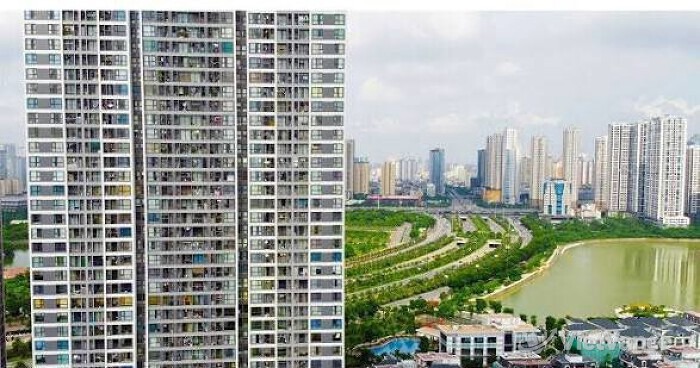
Illustration of a short-term apartment rental.(VietVance)
Lê Quốc Kiên advises buyers to base their calculations primarily on cash flow from long-term rentals. At current apartment prices, he says an annual rental yield of around 3% warrants careful consideration, 4% is acceptable and 5% is good. Calculations should assume 10 months of rental income a year, allowing for vacancies, repairs and furniture depreciation. For an apartment worth VND 6 billion, monthly rent of VND 18 million produces a 3% annual yield by this method. Monthly rents of VND 24 million and VND 30 million produce yields of 4% and 5%, respectively. These figures exclude loan interest and taxes.
Short-term accommodation businesses also face costs for furnishings, platform fees, cleaning and attracting guests. Lê Quốc Kiên gives the example of an operator renting an apartment for VND 18 million a month and then charging guests VND 1.2 million to VND 1.5 million a night. Under his assumed costs, the operator would need to rent it out for about 20 nights a month to break even. The owner’s income under the lease remains the monthly rent; any operating profit above that threshold belongs to the accommodation operator.
Lê Quốc Kiên believes apartments entering the short-term accommodation market could compete more directly with serviced apartments and hotels. Business performance will still depend on tourism seasons, occupancy, building management rules and policy stability. If an operator consistently falls short of the occupancy needed to break even, the owner could face requests for a rent reduction or early termination of the lease.
Source: VietVance