Vietnam’s National Assembly Passes 2027 State Budget Resolution
Vietnam’s National Assembly passed the 2027 state budget resolution on November 9 with all 471 members present voting in favor. The resolution covers revenue, spending, the deficit, and the allocation of funds between central and local budgets. It also sets provisions for implementing the 2026 budget and allocating public investment and recurrent spending in 2027.

On the morning of November 9, Vietnam’s National Assembly passed the 2027 state budget resolution by electronic vote, with all 471 members present voting in favor. The six-article resolution covers state budget revenue, spending and the deficit for 2027; the allocation of funds between central and local budgets; and matters concerning 2026 budget implementation, wages and social policies.
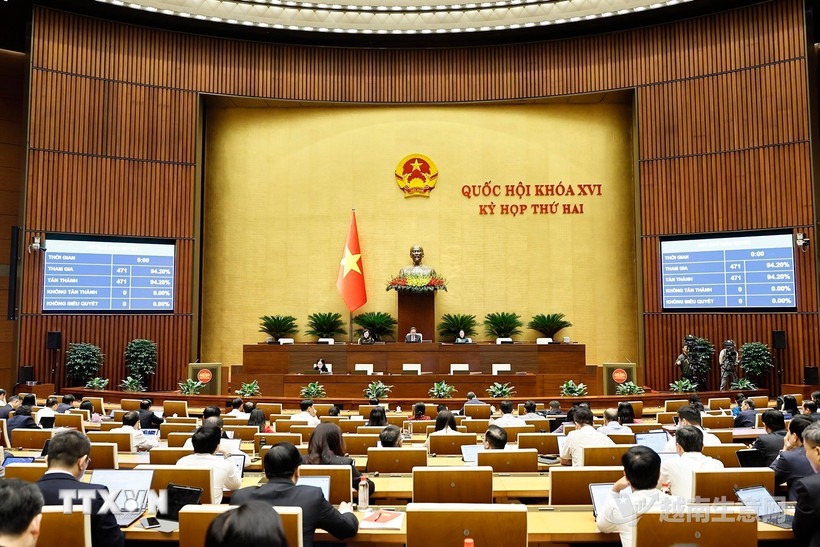
Vietnam’s National Assembly votes to pass the 2027 state budget resolution.(VietVance)
On 2026 budget implementation, the resolution requires the government to direct ministries, central agencies and local authorities to manage their budgets strictly, proactively and flexibly; strive to meet budget revenue targets; spend economically and effectively; aim to disburse all planned public investment funds; and keep the deficit, borrowing and debt repayments within approved limits.
The resolution allows savings from local recurrent spending in 2026 to fund social security policies introduced by the central government, with the remainder going to key infrastructure projects. Funds unused that year may be carried forward to 2027 for the same purposes. Funds from additional central budget revenue in 2025 earmarked for boarding schools in land border communes may also be carried forward to 2027.
For the 2027 budget allocation, the resolution requires a 5% saving in public investment spending when the budget is allocated at the start of the year, with the funds added to key and urgent projects. It also requires a 10% saving in recurrent spending within the applicable scope to supplement social security funding. The resolution further directs the government to coordinate fiscal policy with monetary and other policies, and to strictly manage budget deficits, local borrowing and government debt repayment obligations.
Source: VietVance