Vietnamese Banks’ Liquidity Improves in Q3, but Funding Pressure Persists
VIS Rating data show that Vietnamese banks’ loan-to-deposit ratio fell to 112% in the third quarter of 2026, easing short-term liquidity pressure, while profitability remained broadly stable over the first nine months. Shifts in deposit preferences, competition for deposits and demand for long-term credit continue to strain funding.

Short-term liquidity in Vietnam’s banking sector improved in the third quarter of 2026. An industry report by Vietnam Investment Credit Rating Joint Stock Company (VIS Rating) shows that the sector’s loan-to-deposit ratio fell from 114% at the end of the first half to 112% in the third quarter. VIS Rating attributed the decline mainly to slower lending as some banks approached their annual credit limits, alongside increased long-term foreign funding by ACB, HDB and TCB.
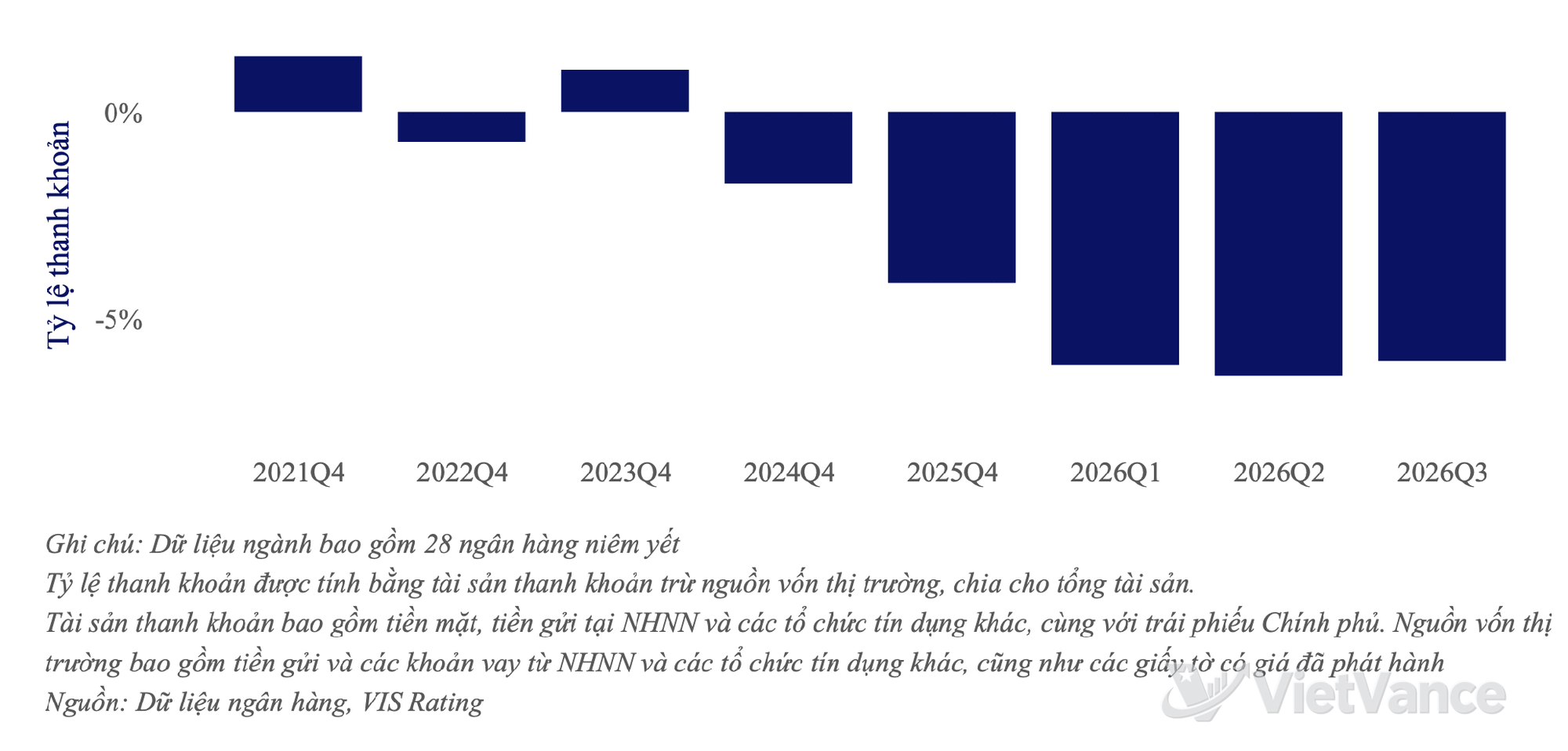
Overall liquidity in Vietnam’s banking sector improved slightly in the third quarter of 2026.(VietVance)
The report also found that banks reduced their reliance on short-term borrowing in the interbank market, easing short-term liquidity pressure. VIS Rating said Circular 50/2026/TT-NHNN eased the immediate pressure to comply with loan-to-deposit ratio requirements and supported banks’ transition to Basel III liquidity rules. On profitability, the sector’s return on average assets remained broadly stable at 1.5% in the first nine months of 2026. Higher lending yields and net interest margins at some large banks offset rising credit costs, although profitability continued to vary among banks.
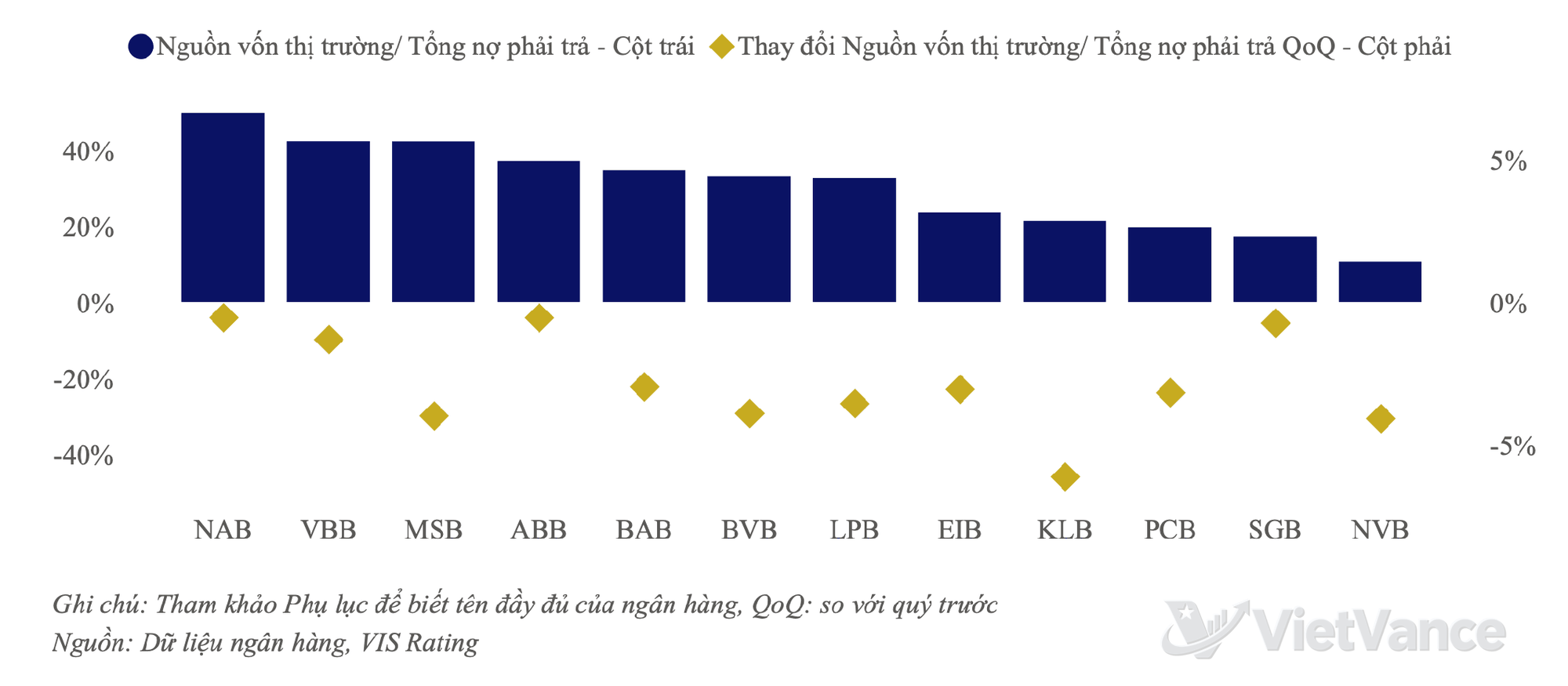
Vietnamese banks reduced their reliance on short-term borrowing in the interbank market.(VietVance)
Funding pressure remains. Nguyễn Việt Anh, TPBank’s deputy CEO in charge of strategy and governance, said at the recent Vietnam Investment Forum 2027 that credit growth had consistently outpaced deposit growth for about five years. Although the gap has narrowed somewhat recently, banks still need to balance funding costs, risk control and liquidity. VIS Rating data show that the sector’s ratio of current-account deposits to outstanding loans fell 0.5 percentage points from the previous quarter to 17.3% in the third quarter, reflecting depositors’ shift toward higher-yielding term deposits and certificates of deposit.
VIS Rating said competition for deposits continued to raise funding costs, putting pressure on net interest margins and profits at small and medium-sized banks. Long-term credit demand related to infrastructure is expected to keep pressure on bank funding over the next 12 to 18 months. The sector’s ratio of tangible common equity to total assets remained stable at 8.3% in the first nine months of 2026, but its non-performing loan provision coverage ratio fell 4 percentage points to 75% in the third quarter. Existing plans to raise equity amount to less than 8% of the sector’s tangible common equity and will take time to implement.
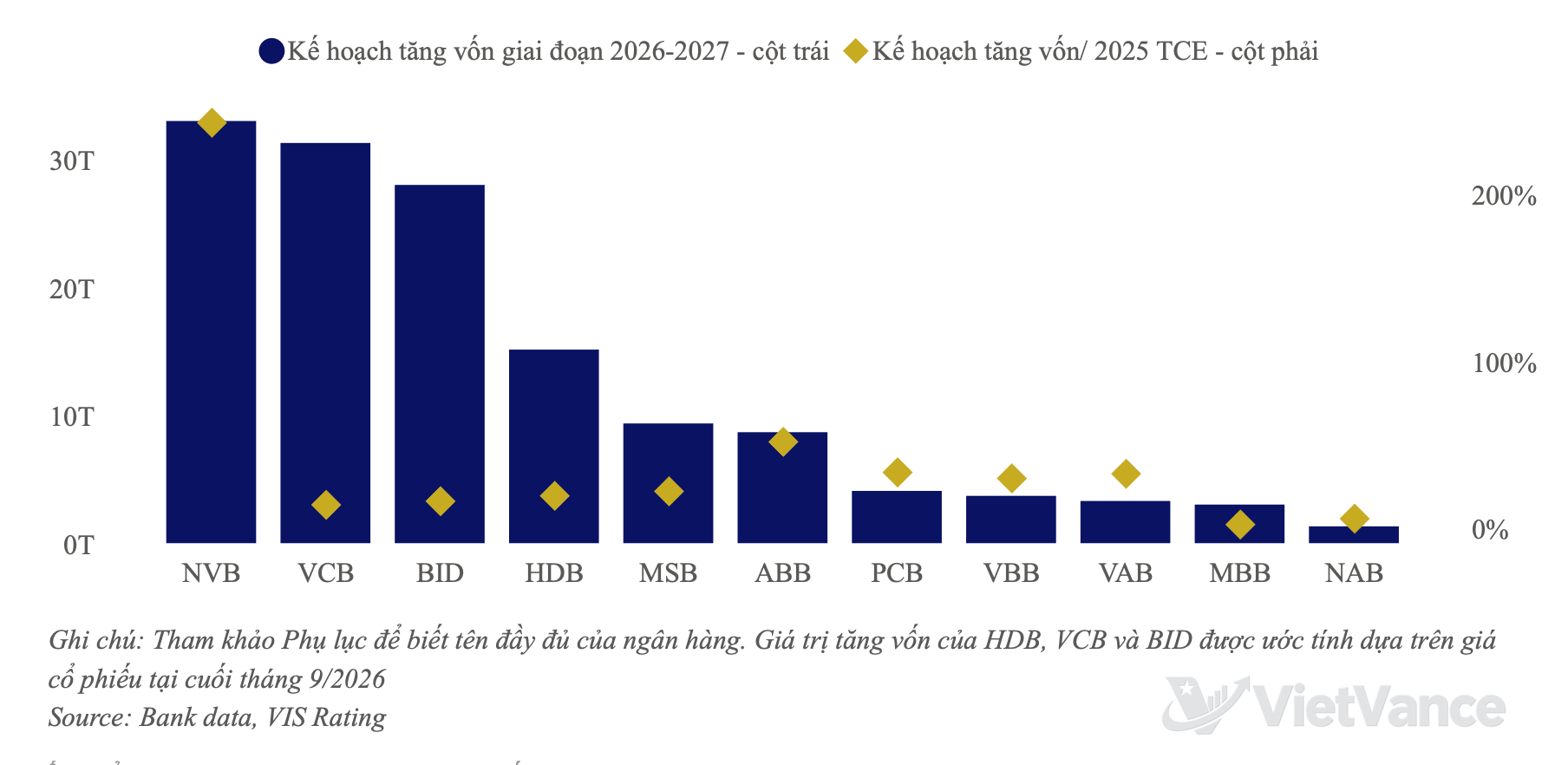
Vietnamese banks’ existing equity-raising plans remain limited in scale and will take time to implement.(VietVance)
Source: VietVance