Vietnam Allocates VND 80.4 Trillion for Wage Reform in 2027 Budget
Vietnam’s National Assembly approved the 2027 state budget resolution on November 9, allocating VND 80.4 trillion to wage reform. Budget revenue is projected to exceed VND 3,334 trillion, spending to exceed VND 4,073 trillion, and the deficit to reach VND 739.597 trillion.

Vietnam’s National Assembly passed the 2027 state budget resolution on the morning of November 9, 2026, with all participating lawmakers voting in favor. The resolution allocates VND 80.4 trillion to wage reform within a recurrent spending budget of more than VND 2,060 trillion.
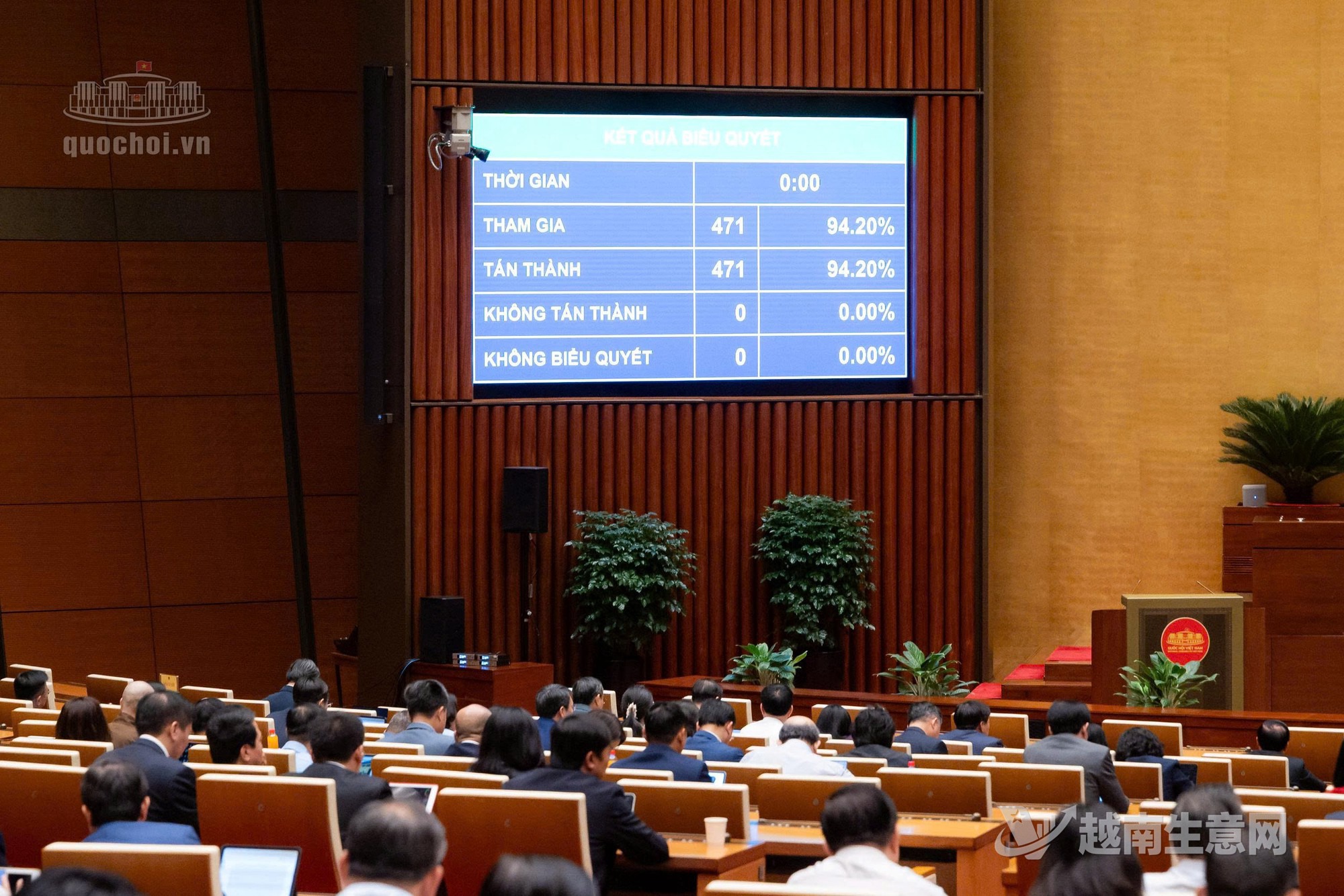
Vietnam’s National Assembly votes to approve the 2027 state budget resolution.(VietVance)
State budget revenue for 2027 is projected to exceed VND 3,334 trillion, including more than VND 1,775 trillion in central budget revenue and more than VND 1,558 trillion in local budget revenue. Budget spending exceeds VND 4,073 trillion, including more than VND 2,364 trillion in central budget spending and more than VND 1,709 trillion in local budget spending.
The resolution sets the 2027 budget deficit at VND 739.597 trillion, equivalent to 4.5% of GDP, and total state budget borrowing at more than VND 1,279 trillion. Of the recurrent spending budget, VND 980.97 trillion is allocated to the central budget and more than VND 1,080 trillion to local budgets.
For corporate and personal income taxes collected under the State Budget Law, Hanoi and Ho Chi Minh City may retain 25% of revenue collected locally; Quang Ninh and Dong Nai may retain 65%; Hai Phong and Da Nang, 75%; and the remaining provinces and cities, 80%. The balance goes to the central budget. Where local budget revenue exceeds planned spending, the difference will fund local development investment, with priority given to major projects.
The resolution expands the permitted uses of accumulated central budget funds for wage reform to include adjustments to pensions, social insurance benefits, monthly allowances, preferential benefits for people who have rendered service to the country, and workforce reductions. Local budgets may use remaining wage reform funds for social security policies issued by the central government and workforce reductions. Wage reform funds allocated from the central budget that remain unused at year-end, including balances from 2026, must be returned to the central budget’s accumulated wage reform funds.
Source: VietVance