Vietnam Records Over 24 Billion Cashless Payments in First Nine Months of 2026
Vietnam recorded more than 24 billion cashless payments in the first nine months of 2026, up 34.49% year on year. It has established bilateral cross-border QR payment links with markets including Thailand and China, while regulators plan to improve interoperability, risk management and customer protection.

State Bank of Vietnam data show that Vietnam recorded more than 24 billion cashless payments in the first three quarters of 2026, worth more than VND 295 quadrillion. Transaction volume rose 34.49% year on year, while value increased 13.33%. Mobile channels accounted for more than 16 billion transactions; QR code payments totaled nearly 354 million transactions worth more than VND 307 trillion.
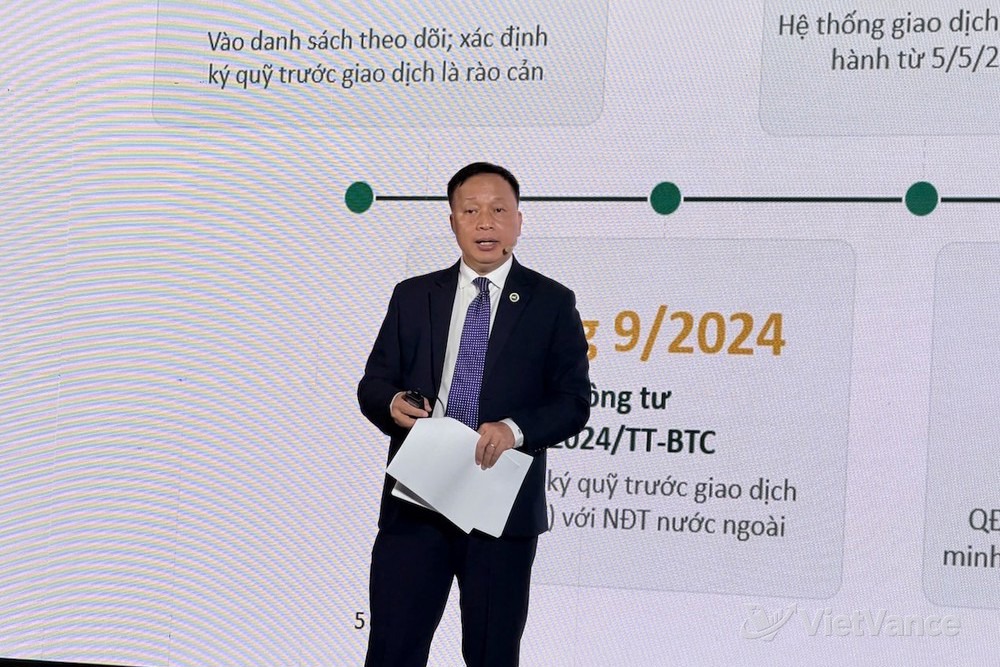
At a fintech event jointly organized on November 26 by departments of the State Bank of Vietnam, the Asian Development Bank and an EY consulting team, Phạm Anh Tuấn, director of the central bank’s Payment Department, said cross-border payments require coordination among parties operating under different legal frameworks and market conditions. Beyond technical connectivity, management rules, payment infrastructure compatibility and users’ practical needs also affect the success of such cooperation.

Phạm Anh Tuấn, director of the State Bank of Vietnam’s Payment Department, speaks at the event.(VietVance)
In the first three quarters of 2026, Vietnam’s interbank electronic payment system processed more than 122 million transactions worth nearly VND 455 quadrillion, up 12.33% and 62.07% year on year, respectively. The NAPAS financial transaction clearing and switching system processed nearly 11 billion transactions worth more than VND 46 quadrillion. The MDP system, which operated from March through September, processed nearly 35 million transactions worth more than VND 152 trillion.
Vietnam has established bilateral cross-border QR payment cooperation with markets including Thailand, Laos, Cambodia, China, Singapore and South Korea. The State Bank of Vietnam said these links allow travelers to scan and pay using their home-country banking apps, while small merchants can serve foreign customers without installing additional information technology equipment.
For the next stage of development, Phạm Anh Tuấn called for further improvements to regulations, greater standardization and interoperability of payment systems, and stronger risk monitoring and customer protection. He said artificial intelligence can help detect fraud and screen transactions, but institutions using it remain responsible for its use.
Source: VietVance