Vietnam’s average coffee export price fell about 20% in the first 10 months of 2026; domestic buying prices hit a nearly three-year low
In the first 10 months of 2026, Vietnam’s coffee export volume rose 18.5% year on year, but export value fell 5.2%, mainly because the average export price dropped about 20%. As the new harvest began, domestic buying prices continued to fall. On November 16, prices in major growing areas ranged from 82,300 to 83,000 Vietnamese dong per kilogram.

According to the Vietnam Customs Department, Vietnam exported 1.56 million tonnes of coffee in the first 10 months of 2026, up 18.5% year on year. Export value fell 5.2% to US$7.08 billion. A drop of about 20% in the average export price offset the gains from higher export volume. In October alone, exports reached 108,800 tonnes worth US$501.2 million, up 53.2% and 22.9% year on year, respectively. The average export price that month was US$4,606 per tonne, down 19.8% year on year.
The European Union was Vietnam’s largest coffee export market, accounting for 40.9% of total export value in the first 10 months. Vietnam exported 681,800 tonnes to the EU, up 25% year on year, but export value fell 3.9% to US$2.89 billion. Over the same period, export volume to the United States rose 47%, while shipments to Russia and China increased 30.3% and 49%, respectively.
Domestic prices also fell as the new harvest season began. According to Vietnam’s Ministry of Agriculture and Environment, coffee buying prices in the Central Highlands fell by 900 to 1,000 Vietnamese dong per kilogram in October compared with September. From November 8 to 15, domestic prices declined for a sixth consecutive week, reaching their lowest level in about 2.7 years.
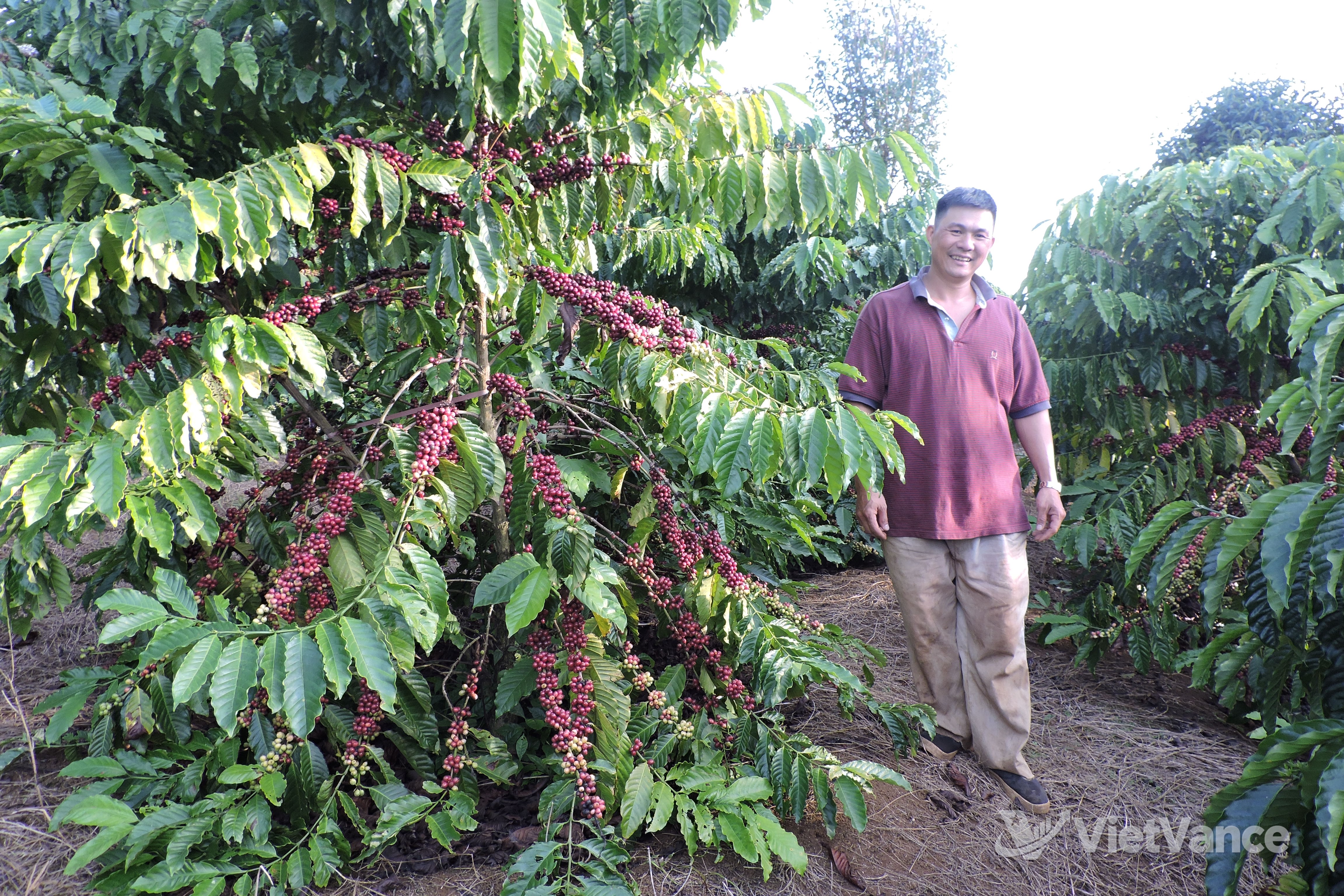
Coffee entered the harvest season as buying prices continued to fall.(VietVance)
A ministry survey on November 16 showed coffee prices in major growing areas ranging from 82,300 to 83,000 Vietnamese dong per kilogram. Prices were 83,000 dong in Đắk Lắk, 82,800 dong in Gia Lai and 82,300 dong in Lâm Đồng. Increased supply from the new harvest and companies’ reluctance so far to step up purchases were the main reasons for pressure on domestic prices.
The Vietnam Coffee and Cocoa Association said the export outlook for the rest of the year remained relatively positive and projected that full-year export volume in 2026 could rise by about 8% to 10% from 2025. However, additional supply as the harvest progresses could continue to put pressure on prices in the short term.
Source: VietVance