Vietnam Says Energy Supply Remained Stable in 2026, but Power Supply Faces Pressure Over Next Two Years
Vietnam’s Ministry of Industry and Trade said at the National Energy Security Forum on November 10 that the country maintained electricity and petroleum product supplies in 2026 despite transport disruptions, extreme heat and reduced hydropower output. A national energy security report expects greater pressure on power supply in 2027 and 2028.

On November 10, Vietnam’s Ministry of Industry and Trade held the 2026 National Energy Security Forum in Hanoi and released the first National Energy Security Report. Deputy Minister Nguyễn Việt Sơn said Vietnam’s energy system had faced its biggest shock in decades in 2026. According to the report’s survey of 177 countries, as of November 9, 102 faced energy difficulties and 13 remained stable, including Vietnam.
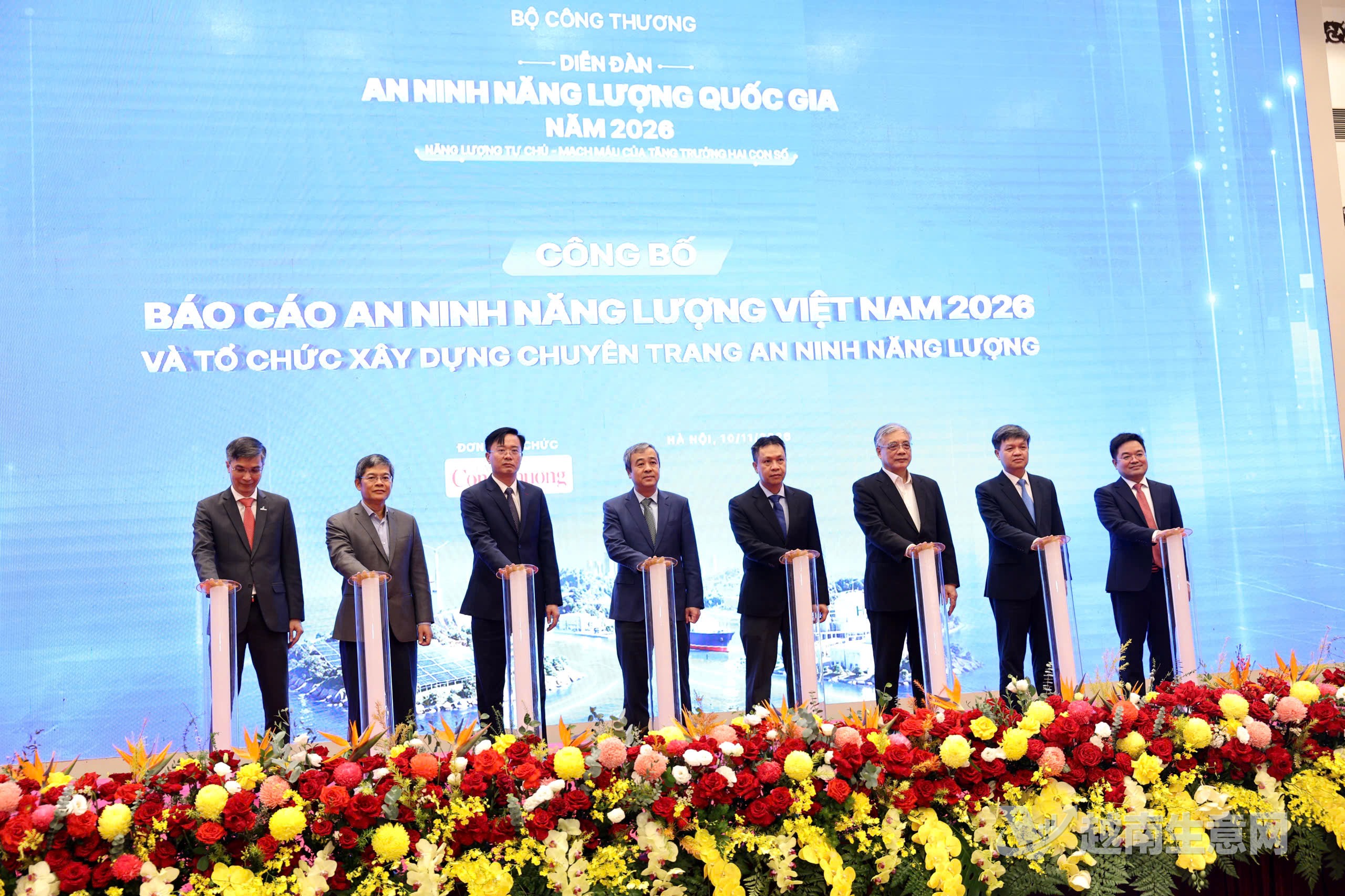
On November 10, the Ministry of Industry and Trade held the 2026 National Energy Security Forum in Hanoi.(VietVance)
The report said the Strait of Hormuz was blocked for about six months and Brent crude prices reached $118.35 a barrel at one point. Extreme heat and El Niño drove up Vietnam’s electricity demand, while hydropower output for the year was about 18.5 billion kWh lower than in 2025. On June 24, peak demand across Vietnam’s power system reached 57,537 MW. The ministry said the system weathered three periods of extreme heat without rotating power cuts.
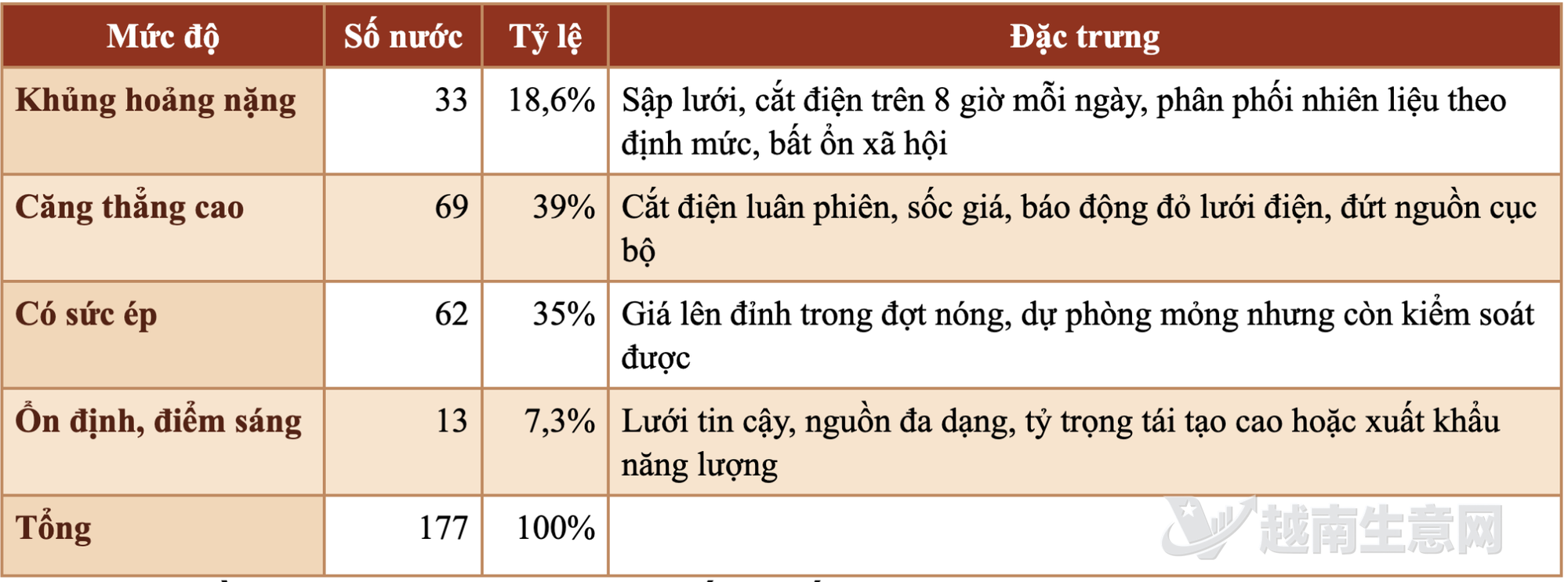
The National Energy Security Report classifies the energy security status of 177 countries, with data updated through November 9, 2026.(VietVance)
Vietnam’s electricity generation and imports in 2026 are estimated at 356.2 billion kWh, up 10.3% year on year; commercial electricity sales rose 9.84% in the first ten months. In the first nine months of the year, construction began on 136 power grid projects and 131 were brought into operation. The ministry said two refineries produced about 12.1 million tonnes of petroleum products over the same period. Vietnam experienced no supply shortage and did not draw on its national petroleum product reserves.
On prices, the government allocated more than VND 64 trillion for measures including cuts to taxes and fees on petroleum products. The report said Vietnam’s domestic retail gasoline price on October 26 was about 63% of the global average. From November 1, the average retail electricity price was reduced by 2% to VND 2,159.9037 per kWh, excluding value added tax.
The report expects Vietnam’s electricity demand to keep rising by about 10% from its already high 2026 level, while new sources of baseload power have yet to come online in time, making it harder to secure power supplies in 2027 and 2028. It forecasts peak demand in the north at 32,693 to 34,865 MW in 2027. At a November 7 meeting, Minister of Industry and Trade Lê Mạnh Hùng called for sufficient energy, especially electricity, to meet the needs of economic development and people’s daily lives.
Source: VietVance