Vietnam’s evening industrial power rates rise as factories consider energy storage
Under Vietnam’s new electricity tariff, the evening peak rate for medium-voltage industrial users is 3,348 dong per kWh, nearly 2.9 times the off-peak rate. A Ho Chi Minh City textile company is considering battery storage to use surplus daytime solar power in the evening.

Vietnam’s new electricity tariff, effective November 1, 2026, sets peak hours for industrial users from 5:30 p.m. to 10:30 p.m., Monday through Saturday. For medium-voltage supply, electricity costs 3,348 dong per kWh during peak hours, 1,814 dong during normal hours and 1,166 dong during off-peak hours. The peak rate is nearly 2.9 times the off-peak rate.
At an industrial green energy seminar in Ho Chi Minh City on November 25, Trần Văn Quy, general director of textile company Công ty TNHH Dệt may Trung Quy, said its monthly electricity bills had fallen 35% to 40% since it invested in a solar power system for its own use three years ago. The investment has been fully recovered. In response to the new evening peak hours, the company is considering adding a battery energy storage system to save surplus daytime solar power for its production lines in the evening.
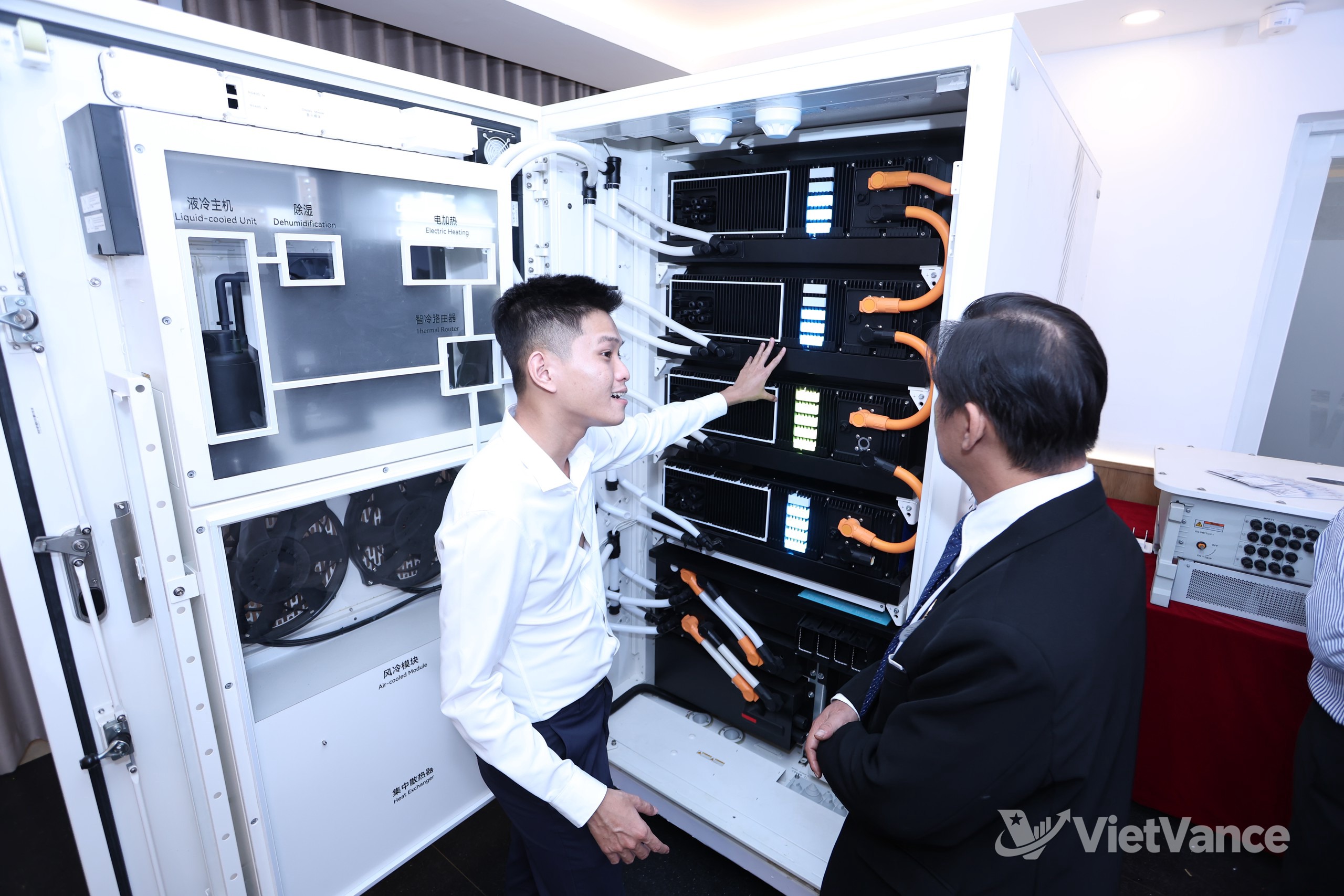
Ho Chi Minh City business representatives learn about an energy storage system at the seminar.(VietVance)
Mã Khai Hiền, head of the energy conservation research and development organization ENERTEAM, said companies could consider moving electricity-intensive tasks such as washing and drying out of the evening peak period. He said storage systems could also hold solar power generated during the day or charge during off-peak hours, then discharge during peak hours to reduce electricity costs.
Nguyễn Văn Nam, head of customer development at Huawei Việt Nam, said rooftop solar generation does not always coincide with factories’ electricity needs. Storage equipment paired with an energy management system can charge when electricity is abundant and discharge during the evening peak or when a factory’s internal power demand is too high.
Source: VietVance