
SGI Capital: International Financing Rates for Vietnam May Stay High into 2027
SGI Capital expects international financing rates in emerging markets such as Vietnam to remain high from late 2026 into early 2027. It also highlights rising real estate credit, slowing property transactions, and growing pressure on banks from bad loans and provisions.

In its global stock market outlook, SGI Capital expects international financing rates in emerging markets such as Vietnam to remain high in the final months of 2026 and early 2027. The firm says businesses still have substantial needs for new financing and refinancing as financial conditions tighten, and rising borrowing costs will add to funding pressure.
SGI Capital expects international financing rates in emerging markets such as Vietnam to remain high.(VietVance)
SGI Capital says recent strong US employment data and a continuing upward trend in inflation have increased the likelihood that the Federal Reserve will raise interest rates again in early December. More central banks worldwide are also tightening monetary policy. The rates businesses actually pay are also affected by asset risk premiums. The firm notes that interest rates on bonds linked to artificial intelligence, riskier bonds and high yield bonds continue to rise.
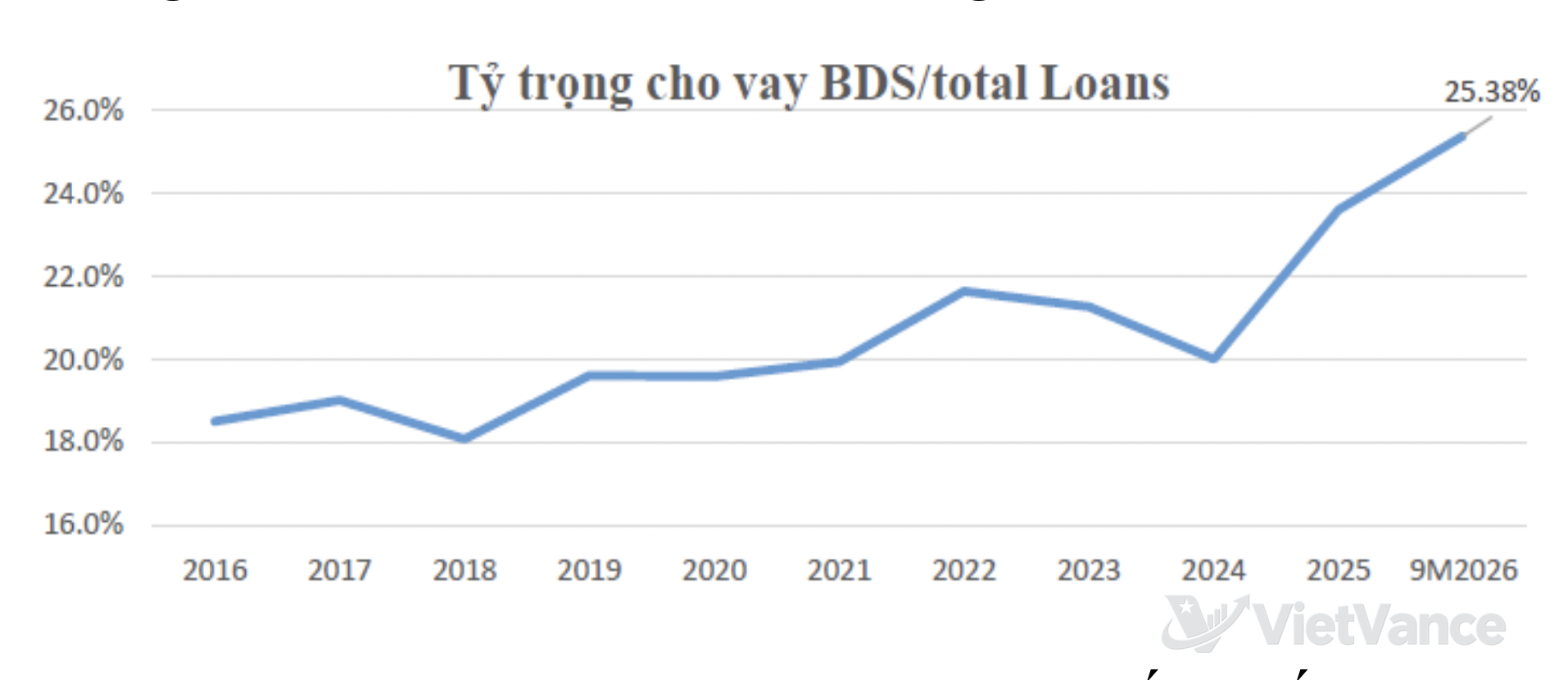
In Vietnam’s real estate market, credit for property investment and business activities, including project development, grew by more than 25% as of the end of the third quarter of 2026, more than twice the overall rate of credit growth, while demand for home loans was nearly flat. SGI Capital says the recent decline in transactions, combined with increased supply from multiple projects in 2027 and 2028, could leave the market facing oversupply for the next three years and increase the risks of tied up capital and bad loans.
According to official data cited in the original article, real estate credit has exceeded 25% of total outstanding credit, equivalent to nearly 40% of GDP. SGI Capital warns that if property market liquidity and prices remain weak, banks’ ability to recover loans, turn over capital and extend credit could be affected.
Banks’ third quarter reports show that the average months of receivables rose to 2.12, the highest in five years. Category 2 loans and nonperforming loans in categories 3 through 5 increased for a third consecutive quarter. Although provision expenses rose sharply in the third quarter, the nonperforming loan coverage ratio fell to a ten year low. SGI Capital expects banks may need to increase provisions further in the coming quarters, putting pressure on profits from the fourth quarter, potentially into 2027.
Source: VietVance