Survey: 94% of Vietnamese Businesses Expect International Trade Growth Over the Next Two Years
An HSBC survey released on November 16 found that 94% of surveyed Vietnamese businesses expect their international trade activity to grow over the next two years, tying with the Philippines for the highest share in the survey and exceeding the global figure of 86%. Tariffs and energy costs remain major pressures, while businesses are adjusting supply chains and using free trade agreements to respond.

HSBC’s 2026 Global Trade Survey, released on November 16, found that 94% of surveyed Vietnamese businesses expect their international trade activity to grow over the next two years. Vietnam tied with the Philippines for the highest share in the survey, compared with 86% of businesses surveyed globally. This finding reflects business expectations, not trade growth already achieved.
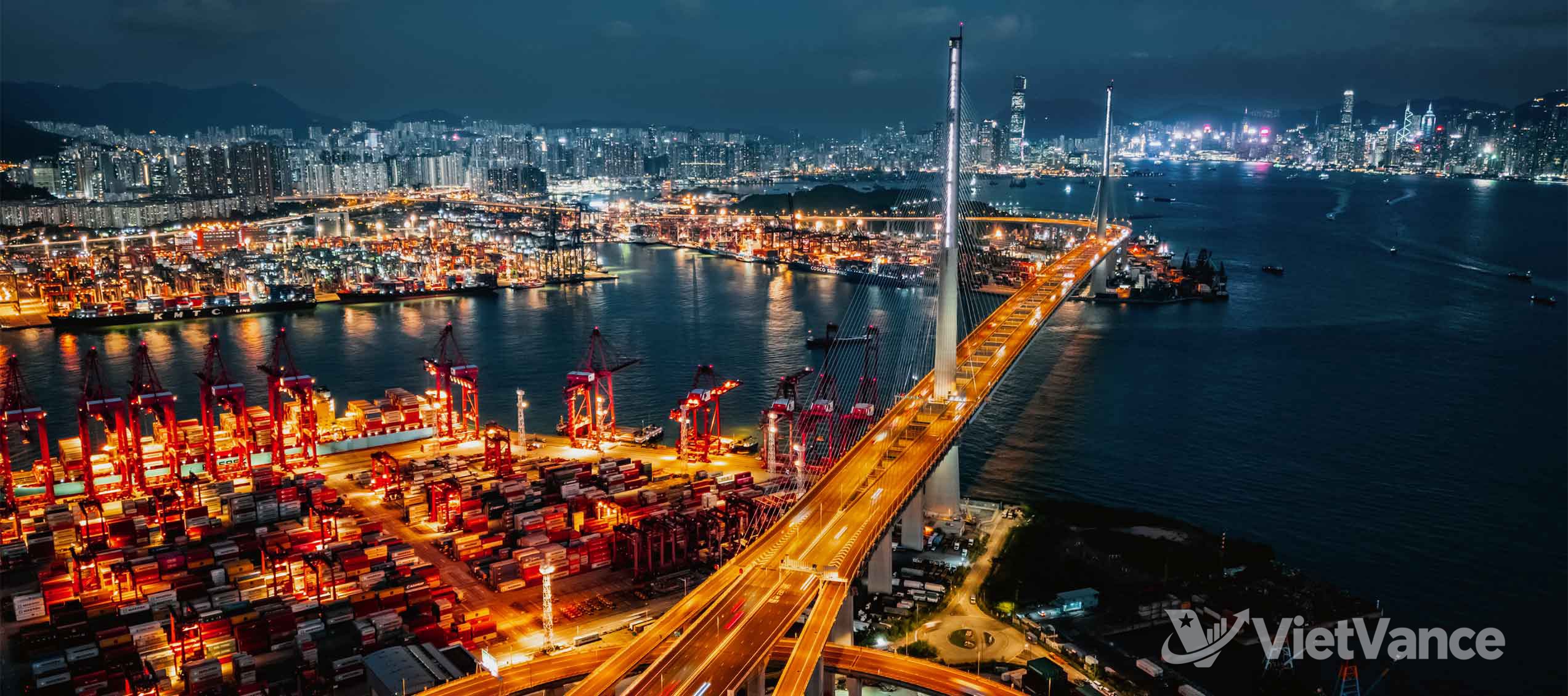
Illustrative image for the survey of Vietnamese businesses’ international trade outlook.(VietVance)
Cost pressures remain significant. Tariffs were cited by 52% of surveyed Vietnamese businesses, above the global figure of 43%; energy costs were cited by 49%, also above the global figure of 44%. At the same time, 90% of surveyed Vietnamese businesses said supply chain changes had improved cash flow and working capital, compared with 78% globally. Another 97% said measures to address trade uncertainty and disruptions had been effective.
Free trade agreements are widely used: 99.6% of surveyed Vietnamese businesses use at least one, compared with 95% globally. However, 97% of surveyed Vietnamese businesses said barriers still limit their ability to use these agreements more extensively. Among surveyed Vietnamese businesses, 50% reported increasing their reliance on the domestic market, while 46% and 41% reported increasing their reliance on the Singaporean and Thai markets, respectively.
Looking at other markets, the highest share of surveyed businesses increasing their reliance on the Vietnamese market was in Malaysia, at 32%; the figures were 31% in Thailand and 29% each in Singapore and South Korea. Among businesses surveyed globally, 88% have taken or plan to take measures to expand their supplier networks across regions, 86% are focused on securing energy supplies or optimizing trade routes, and 81% have shifted toward service-based or digital business models.
Vivek Ramachandran, Head of Global Trade Solutions at HSBC, said energy costs have become a key consideration for businesses managing international supply chains. He said businesses are responding to uncertainty by securing energy supplies, improving operational efficiency and increasing flexibility in their operations.
Source: VietVance