Vietnam’s Central Bank Injects Liquidity Through Foreign Currency Purchases; Stock Market History Draws Attention
The State Bank of Vietnam is buying US dollars on the spot market and conducting 182-day USD/VND swaps. VnDirect data show that the VN-Index rose one month after 11 of 13 foreign currency purchases between 2016 and 2023, but past performance cannot determine how the market will move this time.

The State Bank of Vietnam is buying foreign currency through both 182-day USD/VND swaps and spot purchases of US dollars, adding Vietnamese dong liquidity to the banking system. VnDirect data show that the interbank USD/VND exchange rate fell from about 26,295 dong per US dollar at the end of 2025 to 25,524 dong per US dollar on November 9, 2026, as the dong appreciated by about 2.9% over the same period.
The State Bank of Vietnam’s foreign currency purchases are adding dong liquidity, drawing attention to the stock market’s subsequent performance.(VietVance)
Following the foreign currency purchases, the interbank overnight interest rate fell from 6.1% on November 6 to 4.6% on November 9. VnDirect says the purchases help manage the exchange rate and improve liquidity. Vietnam’s trade surpluses since September have also created conditions for the purchases.
Foreign exchange reserves and inflation remain policy considerations. According to data released by the State Bank of Vietnam, foreign exchange reserves stood at about US$87.6 billion as of June 18, 2026. Vietnam’s average monthly imports were about US$51 billion in the first 10 months of 2026. Average inflation over the same period was 4.57%, slightly above the 4.5% target set by the National Assembly. VnDirect noted that the central bank had issued bills to absorb liquidity during periods of large foreign currency purchases and may use the tool again.
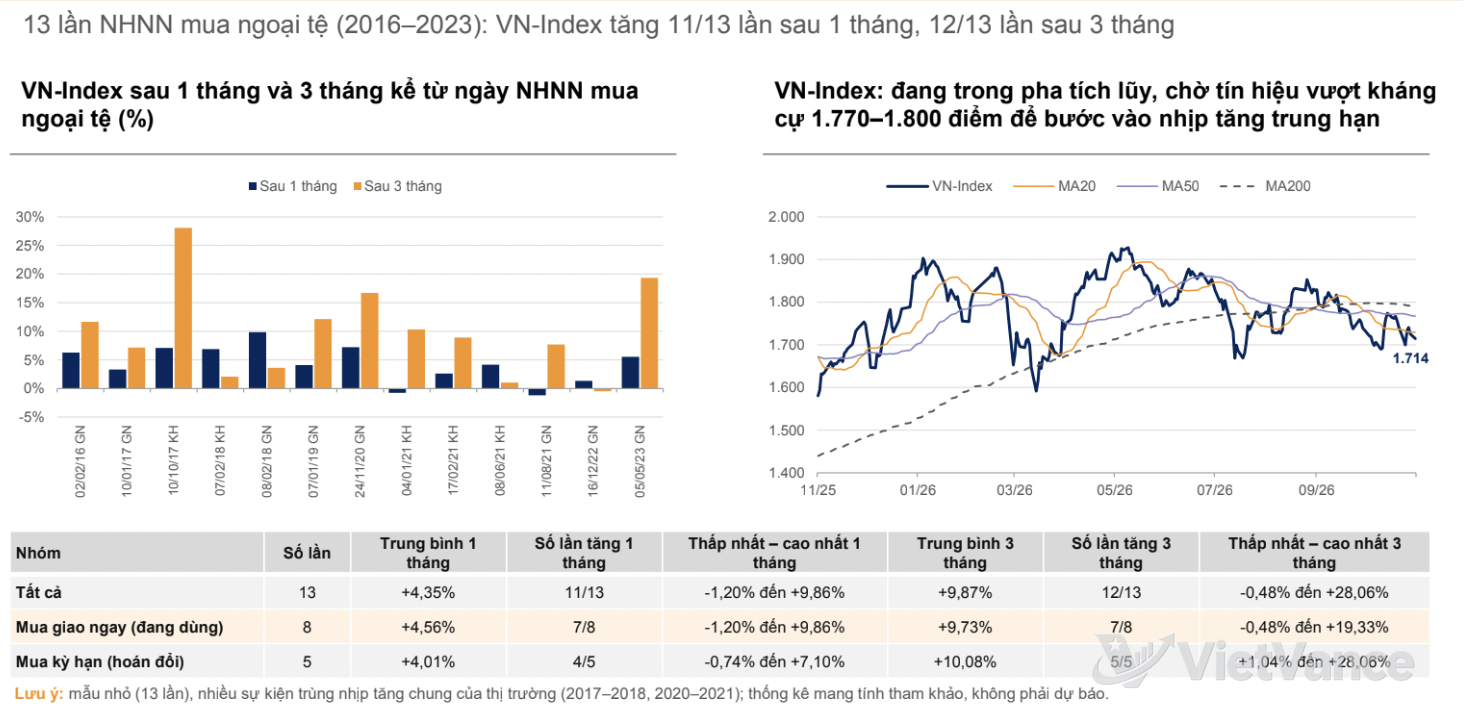
According to VnDirect, the VN-Index rose after one month in 11 of 13 instances of foreign currency purchases between 2016 and 2023, and after three months in 12 instances. The average gains were 4.35% and 9.87%, respectively. These figures reflect historical performance; the index currently still needs to break through the 1,770–1,800-point range to confirm the possibility of a medium-term rise.
Source: VietVance