

Vietnam’s Highland Farm Products Face Logistics and Operational Hurdles Online
Highland communities in Vietnam are using livestreams and ecommerce platforms to sell farm products, but unstable supply, inadequate packaging and preservation, and long delivery times affect quality and price competitiveness. Platform fees and the demands of running online stores also pose challenges for new sellers.

At a conference on commune-level ecommerce models on November 11, Nguyễn Bá Kiện, vice chairman of the Bình Lư Commune People’s Council, said that after about a year of support from TikTok Shop, the commune had trained 20 online sellers, eight of whom had stable income. However, it still struggled to secure enough products for regular sales livestreams. When orders surged, packaging, preservation and shipping could not keep pace.
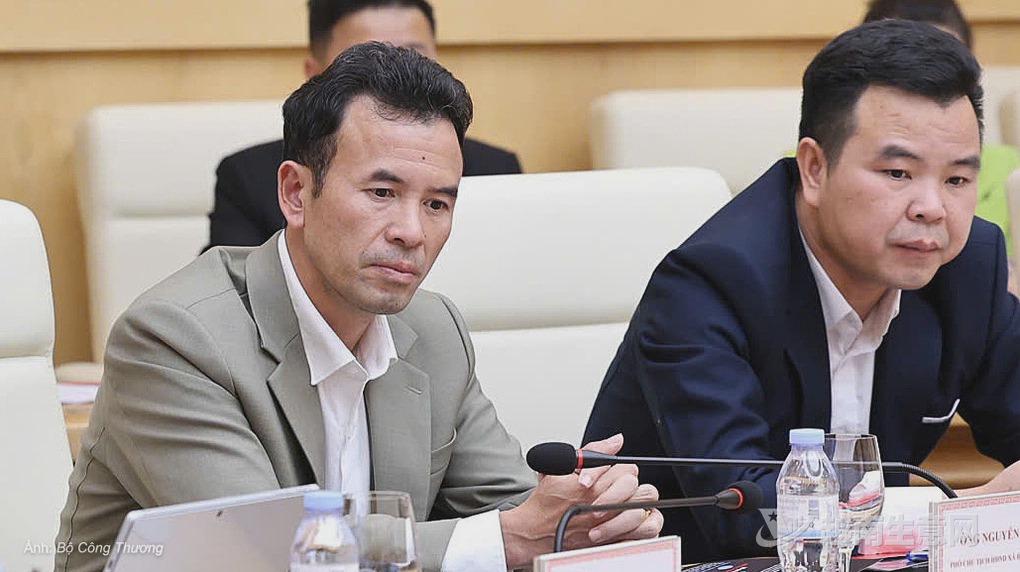
Nguyễn Bá Kiện (left), vice chairman of the Bình Lư Commune People’s Council, attends the conference on November 11.(VietVance)
A content creator said an order of plums took a week to arrive, by which time the fruit had rotted and fermented. Vũ Bích Hồng, who runs the Cô Ba Hồng channel, said an order shipped from Lai Châu to Ho Chi Minh City could take a week. Over the past year or so, her team has helped sell nearly 600 tons of Sìn Hồ khoai sâm through ecommerce platforms; about 100 tons of vermicelli were sold in Bình Lư Commune over four months. Nguyễn Bá Kiện said shipping costs combined with platform fees weakened the price competitiveness of local products.
In Mường Ảng Commune, Điện Biên, more than 2,100 hectares are planted with coffee, of which about 1,800 hectares are ready for harvest, but farmers still mainly sell fresh coffee. The commune has about 18 OCOP-certified products but no stable online sales channel. Hà Thị Thanh Tâm, chairwoman of the commune People’s Committee, said some farmers were still unfamiliar with listing products, managing orders and running online stores, and were concerned about platform costs such as advertising.
Nguyễn Đức Lê, deputy director of the agency responsible for domestic market management and development, suggested that communes first select products with a stable supply, standardize packaging, labels and preservation methods, and set up collection points where farms are spread apart. Nguyễn Lâm Thanh, head of TikTok Vietnam Technology Co., Ltd., said the platform uses some of its fees for promotion, discounts and buyer support, and provides training and fee support to sellers in communes and wards.
Vietnam aims to have 60% of small and medium-sized enterprises operating on ecommerce platforms by 2030, and merchants selling goods or providing services online in 60% of communes and other administrative units. The Ministry of Industry and Trade has proposed better coordination across production, payment and delivery, and measuring results by order volume, the number of people who continue selling, and their revenue after support programs end.
Source: VietVance