Vietnam Property Transactions Fall as Developers Have Limited Room to Cut Home Prices
Vietnam’s Ministry of Construction reported that property transactions fell 8% quarter on quarter and more than 32% year on year in the third quarter of 2026. Developers and industry experts say accumulated land, financing and construction costs limit room for price cuts, while better design and shorter approval times could help control costs.

The Ministry of Construction’s report on the property market in the third quarter of 2026 showed that transactions in Vietnam fell 8% from the previous quarter and more than 32% from a year earlier. Apartment transactions fell more than 14%. Research by Savills also found that property transactions declined 66% year on year. As sales weakened, price cuts were seen as one way to revive demand, but developers faced costs that had accumulated over time.
Nguyễn Xuân Quang, chairman of Nam Long Group, told VnExpress that rising land prices drive up project development costs. Companies must also pay land use fees and cover infrastructure, building materials, labor and financing. These expenses accumulate throughout development and are ultimately reflected in selling prices. If a project takes several additional years, financing, management and related financial costs also rise.
Cao Thị Thanh Hương, deputy director of market research at Savills in Ho Chi Minh City, said construction costs for a new project could rise by about 30% even if it uses the design and development approach of an older project, before land costs are counted. Cutting profits would affect only part of the selling price, while lowering construction quality or the standard of amenities could leave buyers’ expectations unmet.
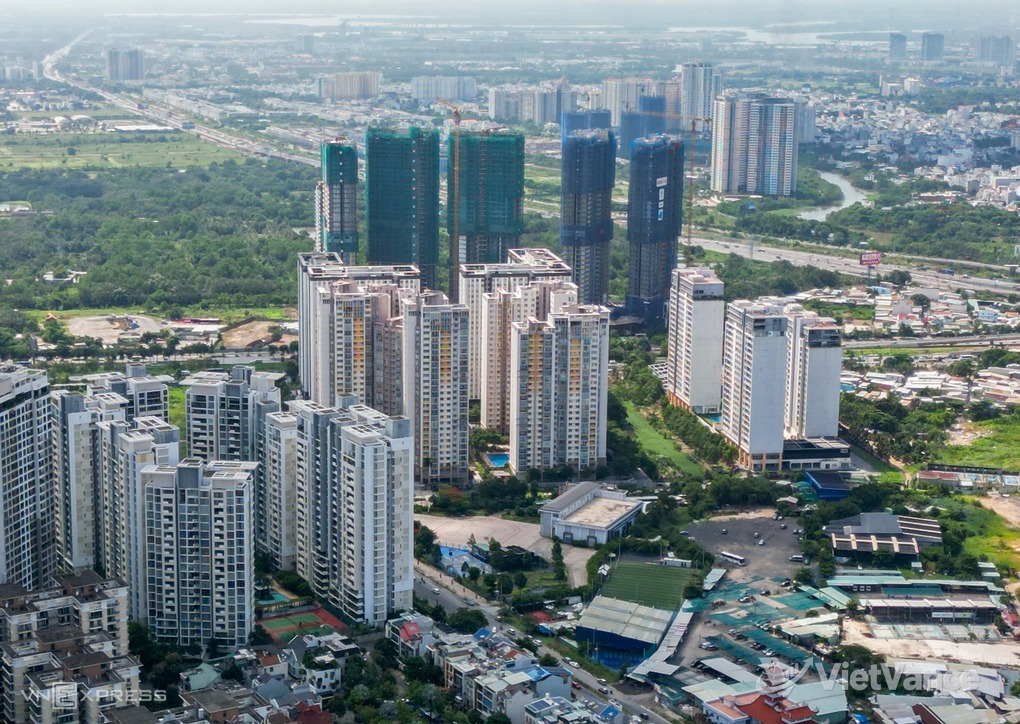
A property development in eastern Ho Chi Minh City in July 2026.(VietVance)
Economist Cấn Văn Lực said a shortage of suitable housing supply, lengthy legal procedures, methods of determining land prices, credit costs, taxes and fees could all push up home prices and make it harder for companies to estimate costs. He also said companies’ excessive focus on the high-end market, scattered investment and inadequate cost control had contributed to rising prices, and that developers should bear responsibility for their decisions.
To control costs, Nguyễn Xuân Quang suggested improving planning, apartment layouts, construction methods and spending on amenities to make more efficient use of land. Cao Thị Thanh Hương recommended increasing housing supply in outlying areas where land costs are lower. Those interviewed also called for shorter legal procedures, stable land and financial policies, and better access to long-term financing for homebuyers. Companies, meanwhile, should adjust their product mix and control spending.
Source: VietVance