Vietnam Raises Revenue Threshold for Household Businesses to Choose Tax Calculation Method to VND 10 Billion
Vietnam’s National Assembly passed tax law amendments on November 20 that will allow household businesses with annual revenue exceeding VND 1 billion and up to VND 10 billion to choose how their personal income tax is calculated from the 2027 tax year. The current upper threshold is VND 3 billion. Experts say the change could ease bookkeeping demands, but rules on switching methods still need clarification.

On the afternoon of November 20, Vietnam’s National Assembly passed a law amending the Law on Corporate Income Tax, the Law on Non-Agricultural Land Use Tax and the Law on Personal Income Tax, with 475 votes in favor among 477 deputies who took part in the vote. Under the amendments, the annual revenue ceiling for household businesses and individual business operators to choose a personal income tax calculation method will rise from the current VND 3 billion to VND 10 billion, starting with the 2027 tax year. The government may adjust the threshold in light of economic and social conditions at different times.
The new rules apply to business households with annual revenue exceeding VND 1 billion and up to VND 10 billion. They may choose to calculate tax on taxable income, multiplying revenue minus costs by the tax rate, or on revenue multiplied by the tax rate. Previously, only those with annual revenue exceeding VND 1 billion and up to VND 3 billion could choose between the two methods; those with revenue exceeding VND 3 billion and up to VND 10 billion had to calculate tax on income.

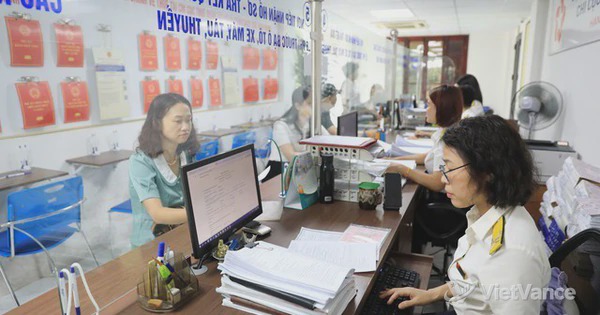
From the 2027 tax year, household businesses that meet the revenue criteria may choose how their personal income tax is calculated. Illustrative image.(VietVance)
Figures released by Vietnam’s Ministry of Finance show that about 81.1% of enterprises and 99.98% of household businesses have annual revenue of no more than VND 10 billion. Under current rules, businesses that choose to calculate tax as a percentage of revenue may need only one accounting ledger, compared with four when tax is calculated on income. Raising the threshold will allow more businesses to choose a method suited to their circumstances.
Vũ Thị Bình, head of Công ty TNHH Tư vấn và Đào tạo quản trị doanh nghiệp Bình Vũ, said the new rules could ease the burden of filing returns and substantiating costs for household businesses. Lê Văn Tuấn, head of tax accounting firm Công ty TNHH Kế toán Thuế Keytas, said businesses using the revenue-based method must still declare all sales revenue. Even though purchase documents do not affect the tax due under that method, businesses should retain them to establish the origin of goods and provide explanations to tax authorities when needed.
Rules on switching tax calculation methods still need clarification. Under Decree No. 68 of 2026, household businesses that choose taxation based on profit must keep that method for two consecutive years. Vũ Thị Bình called for the implementing regulations to specify whether businesses that adopted the method in 2026 may switch to revenue-based taxation from 2027 if they meet the new revenue threshold.
Source: VietVance