Vietnam Live Hog Prices Reach 50,000 Dong per Kilogram
On the morning of November 13, 2026, live hog purchase prices rose in several parts of Vietnam, bringing the nationwide range to 47,000–50,000 dong per kilogram. Prices increased in 14 northern localities and eight localities in the central region and Central Highlands, while Can Tho stepped up livestock disease prevention.

On the morning of November 13, 2026, live hog purchase prices across Vietnam ranged from 47,000 to 50,000 dong per kilogram, with the previous 46,000-dong price point no longer in the day’s range. Prices rose by 1,000–2,000 dong per kilogram in 14 of the 15 northern localities surveyed. Quang Ninh, Hai Phong, Ninh Binh, Bac Ninh, Hanoi and Hung Yen all reached 50,000 dong per kilogram, the highest price nationwide. Thai Nguyen remained at 48,000 dong.
In the central region and Central Highlands, prices rose by 1,000 dong per kilogram in eight of the 11 localities surveyed, putting regional purchase prices at 47,000–49,000 dong. Lam Dong had the region’s highest price at 49,000 dong, while Nghe An and Dak Lak stood at 48,000 dong. Thanh Hoa, Ha Tinh, Quang Tri, Hue and Da Nang were all at 47,000 dong.
Live hog prices rose by 1,000 dong per kilogram in three southern localities. Dong Nai and Dong Thap reached 50,000 dong per kilogram, the highest price in the region; An Giang remained at 47,000 dong, the lowest. Purchase prices across the south ranged from 47,000 to 50,000 dong per kilogram.
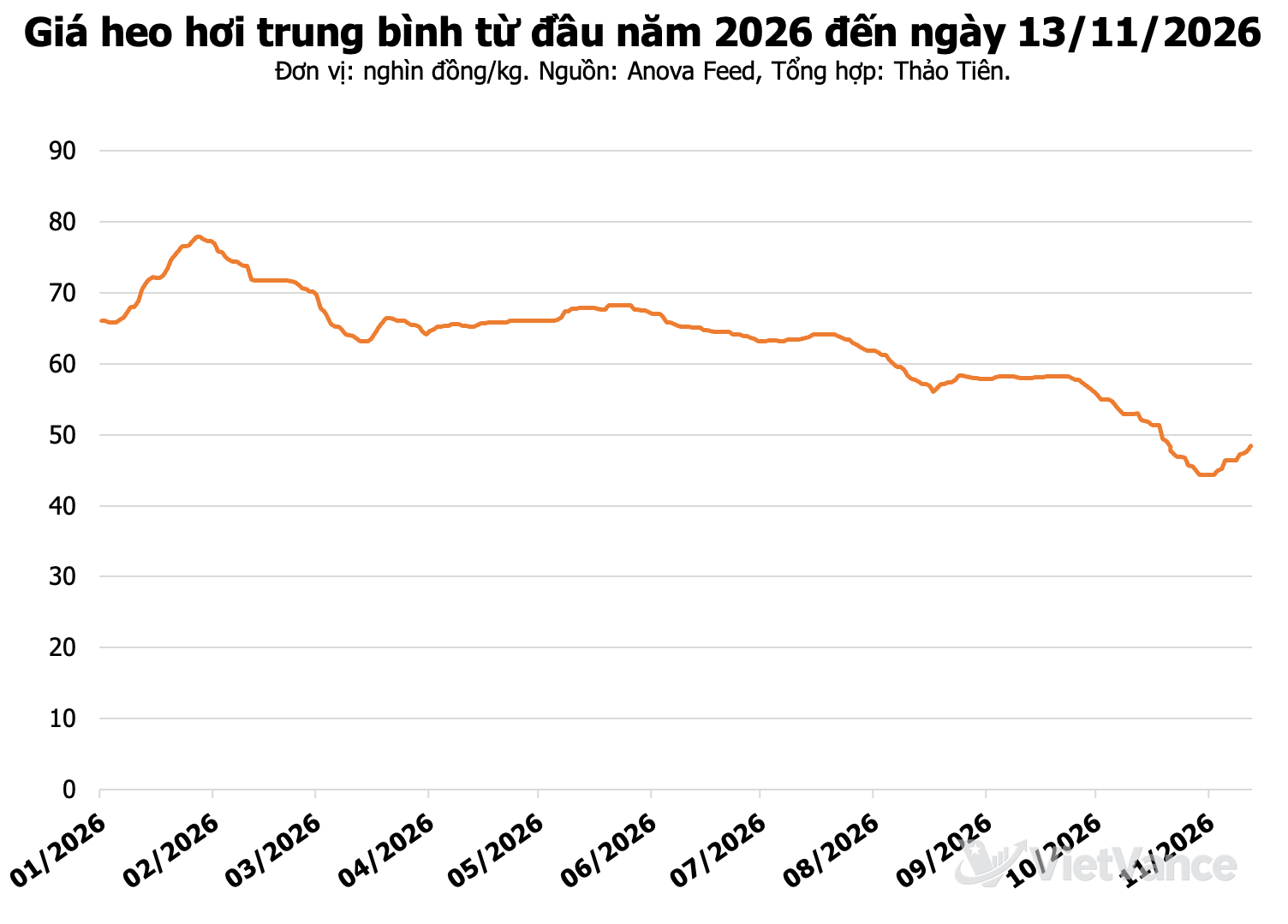
Live hog purchase prices in Vietnam ranged from 47,000 to 50,000 dong per kilogram on November 13, 2026.(VietVance)
Livestock disease prevention in Can Tho has also drawn attention. On the afternoon of November 10, local authorities received a report of a dead pig in a river, retrieved and buried it, then disinfected the surrounding area. According to the local livestock and veterinary department, African swine fever had affected 20 households in 17 communes and wards of Can Tho as of October 2026, with at least one outbreak yet to pass the 21-day mark.
Can Tho’s agriculture authorities have called for stronger local disease surveillance, sampling and response, and faster progress on the second round of vaccinations in 2026, with a target of covering at least 80% of the livestock and poultry population. Localities must also clean and disinfect farms, slaughterhouses, markets and other sites, and inspect quarantine documents and hygiene conditions for animal transport, trade and slaughter.
Source: VietVance