Vietnam issues logistics center grading standards, effective January 2027
Vietnam’s Ministry of Industry and Trade has issued standards that classify logistics centers into three grades based on size, capacity, transport links, technology and environmental requirements. Effective January 8, 2027, the rules require operators to assess and publicly declare their centers’ classifications.

Vietnam’s Minister of Industry and Trade signed Circular No. 71/2026/TT-BCT on November 19, 2026, setting criteria for classifying and grading logistics centers. It takes effect on January 8, 2027. The criteria assess centers by function, size, handling capacity, transport links, technology use and green transition, and divide them into three grades.
Grade I logistics centers serve national and international logistics networks. They must cover at least 20 hectares and have annual cargo throughput of 3 million metric tons, or the equivalent of 200,000 TEUs or 35 million orders. They must connect to major expressways or national highways and at least two modes of transport. Grade II centers must cover 10 to less than 20 hectares and handle 1 million to less than 3 million metric tons of cargo annually. Grade III centers must cover 3 to less than 10 hectares and have annual handling capacity below 1 million metric tons; they mainly serve cargo distribution within provinces and cities.
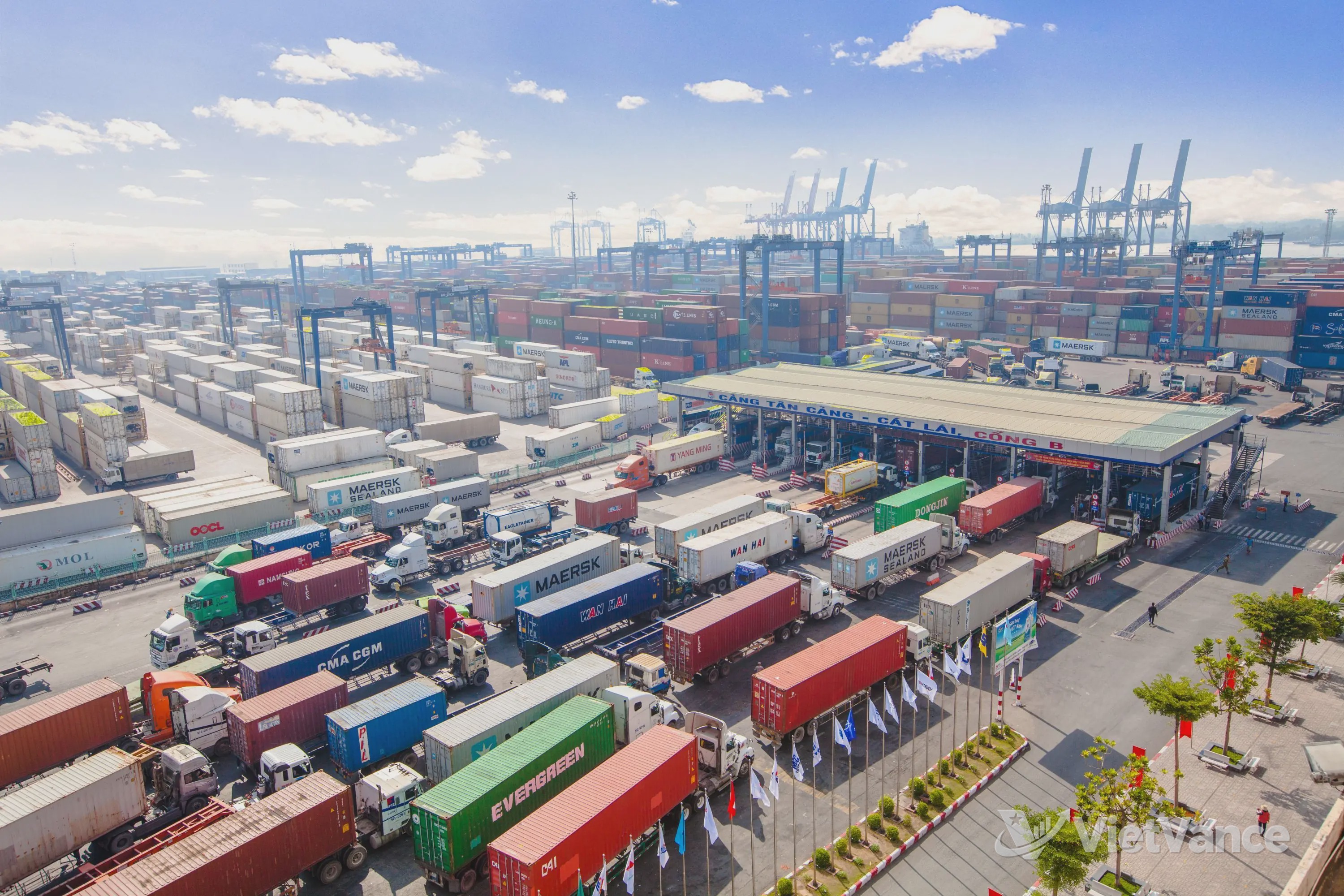
Cargo facilities at a Vietnamese port.(VietVance)
The new rules also classify logistics centers into five types by function. All types must cover at least 3 hectares, have convenient transport links and provide at least three basic logistics services. Grade I centers must have warehouse management, round-the-clock surveillance and smart-card access control systems. During a power grid outage, backup power must keep specialized warehousing, security and last-mile transport coordination systems running for at least 24 hours. At Grade II and Grade III centers, at least 30% and 10% of key processes, respectively, must be automated and linked to electronic data systems.
On environmental requirements, Grade I centers must use electricity from renewable sources, while Grade II and Grade III centers must draw up plans to switch to clean energy. Centers at every grade must also have compliant wastewater treatment facilities, processes for recycling or reusing packaging materials, and electric vehicle parking and charging facilities suited to their operating scale. Operators will assess and publicly declare their centers’ types and grades under the criteria and bear legal responsibility for the information they disclose.
Source: VietVance