Vietnam Approves National Digital Archives Platform Plan
Vietnam approved a plan on November 18, 2026, to build a national digital archives platform for 2026–2030. The plan aims to bring dispersed archives under unified data governance and connect ministries, local authorities and state-owned enterprises to the platform by 2030.

Vietnamese Deputy Prime Minister Phạm Thị Thanh Trà signed a decision on November 18, 2026, approving an overall plan to build and operate a national digital archives platform from 2026 to 2030. The plan applies to ministries, state agencies and organizations at the central and local levels, as well as state-owned enterprises. It aims to shift from dispersed archives management to unified data governance in a digital environment. The decision took effect on the date it was signed.
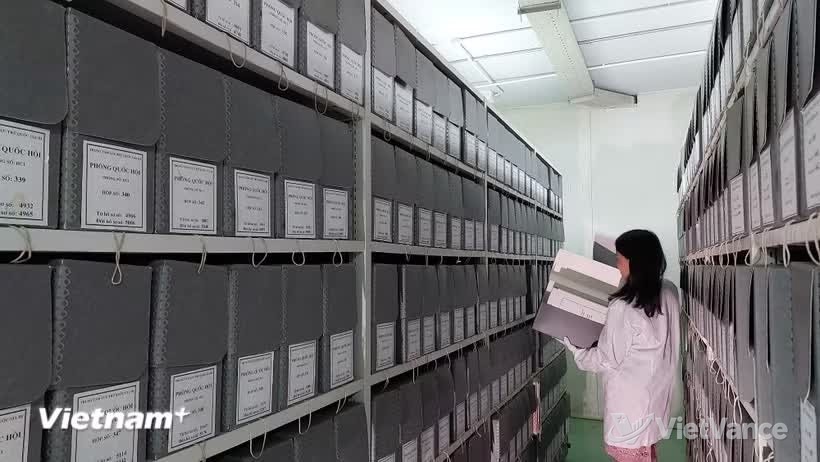
A records storage room at a national archives center in Hanoi. File photo.(VietVance)
Under the plan, Vietnam aims to complete and apply uniformly the legal framework, technical standards, data standards and procedures needed for digital archives management by 2028. The platform’s core functions are expected to be completed and put into operation, alongside a pilot program to automatically receive electronic documents generated by existing document management systems. Digitized records designated for permanent preservation will also be brought onto the platform gradually for storage and use.
By 2029, Vietnam plans to complete the legal framework and operational guidance needed to run the platform and expand the automatic intake of electronic documents. By 2030, all ministries, local authorities and state-owned enterprises covered by the plan must connect to and use the platform as prescribed. Agencies with dedicated digital archives systems must link them to the platform, while those without such systems will use the platform to manage digital archives within their authority.
The plan requires the platform to run on National Data Center infrastructure, use an open architecture and include functional layers for archival operations, data governance, system integration, artificial intelligence analysis and information security. It also calls for a two-layer backup system to improve the recoverability of archives in the event of failures or disasters. Existing systems will continue operating during the transition, and any necessary upgrades must avoid duplicating the new platform.
Source: VietVance