Vietnam Includes Natural Hydrogen in Petroleum Law, but Exploration Has Yet to Begin
Vietnam’s revised 2026 Petroleum Law classifies natural hydrogen as a non-oil and gas resource. An industry expert says several regions have geological features worth investigating, but recoverable deposits remain unconfirmed. Exploration technology, costs and the lack of specific regulations pose major challenges.

Vietnam’s revised 2026 Petroleum Law classifies natural hydrogen as a non-oil and gas resource. Natural hydrogen forms and accumulates underground and can be extracted through wells. Nguyễn Quốc Thập, chairman of the Vietnam Petroleum Association, says Vietnam should study the resource, although it is not yet known whether the country has recoverable natural hydrogen.
Natural hydrogen has entered trial use in Mali: a well in Bourakebougou began trial production in 2012, and additional wells later supplied electricity to a local village. The International Energy Agency’s Global Hydrogen Review 2025 reports that global hydrogen demand reached nearly 100 million tonnes in 2024, up 2% year on year; low-emissions hydrogen still accounted for less than 1% of total production.
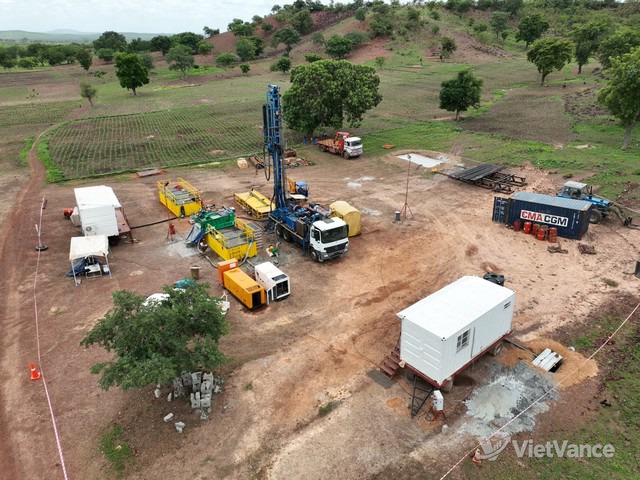
Natural hydrogen extraction in Mali.(VietVance)
Nguyễn Quốc Thập says the deep faults, metamorphic rocks and ultramafic rocks of northwestern Vietnam, along with geological activity in parts of central Vietnam, warrant inclusion in natural hydrogen surveys. Thick sedimentary rock layers in coastal plains may also provide conditions for gas accumulation. These geological features indicate exploration potential only and still require investigation.
He says natural hydrogen exploration lacks established technical standards, while existing oil and gas exploration equipment needs research and adaptation. Deep drilling and geological surveys are costly and risky, and Vietnam currently has no specific regulatory framework for natural hydrogen surveys, exploration and extraction.
To advance the work, Nguyễn Quốc Thập recommends that the state first conduct baseline surveys in areas with potential, then use the results to develop management rules, launch small pilot projects and establish a mechanism to attract private investors. Whether projects can proceed to commercial extraction still depends on resource discoveries and reserve assessments.
Source: VietVance