Vietnam’s finance minister proposes three funds to attract private investment in infrastructure
On November 12, Finance Minister Ngô Văn Tuấn proposed three funds to support project preparation, close financing gaps and provide long-term capital for public-private partnership infrastructure projects in Vietnam.

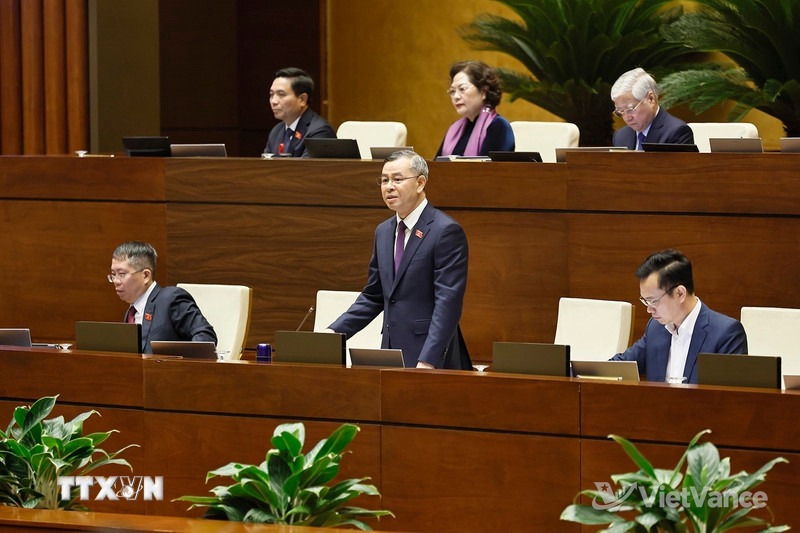
On the morning of November 12, during a question-and-answer session at the second session of Vietnam’s 16th National Assembly, Finance Minister Ngô Văn Tuấn said three funds were needed to attract private capital into infrastructure through public-private partnerships: a project development support fund, a viability gap fund and an infrastructure investment fund.
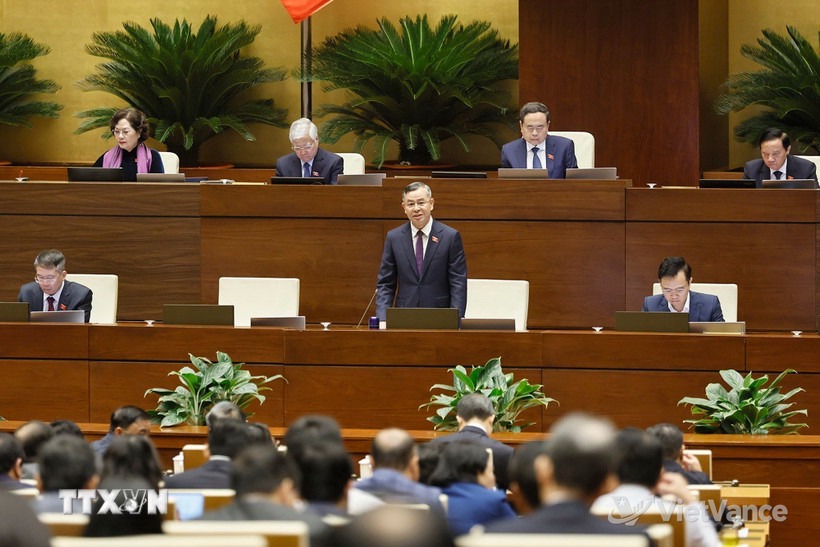
Vietnamese Finance Minister Ngô Văn Tuấn speaks during a National Assembly question-and-answer session.(VietVance)
His remarks addressed lawmakers’ questions about state capital contributions to public-private partnership projects and how funding would be secured. Tuấn said infrastructure projects have long investment periods and high risks, requiring transparent policies that allow investors to assess financial plans and manage risks. He said Vietnam has implemented 69 public-private partnership projects, mainly under BOT and BT models.
According to Tuấn, the project development support fund would finance preliminary project studies and investment planning; the viability gap fund would improve project feasibility; and the infrastructure investment fund would provide long-term capital. He said current public-private partnership law caps the state’s capital contribution to a project at 70%.
Tuấn also said private investors in public-private partnership projects must maintain and operate facilities as required by their contracts. Where expressways charge tolls, the state should retain existing roads so people can choose how to travel according to their needs and ability to pay.
In the same question-and-answer session, Tuấn said the Finance Ministry was submitting draft amendments to the Securities Law to the National Assembly that would introduce a supervised pilot mechanism for the securities market. Once the law is enacted, the ministry will issue guidance or ask the government to issue regulations, while managing risks and protecting investors’ rights during the pilot.
Source: VietVance