Vietnam Plans Coordinated Railway Industrial Complex to Avoid Duplicate Investment
Vietnam’s government has called for coordinated development of a railway industrial complex to avoid building similar facilities in neighboring areas. The Ministry of Construction is preparing a detailed plan for a complex of about 250 hectares in Hanoi; the investment model and the roles of the government and businesses remain to be clarified.

On November 16, Vietnam’s Standing Deputy Prime Minister Phạm Gia Túc chaired a meeting on a railway industrial complex and called for coordinated development to avoid building multiple facilities with similar functions in neighboring areas. He said railway industry development should help the country gradually build self-reliant capabilities, rather than serve the needs of a single company.
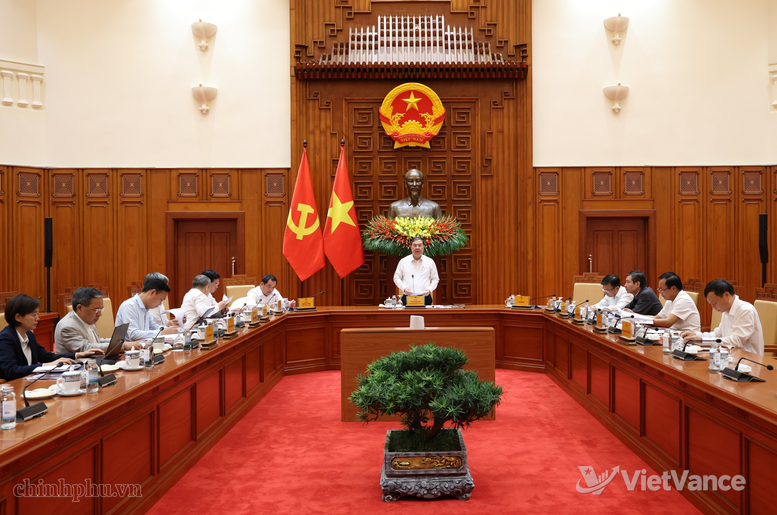
The November 16 meeting on the railway industrial complex.(VietVance)
Deputy Minister of Construction Bùi Xuân Dũng said at the meeting that, under a decision issued by the Prime Minister on October 29, 2025, the proposed complex would cover about 250 hectares in Chuyên Mỹ and Ứng Hòa, Hanoi. The Ministry of Construction is preparing a detailed plan as a basis for subsequent investment. The complex is intended to cover research and development, design, testing, production, assembly and maintenance for national railways, urban rail transit and high-speed rail.
Hanoi has also proposed investing in a railway industrial park near the area being studied by the Ministry of Construction, with similar planned functions. The ministry supports building just one complex in the area, but the business proposal and the ministry’s public investment assignment follow different procedures. The investment model, how funding sources would be combined and the implementation arrangements still need to be clarified.
Phạm Gia Túc said the project’s scale should match Vietnam’s rail network and market demand to avoid duplicate investment and excess capacity. He proposed encouraging private and foreign-invested businesses to participate in suitable activities, allowing limited public funds to focus on other necessary tasks. Participants also proposed using public investment for infrastructure while businesses take part in relevant production and commercial activities.
The meeting concluded that technology transfer must take account of market size, the capacity to absorb the technology and the ability to upgrade it later. The complex should also be able to serve different types of railway. Phạm Gia Túc asked the Ministry of Construction to review its assigned research and investment preparation work, formulate an official position and report to the Prime Minister and competent authorities. Hanoi’s proposal must comply with railway laws and relevant standards.
Source: VietVance