ABS Sees Potential Rebound in Vietnam’s Stock Market, Warns of Intraday Pullbacks
ABS Securities says improving macroeconomic conditions and lower stock valuations could help Vietnam’s VN-Index rebound by the end of 2026. It identifies 1,651 points as a key short-term support level but warns of unexpected declines during a recovery. A drop below 1,600 points could lead to a deeper correction.

In its November stock market outlook, ABS Securities said Vietnam’s VN-Index could rebound by the end of 2026 after a prolonged correction, as macroeconomic conditions gradually improve. In its higher-probability scenario, the index holds short-term support near 1,651 points and then recovers, potentially reaching 1,800, 1,840 and 1,870 points in turn. Unexpected declines could still occur during the rebound.
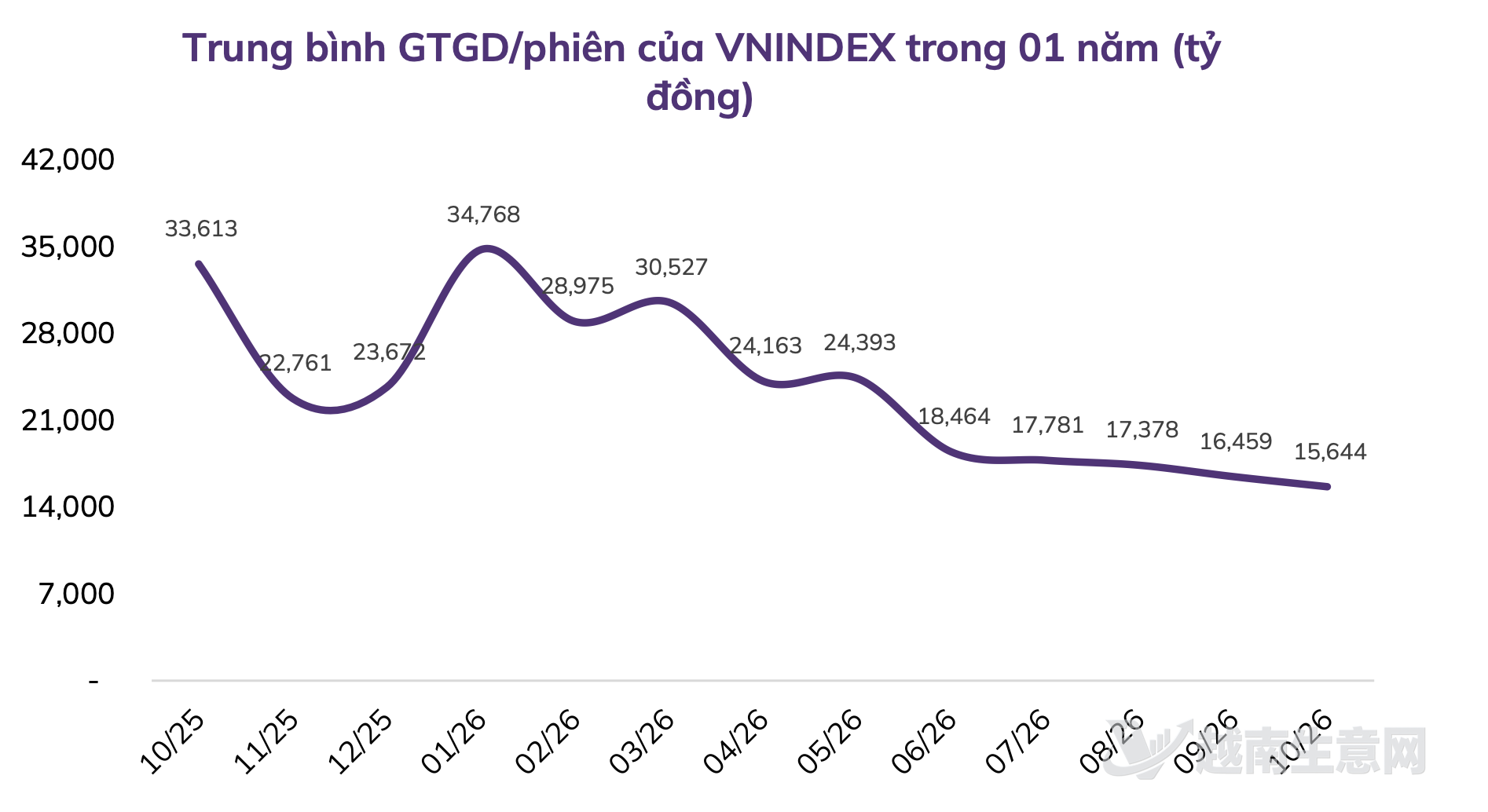
ABS said the VN-Index could still experience unexpected declines during its rebound.(VietVance)
As of November 9, 2026, the VN-Index traded at a price-to-earnings ratio of 10.67, below the 11.57 recorded at the market low during the April 2025 tariff shock. ABS expects average daily trading value could recover to around VND 20 trillion if the market strengthens.
In ABS’s lower-probability scenario, the index loses the medium-term support level of 1,600 points and falls toward 1,500 before consolidating again. The firm said short-term technical signals point to a possible recovery and highlighted banking, securities, real estate and public investment-related stocks.
Vietnam’s gross domestic product grew 9.95% year on year in the third quarter of 2026 and 9.01% in the first nine months. Industrial production, investment and construction, and exports by foreign-invested companies were the main drivers. However, the consumer price index rose an average of 4.57% year on year in the first ten months, while commercial lending rates increased, potentially limiting room for further economic stimulus. ABS said a weaker US dollar and continued declines in energy prices could ease exchange-rate and imported inflation pressures.
Source: VietVance