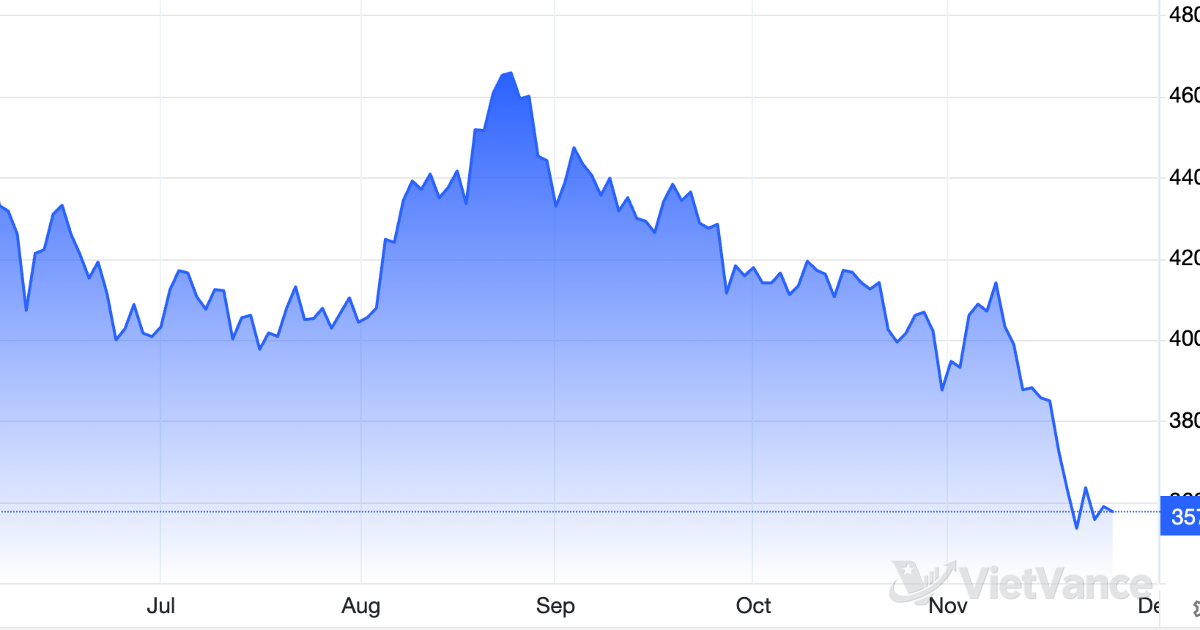
Vietnam Stock Valuations Fall, but Long-Term Investment Awaits Macroeconomic Support
As of November 6, 2026, 395 companies listed on the Ho Chi Minh Stock Exchange had reported third-quarter results. Their net profit rose 52% year on year, driven largely by a few major companies. VNDirect says valuations have fallen, but attracting long-term investment will require clearer macroeconomic support.

As of November 6, 2026, 395 companies listed on the Ho Chi Minh Stock Exchange had released third-quarter 2026 financial reports, representing 99.9% of the exchange’s total market capitalization. Their net profit rose 3.7% from the previous quarter and 52% from a year earlier. Net profit at VIC, VHM and BSR increased 3,392%, 453% and 888% year on year, respectively; excluding these three companies, market-wide net profit rose 17.5%. In the first nine months of the year, overall net profit increased 48.8% year on year, or 22.2% excluding the same three companies.
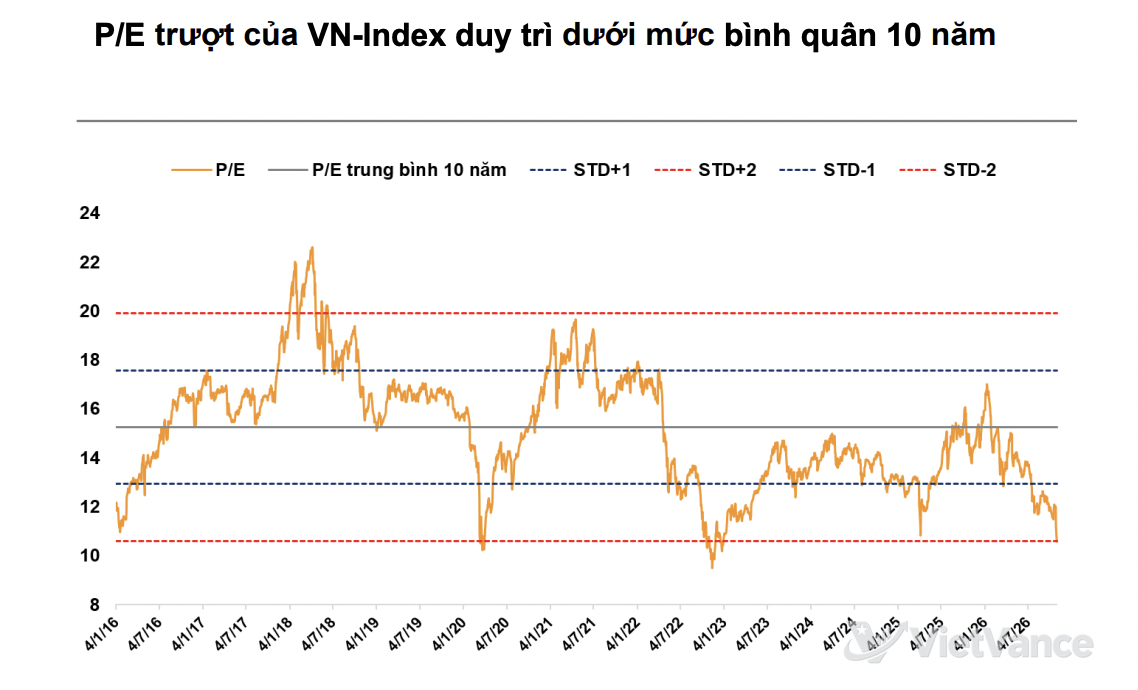
Earnings grow at Vietnamese listed companies as stock valuations fall.(VietVance)
Performance varied sharply across sectors. In the third quarter, net profit in the oil and gas and real estate sectors rose 472.2% and 466.7% year on year, respectively, driven largely by BSR, VIC and VHM; excluding those companies, the increases were 47.6% and 71.4%. Basic resources and retail grew 109.5% and 54%, respectively. Net profit in financial services fell 49.6%, amid lower stock market trading activity and declines in brokerage revenue and proprietary trading profit.
VNDirect said a market correction in late October, together with stronger third-quarter earnings at listed companies, brought the VN-Index’s trailing 12-month price-to-earnings ratio down from 12 at the end of September to 10.6. Excluding Vingroup stocks VIC, VHM, VRE and VPL, the ratio was about 9.1. VNDirect considers current valuations attractive relative to the earnings growth prospects of listed companies.
VNDirect cautioned, however, that low valuations alone are insufficient to drive a substantial market revaluation or attract long-term investment. It said lower oil prices, improved liquidity in the financial system, further declines in interest rates followed by stability, and positive signals from bilateral trade talks between Vietnam and the United States would help improve investors’ appetite for risk. If the VN-Index remains near its current level, its projected price-to-earnings ratio is expected to be about 10.4 after fourth-quarter 2026 results are factored in.
Based on valuations relative to earnings growth prospects, VNDirect favors the retail, construction and building materials, and utilities sectors. It considers their growth prospects relatively attractive at current valuations.
Source: VietVance