Vietnam’s Technology Minister: Country Has Mastered Parts of Some Core Technologies
At a November 12 National Assembly hearing, lawmakers questioned Vietnam’s progress in core and materials technologies. Science and Technology Minister Vũ Hải Quân said Vietnam can design semiconductor chips but still relies on overseas manufacturing. Strategic technology projects will be pursued according to their potential for immediate use or need for long-term research.

On the morning of November 12, Vietnam’s National Assembly held a question-and-answer session on science and technology. Nguyễn Minh Tuấn, a National Assembly deputy from Phú Thọ Province, said that although Vietnam had mastered core technologies related to drones and robots, it still depended on imports for materials including iron, steel, aluminum and plastics. He asked the science and technology minister to explain what progress Vietnam had made in core and materials technologies and where future research and development would be directed.
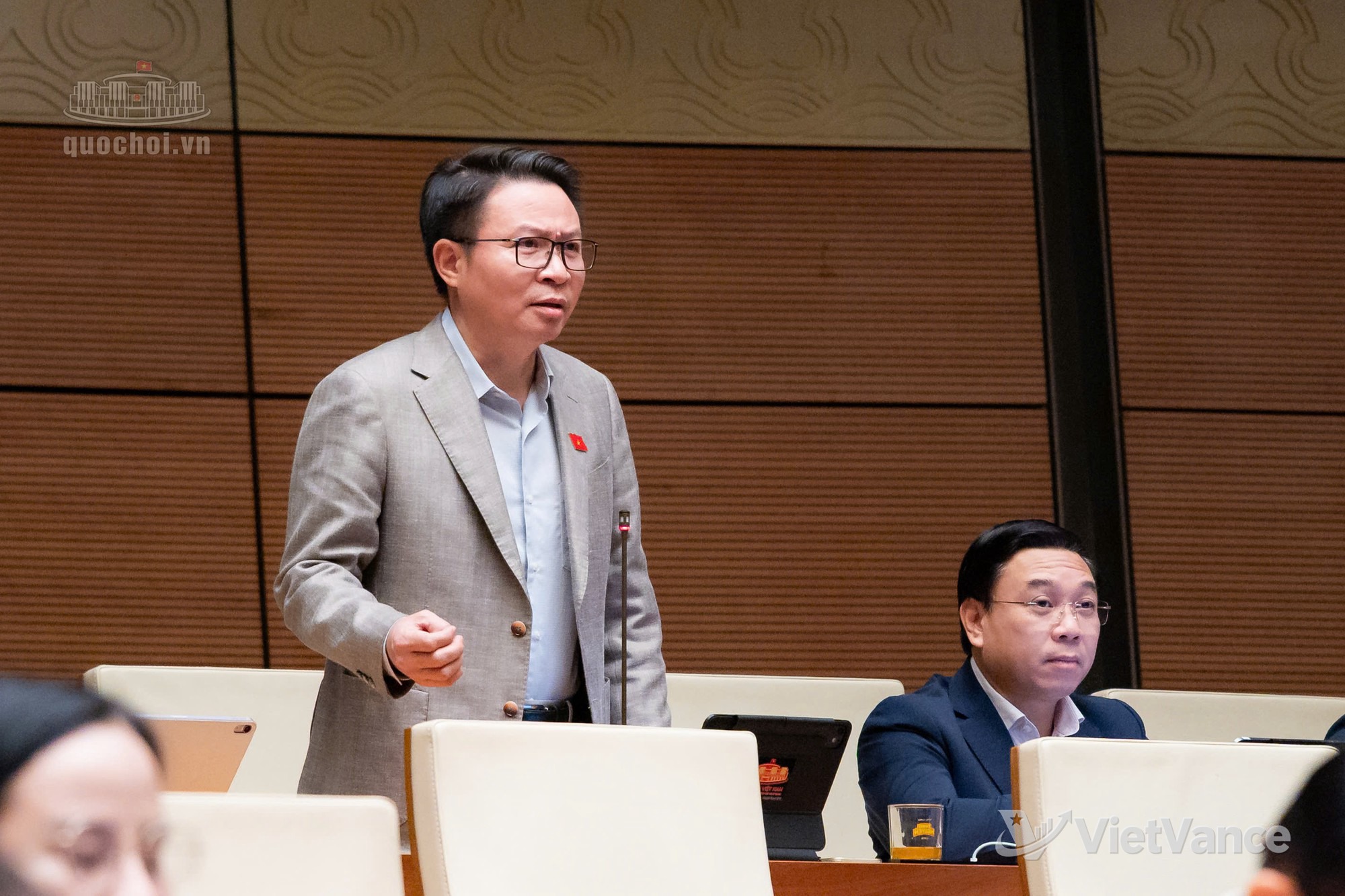
Nguyễn Minh Tuấn, a National Assembly deputy from Phú Thọ Province, questions the minister at the National Assembly.(VietVance)
Science and Technology Minister Vũ Hải Quân responded that the Politburo of the Communist Party of Vietnam had issued a notice of conclusions on developing the materials technology industry. Citing semiconductor chips, he said Vietnam could design them, but manufacturing still had to be carried out abroad. A strategic technology product involves multiple stages, and Vietnam currently controls some of them.
Vũ Hải Quân said the Ministry of Science and Technology divides strategic technologies into those that can be applied immediately and those requiring long-term research. Vaccine technology could be transferred from abroad and used for domestic production, contributing relatively quickly to economic development. Drones, by contrast, involve several fields, including chips, mechanical engineering and materials technology, so the work needs to be divided into separate research and development tasks.
Dương Khắc Mai, a National Assembly deputy from Lâm Đồng Province, also asked about progress on strategic technology projects. Vũ Hải Quân said that after the prime minister approved the list of strategic technologies and assigned tasks to ministries and agencies, an interministerial committee was established under the leadership of the Ministry of Science and Technology. Ministries and agencies work with businesses on project proposals and submit them to the committee for evaluation. Once approved, they complete the documentation and organize implementation. The ministry’s areas of responsibility include artificial intelligence, semiconductor chips and drones.
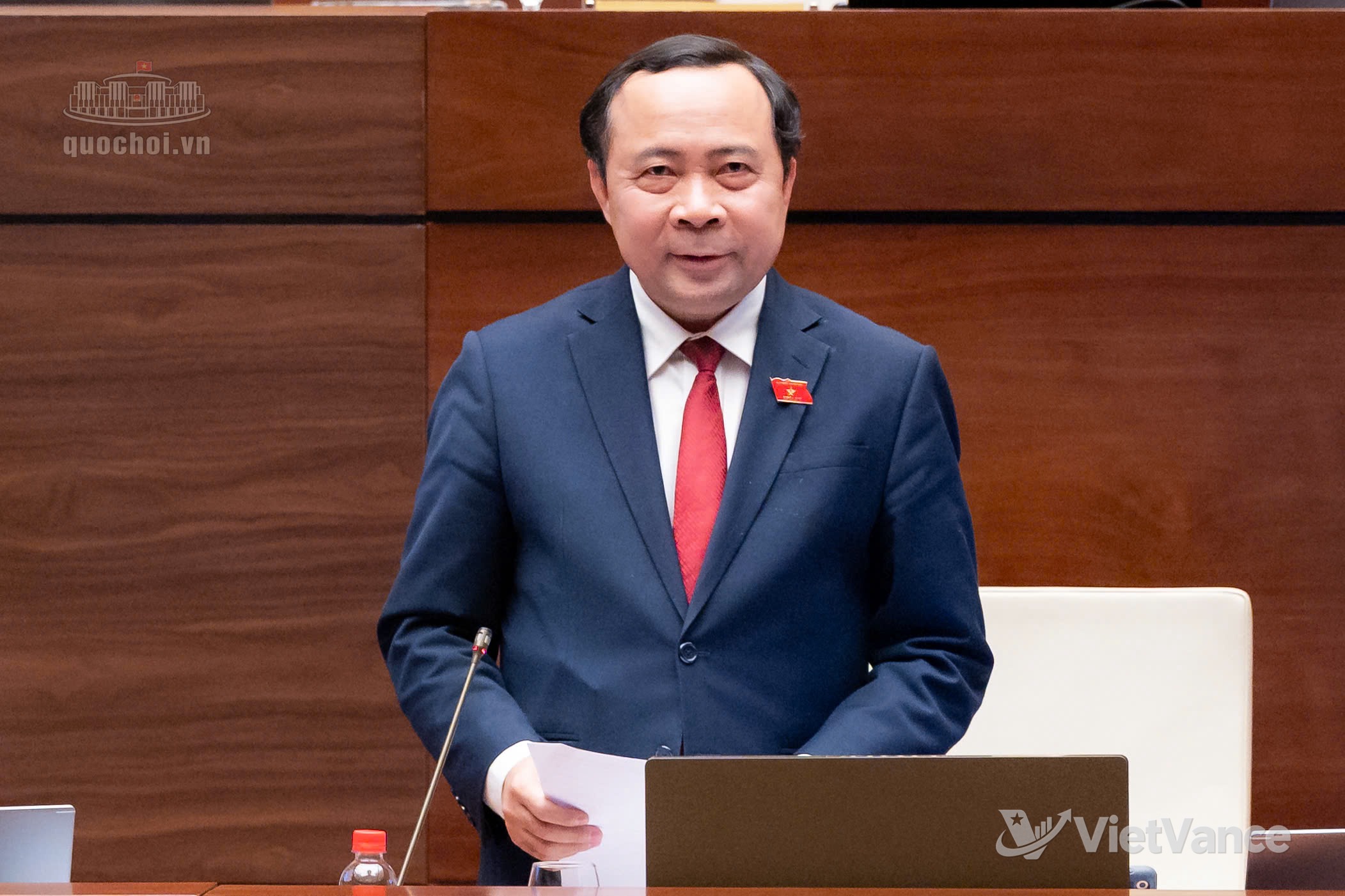
Vietnam’s Science and Technology Minister Vũ Hải Quân answers questions from National Assembly deputies.(VietVance)
Explaining the slow progress of projects, Vũ Hải Quân said the approach was new. Each project must specify the products and technologies it aims to produce and assess their commercial prospects and contribution to economic growth, making early difficulties hard to avoid. He expects implementation to become smoother as the process matures.
Source: VietVance